logo-cropped

Nottingham’s independent bookshop | 14a Long Row, Nottingham NG1 2DH | 0115 8373097

Newsletter: 13 Feb 2026

click here to sign up for our newsletter

Hello Readers,

While writing this newsletter, Kate (working remotely) asked Ross to send over a nice picture of the bookshop garden. He informed her that spring has not yet come to Swann’s Yard and to try again later, so instead, we’re offering you a nice list of books that you can curl up with until spring does its springing.

Our book groups are already in full swing this year, and after a slightly slow start to the year, we’re back to a stacked events programme in March, featuring several Irish events around St Patrick’s Day. You can find the full list here.

Best from the Five Leaves Team: Ross, Carl, Sarah, Giselle, Kate, Pippa, Deirdre, and Costanza

New From Five Leaves Publishing

________________________

We have two new books on our Publishing side this month. We’ve just received copies of from the printer of the much anticipated second volume of CJ DeBarra’s Queer Nottingham. This one covers the 1990’s to 2020, where we dive into the underground queer spaces of the hedonistic 1990s, then see the return to grassroots activism, and ultimately end up with our vibrant, diverse community, which plays such a vital role in Nottingham’s culture today. The book incorporates archival research with an impressive 175 interviews from people across the queer spectrum. Look out for details of an official launch party. It will be tough to out-do the event we had at Nottingham Central Library for the last volume, but we’re going to give it a go.
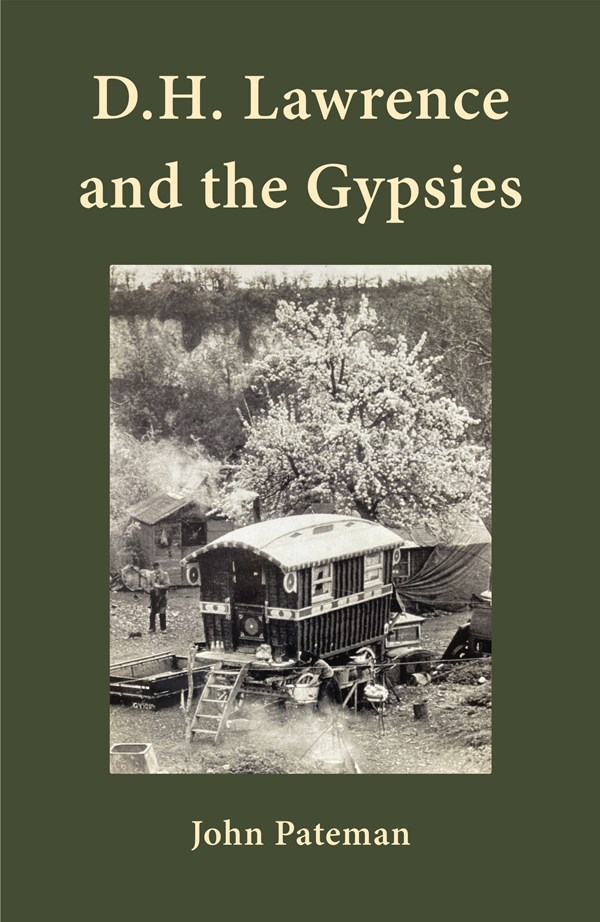
Due in any day now is the latest instalment in our D.H. Lawrence series with D.H. Lawrence and the Gypsies, by John Pateman. This one is an exploration of Lawrence’s lifelong fascination and affinity with people who lived outside the bounds of ‘civilised society.’ The book explores Lawrence’s intimate understanding of Romany culture, his admiration and longing for an itinerant life on the road, but also his reproduction of some of the stereotypes, and his exploration of class and race in the early 20th century. Author John Pateman describes himself as a “Gypsy, Librarian, Communist,” and we’re proud to call him a friend of the shop, as well as the author of Willie Hopkin: D.H. Lawrence’s Socialist Friend, which we published in 2024.
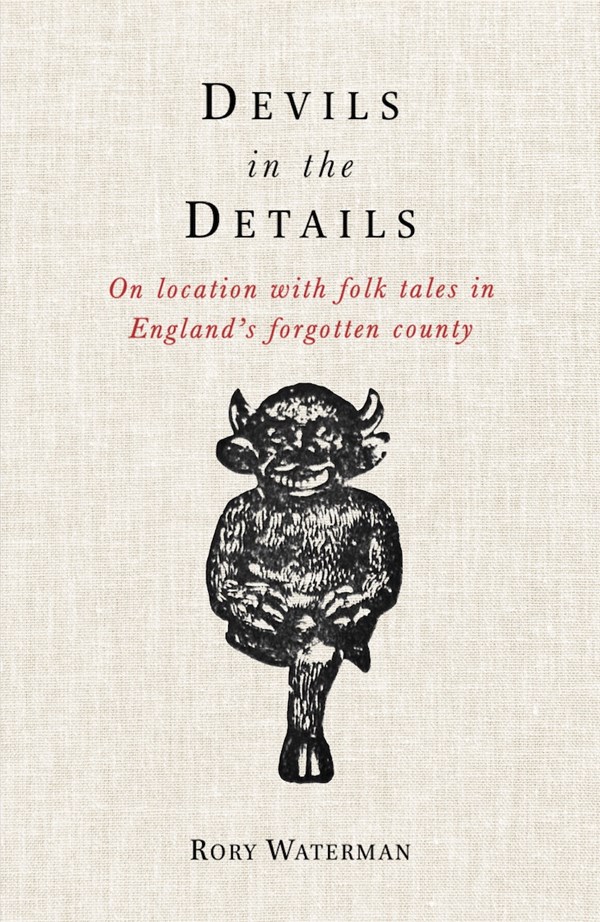
Just going into final edits now, is Devils in the Details, our second book with Rory Waterman and the Lincolnshire Folktales Project. Last year Rory was a co-editior of and contributor to our compilation Lincolnshire Folk Tales Reimagined. This time he invites us to join him on his travels around the county, in search of its folk tales through the landscape, architecture and history. Although this solo-authored book is about the folk tales, rather than focusing on retellings, it’s punctuated with weird and wonderful tales throughout, that will appeal to storytellers and story lovers alike.

 What We’ve Been Reading

_______________

__
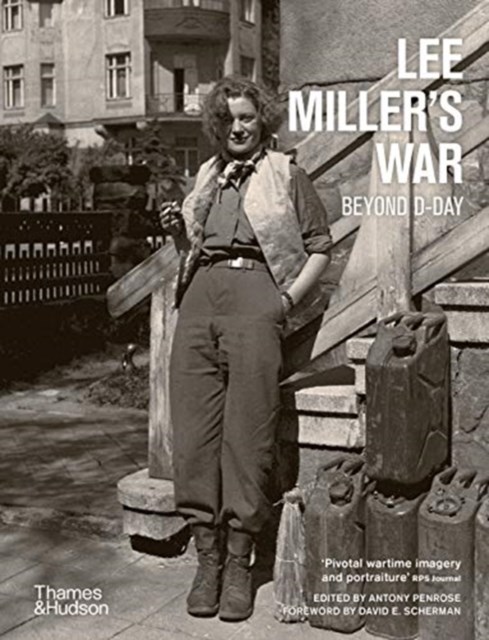
Lee Miller’s War: beyond D-Day edited by Antony Penrose (Thames and Hudson, £17.99)

Having seen the film Lee, watched an online talk on her and attended the Lee Miller exhibition at Tate Britain, I thought it was time to pick up a book, or one book from among the many. Though the exhibition (open until 15th February) featured many aspects of Miller’s life ranging from her photos of fellow surrealists through to her pictures of North Africa, it was the wartime and post-war images that stuck with me, hence choosing this book. It’s illustrated by many of the best – in other words, most tragic – images but there are also many articles by her about her journey with troops, often on the front line as the Allies fought their way through France and Germany. Miller was among the first to photograph the invasion, the camps found by troops, and there’s even a photo of her having a bath, in Hitler’s bath, with her filthy boots on the bath mat in a chapter starting “I was living in Hitler’s private apartment in Munich when his death was announced”.
Miller’s ambivalent feelings towards some of the women she photographed are included, the French women having their heads shaved as they had slept with German troops, the well-fed German women appearing from the ruins of their cities. Lots of pictures to look at, and text to read and reread.

–Ross
How Silicon Valley Unleashed Technofeaudalism: The Making of the Digital Economy by Cedric Durand  (Verso, £12.99)*

A provocative, political and economic critique of the digital economy’s dominant forces. Rather than ushering in a new era of innovation and prosperity, the tech giants have regressed toward a feudal order, where a few major platforms extract value and control data, turning users, workers, and even other businesses into dependent subjects, akin to feudal lords extracting rent and reinforcing dependencies rather than fostering competitive markets.
It’s a stimulating read for anyone interested in political economy, tech critique, and how digital platforms may be transforming economic and social relations, though its pace is a little uneven, and the second half gets bogged down in academic theory rather than real world examples.

–Carl

*unavailable on our website at time of mailing email us to reserve your copy

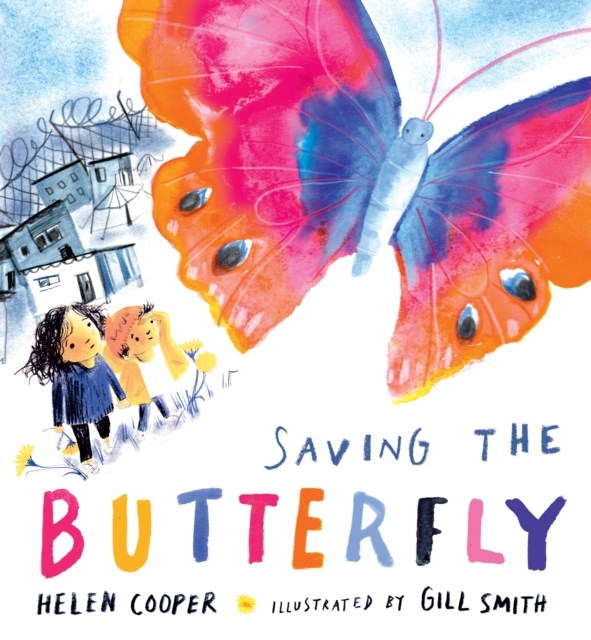
Saving the Butterfly : A story about refugees by Helen Cooper illustrations by Gill Smith (Walker, £12.99)

When two refugee children try to remake their lives in a new home, the younger one is able to start over, but the older one’s anxiety keeps her hiding in the house. One day the younger one brings her a butterfly, but it can’t live its whole life stuck inside. It’s up to the older one to rescue it, but to do that, she’ll have to go out into the world. A touching story with beautiful art which addresses both the refugee crisis and the topic of children’s anxiety with a gentle hand.

–Kate
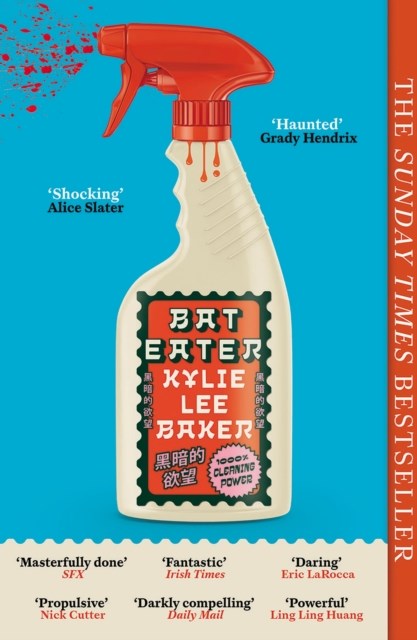
Bat Eater by Kylie Lee Baker (Hodder & Stoughton, £10.99)

This was the first book I finished in 2026 and I haven’t stopped thinking about it. It’s also the first squarely “Covid novel” I’ve read, and I realise I’ve been avoiding books directly engaging with an ongoing pandemic we are not done experiencing let alone processing. However, this is filled with a rage it turns out I needed. It is gory and visceral and definitely not for the faint-hearted! The book starts with our protagonist, Cora, witnessing her sister’s death and follows her trying to navigate that loss alongside experiencing anti-Asian hate, a possible serial killer, hungry ghosts and messy family dynamics. The book grapples with mental health, the migrant experience and trying to belong, all while being a propulsive, compelling read. I couldn’t put it down.

–Sarah
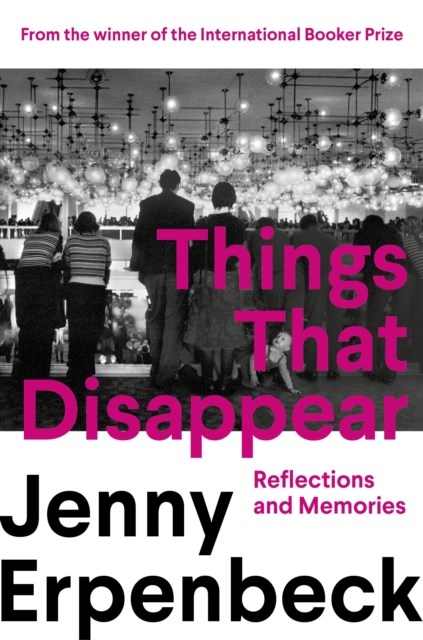
Things That Disappear: reflections and memories, by Jenny Erpenbeck (Granta, £12.99)

Jenny Erpenbeck won the International Booker Prize for Kairos, a novel of coercive control set in Berlin as her native East Germany moved towards the endgame. So much of her work relates to that disappearance, as do some of the essays, all short, in this slim volume quite suitable for a train journey to London. All the essays appeared in the Frankfurter Allgemeine Zeitung and are translated here by Kurt Beals. Some of the disappearances are very personal, of loss, some of just parts of life that have moved on or from which you have moved on. I imagine that most of the readers will be Erpenbeck readers, but there are a lot of them around.
The title reminded me of a much thicker book, with longer essays, London: a book of disappearances edited by Iain Sinclair, which I’ll get back into stock. Not least to reread the essay about a part of London that I thought I knew well enough but which was entirely made up. Not so much a disappearance as a fabrication. Other, real, disappearances reflect book trade history, the East End of London – lots of things that press my buttons. I’ll try to find my old copy tonight.

–Ross
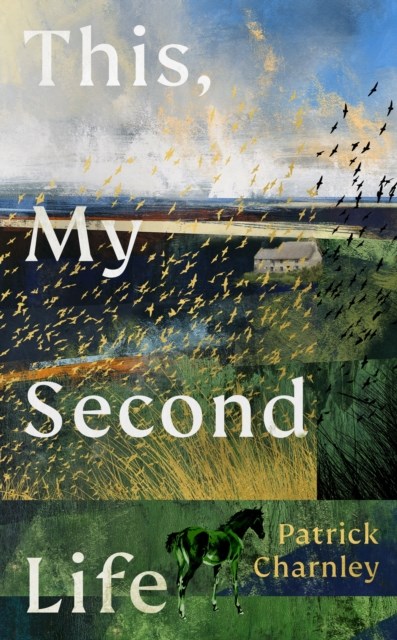
This, My Second Life by Patrick Charnley (Hutchinson Heinemann, £16.99)

A quietly restorative and beautifully written literary debut follows a young Jago Trevarno as he rebuilds his life after surviving a cardiac arrest that leaves him with lasting brain injury. Relocating to his uncle’s farm in rural Cornwall, his days are measured by the rhythms of nature and the simple tasks of farm life. His fragile stability is tested both by the return of his first love and by growing tensions with a local landowner, lending a subtle narrative tension (what is behind that locked door?) to the reflective tone. A perfect fiction pick for the winter’s end / early spring transition.

–Carl
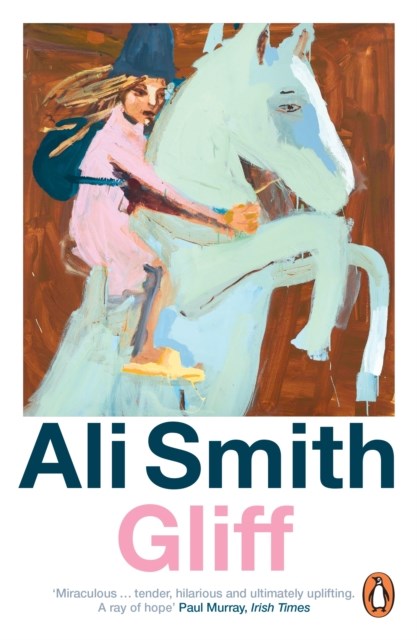
Gliff, a dystopian novel by Ali Smith (Penguin, £9.99)

This doesn’t work for me as a novel, but it’s still worth reading. Gliff is a horse, bought, though not actually paid for, by two children who have fallen outside the system when their house is marked for demolition and they have to look after themselves. Their mother is working in a hotel somewhere and an older youth gives them some money, finds a temporary place for them and disappears from the scene. The hotel says they have no record of their mother. Data is all. The book hints at so many bad issues we have to deal with and is prescient about new issues that have come up since she wrote the book. The demolished houses, for example, first have red paint daubed round them and people feel uncomfortable near them. Flags, anyone? The right of residence can be taken away easily. ICE?
Surprisingly there were little bits of humour. The boy who thought he had sold Gliff is called Colon. You mean Colin? No, he is called Colon, with one of the children wondering if his second name was Isation?
Ali Smith also includes some phrases worth remembering: “A tyrant runs a country. He does this via a lot of people doing this tyrant’s work for him.”
    Gliff is her most recent paperback. Her new hardback is Glyph. I have no idea, yet, if they are related.

–Ross

Hamnet, the film… though you have probably also read the book

I wrote this after seeing Hamnet (thrice).
Paul Mescal is a wonder to behold in Hamnet.

I taught Shakespeare’s work many times during a part-time but full-on lecturing life at Loughborough University (c. 1993-2024); occasionally the plays, but most often recently (before I retired in Dec ‘24), a selection of Shakespearean sonnets. I loved lecturing; rediscovering the sonnets and passing that enthusiasm on to students in our lively seminars. If I were teaching them now, I’d tell them to go and see Paul Mescal in this film. Maybe we would have had a class outing to the cinema.

What surprised me about Hamnet-the-movie? I knew on one level of course that Will was once a young and sexy man, in love. How could you read/see Romeo and Juliet, hmm and not know WS was in love as a teenager? You could not see/read ‘Much Ado About Nothing’ and not realise that WS, like Benedick, is captivated by the sort of witty, feisty, independent woman like Beatrice (or Agnes) who, as my Mam would say, ‘has far too much oul guff out of her’ and ‘sez more than her prayers’.

But that huge overwhelming ‘William Shakespeare’, colossus of Stratford / The Globe/ England-land, and especially that weird balding ‘portrait’, had sort of obscured in my mind that WS was, of course, once an educated but intensely curious and, crucially, *young* and yes, attractive, man. I made someone laugh recently when I said we find it easier to accept David Mitchell as WS in Upstart Crow.
I am a big fan of both Mitchell and this well-written show. Of course I am: Literature and Literary Culture is the world I live in. Besides, it is very funny, and it’s on BBC. If Mitchell fits only too well into the ‘Will’ of your imagination, remember this: Mitchell is in his 40s, playing Will in his late 20s (in the early timescape of the TV series ).
In Hamnet, 30-year-old Mescal is, for me, totally believable as the 18-year-old falling for the slightly older Agnes, and as the older, but definitely not middle-aged looking, Will. Literary Historians reckon WS wrote and first produced Hamlet when he was in his late 30s.

Like every Irish teenager, I studied a WS play each year at Secondary School. I learned off lots of speeches. There were painful … er… Readings. I am not sure ‘drama’ is quite the term, but the pain was real. A classroom of teenagers murdering the Comedies/Histories/ Tragedies? I would like to say we showed some discretion or discrimination. We didn’t. Yea, alas, we murdered them all, forsooth. The classroom floor was strewn with mangled and broken verse, comparable to the final scene of Hamlet. You’re thinking ‘the lady doth protest too much’? Ha! If only. I could act a bit, then and now, but something about reading Shakespeare aloud in class turned us all into wooden bores.

I distinctly remember learning about the Dark Lady and the Fair Youth, objects of inspiration and attraction in the sonnets. (Sorry if I’m upsetting your notions of 1960s-70s Irish convent schools. We learned about Oscar Wilde and Bosie too.) Overwhelmingly, I would say, the sonnets express desire. Paul Mescal brings that to life on the screen: desire for love, for connection, for freedom; the desire to write and be successful, to have your worth acknowledged. To be ‘seen’. as they say these days.

Yes, I *am* aware that Will-who-wrote-the-sonnets was at the other end of his life to the-Writer-figure-in-this-film. All those sonnet lines about wanting to be remembered, to leave a legacy, to achieve immortality, would be unlikely coming from a young man (as we first meet WS in Hamnet the film).

I think what comes across most strongly in Hamnet-the-movie, a quality I would have liked my students to discern, is that the passionate will (pardon pun) to matter, to make a mark, was always there. Yes, I realise also that speculation about a writer’s motivation is always going to be just that: speculative. As my favourite tutor used to say, “It’s not as if we’re going to dig him up and ask him”!

I loved the tearing-up-paper-at-night scene, and the thrumming out of the rhythm of a sonnet, because, though I wouldn’t call myself A Writer, I’ve been there, done that, got the jerkin. I am grateful for better pens, paper, lighting and heating, and my non-communal living. I, like Agnes, am a farmer’s daughter. I have a lot in common with a young woman who is scruffy, untidy, a bit grubby, seen as a (w)bitch, unmanageable, unmarriageable. Yes, Co Carlow farmfolk, I knew well what you thought of me . . . and probably still do, like I fkn care.

I was intrigued by the casting of Hamnet. I don’t want to sound like a mad Irishwoman (that ship has sailed, I can hear my beloved Brian comment), but I was delighted by the success of Hamnet the novel, by Maggie O’Farrell, 2nd-generation Irish. I moved ‘over’ from Carlow in 1988. I am Irish, yes, but also Irish-in-Britain, part of a community I somewhat inadvertently joined back then. I have not met O’Farrell but I am proud to be part of the same community. The Kerrywoman Jessie Buckley brought the strange, fey, otherworldly quality of O’Farrell’s Agnes from page to screen. In a way, Buckley and the director could create Will’s partner from scratch, as little is known about the original AH. There’s marvellous material in the novel, and, I’m sure, in the film script, and hence, wider scope for the imagination, but we the audience don’t all think we know who Hathaway is.

Paul Mescal had, arguably, a much more difficult role. Each of us has our own version/vision of William Shakespeare, greatest writer of English ever, the GOAT, the inimitable unassailable Bard/ Swan of Avon, and so on. Mescal had to put “too too solid flesh” on the bones of the screenplay, but also on the skeletons we carry around in our closeted brain-cells, the Shakey Bones of our preconceptions.

Paul Mescal’s role as Shakespeare will outlast Oscars 2026.

“So long as men can breathe or eyes can see,
So long lives this, and this gives life to thee.”
(Sonnet 18)

Sonnet 55 even mentions statues:

“Not marble nor the gilded monuments
Of princes shall outlive this powerful rhyme,
But you shall shine more bright in these contents
Than unswept stone besmeared with sluttish time.
When wasteful war shall statues overturn,
And broils root out the work of masonry,
Nor Mars his sword nor war’s quick fire shall burn
The living record of your memory.
’Gainst death and all-oblivious enmity
Shall you pace forth; your praise shall still find room
Even in the eyes of all posterity
That wear this world out to the ending doom.
So, till the Judgement that yourself arise,
You live in this, and dwell in lovers’ eyes.”

Thanks, Paul Mescal, for your phenomenal performance.

F**k the Begrudgers.
——

Deirdre O’Byrne
Knows all the words to her tribal song , ‘Follow Me Up To Carlow’. Likes books, dogs,
cinema. Dislikes people commenting on her Irish accent. Runs monthly book at Five
Leaves Bookshop.

Newsletter: 29 Jan 2026

click here to sign up for our newsletter

Welcome to our February and March events newsletter.

We have started to return to activity after the post-Christmas lull – though the shop has been reasonably busy since the break.

There have been a few moves round… horror/science fiction/fantasy have all been separated out and given more space, translation has grown with mini-sections in masses of languages, politics has a bit more display space, as has music. Art, alas, is one of the losers and no longer has a unit of its own. Have a wander round to find your favourite section and ask us if you can’t spot it – there’s always the possibility we will know.

There’s a distinct Irish element to our events in March in support of the local St Patrick’s Festival. There’ll be more down the line, celebrating important parts of the Irish calendar, some storytelling and – let us know if you are interested – a slow reading group discussing James Joyce’s Ulysses. Meantime our monthly Irish book group (for which you don’t have to be Irish) is thriving. On the book group front, our Pagan group is now Witchcraft and Paganism, and we are trying generally to have the dates of all our book groups sorted well in advance and on our website. There are lots of external bookstalls coming up at events organised by others too – Simon Armitage, Hollie McNish (sold out at Metronome), Yael van der Wouden and Sacha Coward, Katy Watson, Claire Hubbard Hall, Danny Scott. Email us if you can’t find the details.

In the news…

Like you, we have watched American politics with mounting concern. We have sent a message of solidarity to the eighteen (!) independent new and secondhand bookshops in Minneapolis/St Pauls. Several of them have been actively and publicly involved in resisting the occupation of the Twin Cities by ICE: fundraising, striking, demonstrating, and protecting vulnerable people. Locally, many of our customers have been involved in Stop Trump activities, and there will be a gathering this Saturday at 1:00 pm at the Brian Clough Statue. At the first such gathering, we heard from Minneapolis citizens currently resident in Nottingham.

Five Leaves Publishing

We are sorry to hear that David Ablitt died a few days ago. Dave was the author of our book Sneinton People, which comprised interviews with residents of Sneinton over forty years ago, which were first published in Sneinton Magazine at the time. These ranged from someone who fought in WW1 through to a refugee couple who fled Iran after the 1978 revolution. As this note suggests, Dave was active in community issues for many years, but we also knew him from his days as a young political activist in Nottingham in the 1960s, the period covered in our Winter in the Bookshop memoir by Sylvia Riley. Our condolences to his friends and family. Let Ross at the bookshop know if you would like information on the funeral – though we imagine word has got round well already.

Finally, congratulations to CJ DeBarra, author of our two-volume Queer Nottingham history – she will be given a Rainbow Heritage Award for this work in February by Notts LGBT+ Network. The second volume will be available in a few days to catch a couple of events – the launch date will be announced soon.

For a full list of our events and book clubs head over to our events page

Best Books of 2025

This is our last post before Christmas, so it’s an opportunity to thank you for your support throughout this year – as customers, colleagues, librarians and friends.

We *might* do a separate report on the year, but we’ll just mention a few things. On publishing, we had a big success with CJ DeBarra’s first Queer Nottingham going into reprint weeks after publication. There were around 150 people at the launch at the Central Library and it was such a fun event with people from their teens to their eighties. The second volume, taking us from the 90s up to date comes out in February.

Lincolnshire’s ours too of course, thanks to Rory Waterman. Lincolnshire Folk Tales Reimagined has sold over 500 copies in a short period.

Six new Five Leaves New Poetry pamphlets appeared, thanks to Tony ChallisTara SinghRamisha RafiqueElizabeth Drummond and Sue Forrester. We also produced a new edition of Poems of a Nottingham Lace-Runner, by Mary Bailey thanks to John Goodridge, Karen Winyard and Nottingham Women’s History Group for that.

Of course we’ve had dozens of events. It would seem wrong to pick any out as “the best”, but certainly the most emotional was one of the smallest, with Janet Alder talking about the twenty and more years she has spent trying to get justice for her late brother, who died in police custody. The range has been immense. Just looking at a random month last year, March’s events included talks by the musician Boff Whaley, the Chinese novelist Xiaolu Guo, the Romany-now-thriller writer Louise Doughty and an in-house talk on Irish comedy. We are often fully booked or have to hold the talks in bigger venues.

Speaking of which… we now have a growing monthly Irish book group to add to our fiction, Pagan and serious non-fiction group. Every month the Irish group gets bigger.

There have been setbacks. Three authors published by us in the past have gone to the big bookshop in the sky – Michael Baron (who edited two of our poetry books), Zoë Wicomb (author of a book of short stories for us) and John Lucas. John wrote or edited several books for Five Leaves over the years and spoke or read regularly in the bookshop. He also ran Shoestring Press and worked with us on project after project.

So many of our communities feel under pressure, whether that be our colleagues at the University of Nottingham fighting to save jobs and the status of the university through to those worried about the men who paint roundabouts and shout at hotels. But we are where we are, and we are proud to stand with you, changing the world one book at a time, or just reading a good novel!

from the Five Leaves Team: Carl, Costanza, Deirdre, Giselle, Kate, Pippa, Ross, Sarah, and, at this time of the year, Rosa the Reindeer.

Non-Fiction

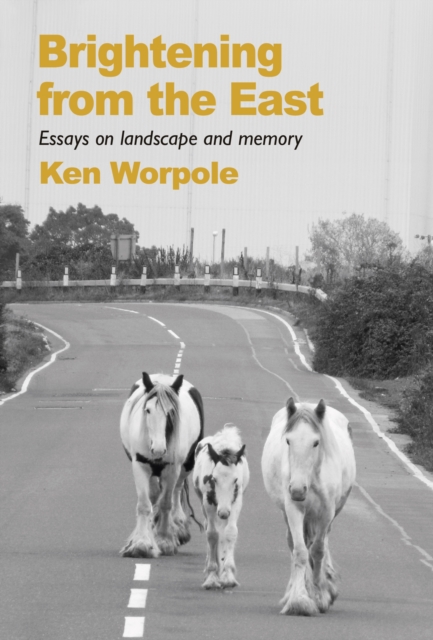
Brightening from the East: essays on landscape and memory by Ken Worpole (Little Toller, £16)

Transparency… I’ve been reading Ken Worpole’s writing for decades, published a book of his in 2008 and he is part of the select Five Leaves’ London gang. The first time we met, decades ago, we were on opposite sides of a bitter argument at the Federation of Alternative Booksellers but became friends and comrades. But I would have read this book anyway as it ticks all my boxes… social history, landscape, cityscape, obscure stories about even more obscure organisations and communities, in this case mostly in Essex, often the playground for another interest, London’s East End.

I’d always wished Ken would write an autobiography, but he does, here, include some autobiographical pieces including of his teenage years in Southend where he met Larraine, his wife of sixty years. Larraine was a photographer and some of her work appears here, including the cover image. Sadly Larraine died recently.

Ken’s book ends with a set of essays on people important in his world including John Berger, Roger Deakin, Doreen Massey and Colin Ward. If that list means anything to you, get in.
Read the chapters one cup of coffee at a time or devote the weekend to this book. You won’t regret it.

–Ross

Foreign Fruit: A Personal History of the Orange by Katie Goh (Canongate, £16.99)

I think this is my favourite book of the year, and also one I think deserves so much more attention! I don’t expect many people to have thought – I wish I knew more about oranges! But after reading this, you’ll be telling everyone you know facts about their fascinating history. I swear. It’s not just me! Goh blends memoir with a cultural history of the orange; successfully connecting trade routes, colonial legacies, mythology and her family’s history. I texted the opening line to my best friend, and then didn’t put the book down! Goh’s writing is captivating, vulnerable, and incredibly researched as she weaves the history and journey of the orange with her own Irish Chinese Malaysian heritage. Think: Amitash Ghosh’s Curse of the Nutmeg meets Crying in H-mart by Michelle Zauner.

Sarah

The Invention of Infinite Growth: How Economists Forgot About the Natural World by Christopher F. Jones (Oneworld, £28)

A meticulous yet readable history of modern economic thought, showing us how the notion of ceaseless expansion (“Growth at all costs”) has become the single and only political imperative.
Jones explains that modern neoclassical economics, particularly in the 20th century, has deliberately erased “Land” as a constraining force on production, enabling a dangerous belief that technological progress and market forces could overcome all planetary limits (hello Elon Musk and his Mars obsession). This has, of course, led to environmental catastrophe and soaring inequality. Why doesn’t anybody other than China really make anything anymore? What are ‘services’? How can banks just ‘create’ money?

A critical, but accessible book, urging a shift away from the “growth fetish” toward new models that prioritize ecological and human well-being.

–Carl

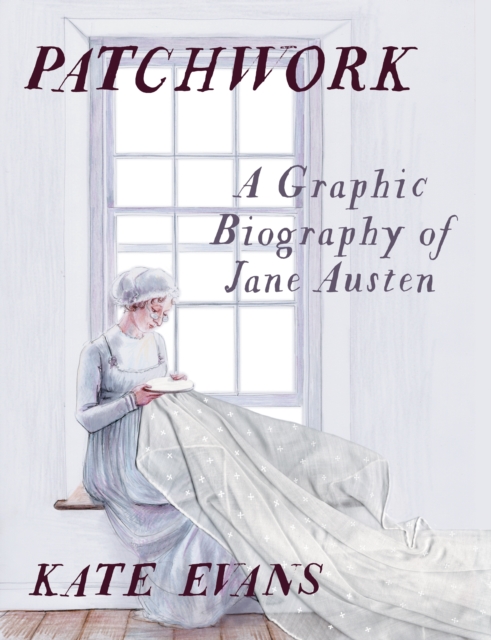
Patchwork: a graphic biography of Jane Austen, by Kate Evans (Verso, £25.00)

Yes, Verso, that serious publisher of heavy political tomes. But anyway… I famously (well, among my workmates at the bookshop) dislike the writing of Jane Austen. But this work is just beautiful and might turn me. Kate Evans tells the story in a patchwork format – Jane knew one end of a needle from the other after all – with lovely illustrations. In the centre there’s a long supplement about the cotton used in patchwork. Ah, that’s where Verso comes in, except it’s not heavy. Do you know the statue of an enslaved woman and a Nottingham textile worker over in the Green Heart? Well think of this supplement as the Jane Austen version.

At the very least, when you are in the shop, browse the book. Kate Evans – by the way – when she came to the shop wore handmade clothes from Jane’s period and gave us a mini-lecture about fashion.

–Ross

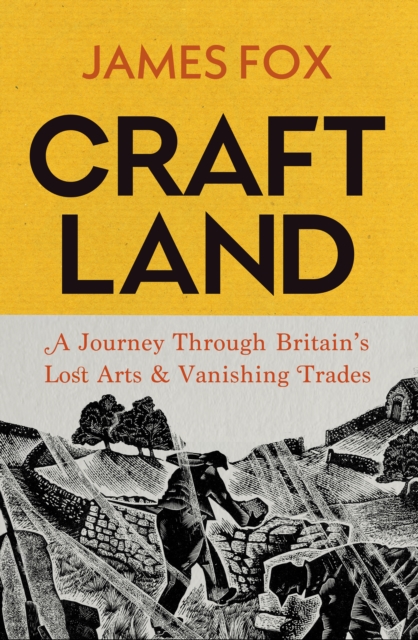
Craftland: A Journey Through Britain’s Lost Arts and Vanishing Trades by James Fox, (Vintage, £25)

This intimately researched book charts the landscape of Britain’s (dying) crafts. Fox looks at the fundamental connections between people, land and local skills, ultimately arguing for preservation not purely for whimsical nostalgia, but with environmental consideration and local economic generation. If you love Braiding Sweetgrass, but found you couldn’t connect your own life and practice to the teachings of the book through a removal of geography and shared culture, you should read this. Fox spends time with the skilled craftspeople he is writing about, and is so clearly enthused and awed by their work. Flags on lampposts don’t make me proud to be British, but this book does a lot to argue for a genuine heritage, often informed and sustained through migration and skill sharing.

–Sarah

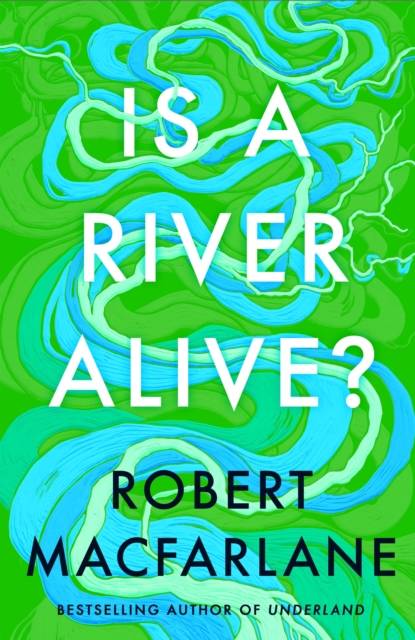
Is a River Alive? by Robert Macfarlane (Penguin, £25)

This pick is partly for the book itself and partly for what it’s done. As Macfarlane readers will expect, it’s full of vivid descriptions of landscapes and unusual people the author meets while travelling through the world. In particular, it takes us to three rivers, one which has won rights, one which is all but dead, and one which is under threat, while linking them back to the springs, streams, and rivers in this country. At times I found myself longing for the wilder rivers of my childhood in California, but it also got me out exploring the tamer rivers nearest my current home, which can be both heartbreakingly polluted and stunningly beautiful.

Regarding what it’s done, this book is more explicitly environmental and activist than Macfarlane’s previous writing. It’s been a joy for me to see it amplify the cause of river restoration in the UK. The Right to Roam movement has spent the year focusing on improving access to rivers, while other groups have been drawing attention to the pollution of these precious places by profit-seeking water companies and industrial agriculture. Of course, this activism has been ongoing for years, but I do think the book has been important in drawing more attention to the cause and is a great contribution to the national conversation.

–Kate

Fiction & Poetry

Passion by David Morley (Carcanet, £12.99)

David Morely is a naturalist, which is reflected in his poems, and one of a small but growing handful of Romany poets. In Passion, his most Romany book yet, he uses more Romany words than any poet I have read, to great effect. They are glossed at the end of the poems. I’ll try to remember to pick up the book on Christmas Day, the better to appreciate one of his poems which starts:

Christmas Day. The dawn is sure and quick and blue.
I toss the xalayimos [wet wash] on the line and place my pot of cyclamen
where it glimmers and grows and drinks the winter light.

David Morley should be reading in the bookshop early in the New Year. We’ll let you know.

–Ross

The Leather Boys by Gillian Freeman (Dead Ink, £10.99)

My favourite cover of the year (as well as a great read)! Originally published in 1961, amid landmark changes around homosexuality in the law in Britain, this comes from the brilliant indie publisher Dead Ink’s Outsider Classics series of lost cult literature. The Leather Boys grapples with class, love, masculinity and queer identity, centring around two working-class men connected through their affiliation with a gang. I am often sceptical about the readability (and enjoyability) of ‘rediscovered classics’, but I found this layered and charming and reading working-class love stories, especially queer ones, is still sadly rare!

–Sarah

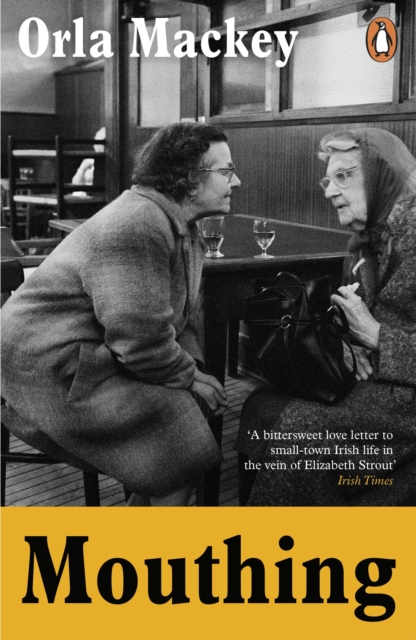
Mouthing by Orla Mackey (Penguin, £9.99)

My discovery of the year was Mouthing by Orla Mackey, thanks to Sarah for the recommendation. It’s got multiple narrators, and a great sense of personal voice. It’s written in Hiberno-English (posh term for English as it’s spoken in Ireland). It’s the only book I’ve ever read that uses ‘ibex’ in the sense my Mam would (hint: nothing to do with wild goats). I was a bit disappointed Mackey didn’t also use Mam’s other equally loaded term ‘gazebo’ (nothing to do with fancy garden structures). But I’ll watch out for it in her next book.

–Deirdre

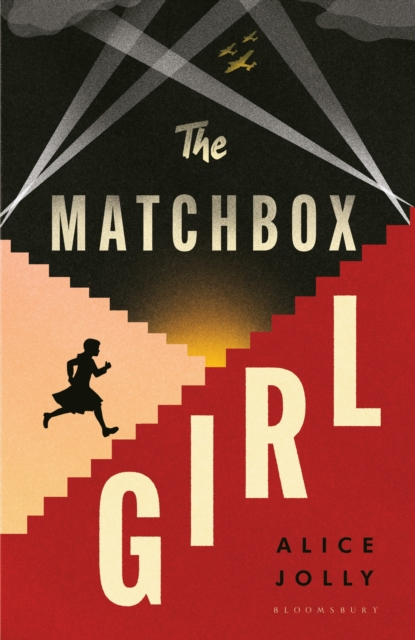
The Matchbox Girl by Alice Jolly (Bloomsbury, £18.99)

Told through the unique voice of Adelheid Brunner, a non-verbal autistic girl obsessed with collecting matchboxes, Alice Jolly’s book is a compelling historical novel set in wartime Vienna, providing an unforgettable perspective on a dark period.
Adelheid finds herself in a children’s clinic under the real-life Dr. Hans Asperger as the Nazi regime gains control of the city. Her relentless internal search for order clashes with the escalating chaos and danger outside, forcing her to witness heart-breaking choices and systemic cruelty.

Vividly imagined and meticulously researched, the book is a powerful study of survival and humanity. Most importantly, questioning the knowledge and complicity of Asperger, an otherwise compassionate researcher in such an evil regime.

–Carl

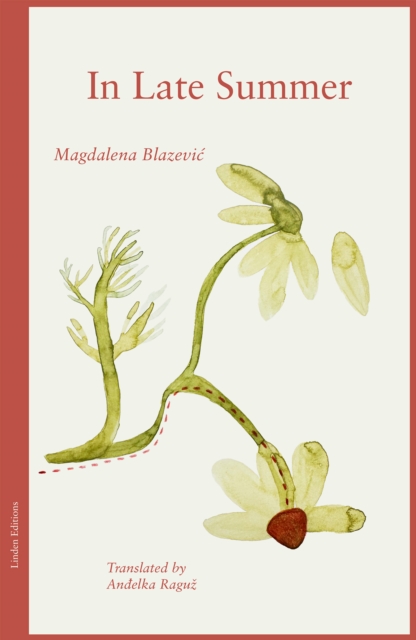
 In the Late Summer by Magdalena Blaževic, translated from the Croatian by Andelka Raguž (Linden Editions, £12)

This is a beautiful, devastating read, set during the Bosnian war and narrated by Ivana, a 14 year old girl we know has died. The juxtaposition of innocence and childish joy with the brutality of war could easily feel gimmicky, but the prose is carefully balanced and the translation holds a rhythm that feels authentic. The narrative is also based on the author’s personal experience and dedicated to the residents of Kiseljak. For all this heaviness, the novel captures so much joy and care in the depiction of childhood friendship, of rural life and family. Certainly not the easiest read, but one I highly recommend nonetheless.

–Sarah

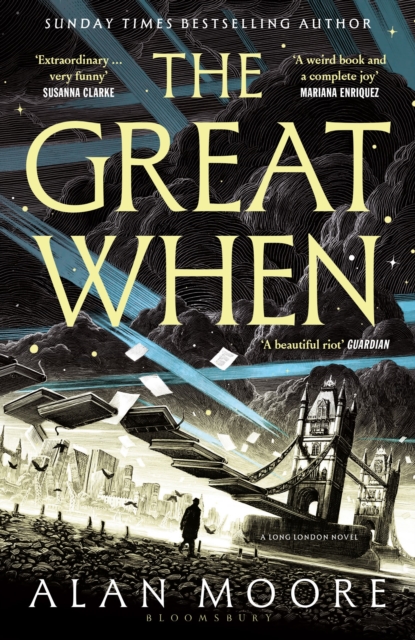
In The Great When by Alan Moore (New in Paperback in 2025, Bloomsbury, £9.99)

My favourite read this year is from none other than the warped imagination of Alan Moore. I feel I should warn you – the opening chapter is strange, stranger than the rest of the book actually, and at times uncomfortably explicit. It acts as a sort of cinematic opening credit music, setting the scene and the background of the characters that will appear later. But stick with it, and the book eventually turns into a mind-bending romp through a post-war London which is overlayed on a parallel city made of myth and magic. In truth, I’ve read books with roughly that premise before, but this alternate London is somehow more of a psychedelic hallucination, and yet strangely more real feeling than a typical magic London novel.  Also, for those who (like me) are geeky about 19th and early 20th century magic, the book is fantastically well researched, weaving historical occultists’ lives with a fictional young bookseller, just trying now to get turned literally inside out… like the last guy.

–Kate

Service Model by Adrian Tchaikovsky (Tor, £10.99)*

What would happen if we programmed computers and robots to take care of absolutely everything? Look to the future, when the human race has nearly died out and computers are running the world, but still obeying commands given centuries before – the result can only be ridiculously funny.

Charles the robot valet is carrying out his tasks. He’s checking his master’s appointment list. He’s laying out his master’s clothes so his master can visit anyone who is on his appointment list for the day, even though his master has not left the house in years. He’s going through his task list one by one, even though none of them make sense any more. He discovers that some of his master’s clothes are covered in blood, and then remembers that he cut his master’s throat while shaving him. He has no idea why. He avoids arrest by robot police and sets off for the Central Services diagnostic centre to find out what’s wrong with himself. He arrives to find a long unmoving queue of odd robots, and is encouraged to jump the queue by an even stranger robot called The Wonk, as the queue hasn’t moved for decades. The Wonk christens the valet UnCharles (he lost his name when his master died) and they set off on an increasingly strange odyssey to discover their destinies. If I haven’t already sold you on this, imagine a robot-controlled library where the robots act like knights to protect the zillion gigabits of data, which in the interests of efficiency they’ve converted to binary then put all the bits in order… I challenge you to read this and not hurt from laughing.

– Pippa
*not available on our website at time of sending, email or phone to order

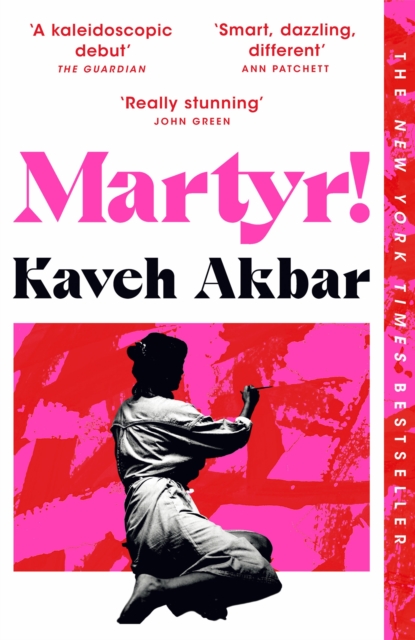
Martyr! by Kaveh Akbar (New in Paperback in 2025, Picador, £9.99 )

Some books are worth the hype, but being stubborn, I often refuse to pick them up until they’re no longer ‘cool’. Nominated for a slew of prizes, and winning several, this debut novel from a poet managed to take me by surprise. The prose is not florid, it’s funny, sardonic, and very readable. The protagonist could easily be read as an author stand in: Iranian-American poet, aspiring writer, untapped genius. But Akbar takes those expectations and skewers them. Laughing at tropes he has embraced and embodied, while bringing heaps of cultural critique and millennial hopelessness. Obsessed with martyrdom and what it means for a life to have ‘meant something’ in its death, our protagonist embarks on an artistic interrogation of identity and meaning in contemporary America.

– Sarah


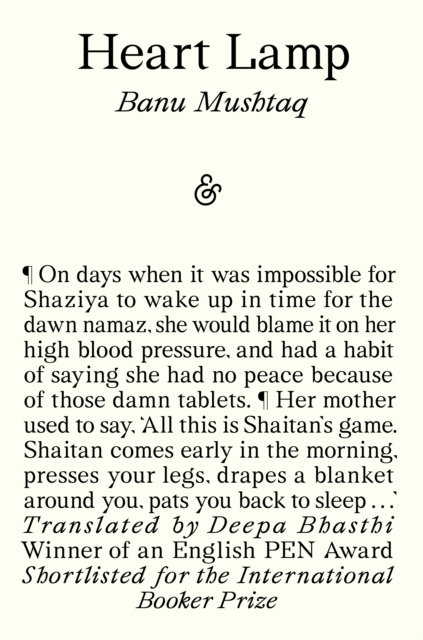
Heart Lamp: selected stories by Banu Mushtaq, translated by Deepa Bhasthi (And Other Stories, £14.99) and 
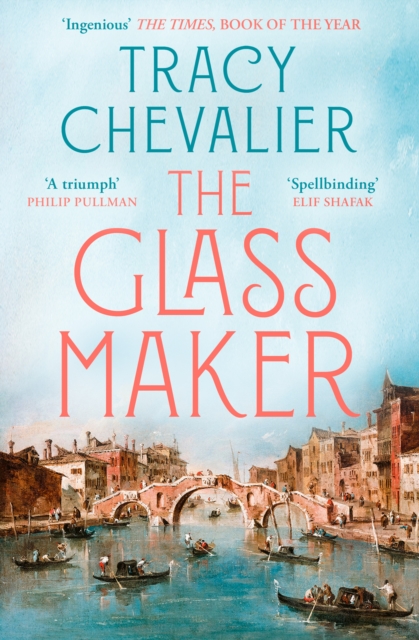
The Glass Maker by Tracy Chevalier (New in Paperback in 2025, Borough Press, £9.99)

Following the theme of using “foreign words” in a text for those reading in English. Mustaq and her translator take no prisoners in including more of such words – in Kannada – than I can recall in any novel or set of short stories. There is no gloss here, which helps the reader to feel a bit estranged from the situation, to pay more attention. Heart Lamp won the International Booker Prize and I suspect I was not alone in not having heard of the language before. It’s spoken by about 45 million people in India. The importance of these stories are that they are about the lives of Muslim women in this increasingly Hindu-dominiated country. The day to day problems of the women, however, are based in patriarchy. And unfortunately the women don’t always win. It’s a tough read.

In The Glass Maker there’s a few words of Venetian, but that’s not an issue in this more mainstream novel. The book starts in Venice in 1486 or rather across the lagoon at Murano where the trade is in glass. Orsolo Rosso – a woman – learns the trade. Her story, and that of her family continues down the generations to the COVID period, which reflect the even more ghastly plague years in Venice in the past. The plot device of the book is that the same woman, the same family, live in the present moment but the present moment can be a century after the last chapter. There’s no Doctor Who special effects. Down the generations the trade changes. Venice becomes less isolated from the mainland and what was once a craft becomes something for the tourist trade. Each time Rosso and her friends and family have to deal with the circumstances at the time. This is the first book of Chevalier’s I’ve read since The Girl with a Pearl Earring. If you liked that one you will like this.

– Ross

_________________________ __

Five Leaves Holiday Gift Guide 2025

Non-Fiction

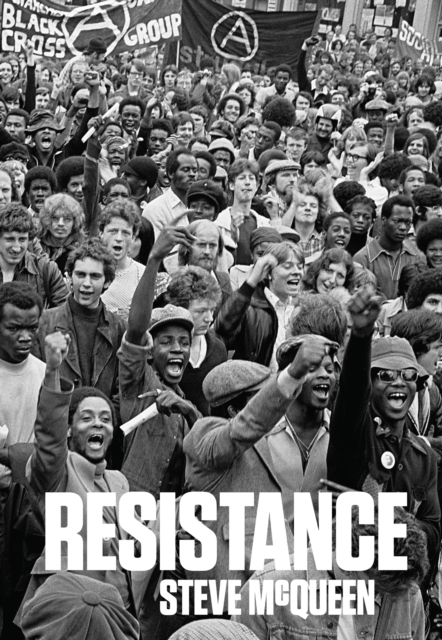
Resistance, edited by Steve McQueen (Monument, £25.00)

This book is stunning. For years, I didn’t quite understand why people would buy photograph books, but the collected images here are so arresting, I found myself sitting behind the till with a copy to look through whenever there was a lull in the shop. Resistance takes you through 100 years of British protest, from suffragists to Greenham Common up to the march against the invasion of Iraq in 2003. There are vast crowd shots and intimate portraits, tree huggers and gay kissers, police violence captured in a still. This is a beautiful and powerful collection of the varied ways we have fought as a nation and would make an excellent gift for anyone who loves art, history, politics or needs some hope in the current climate.

–Sarah

Women in Struggle: episodes from East Midlands history  Ed. Chris Wrigley (£8)

Notts and Derby Labour History Society has brought out Women in Struggle. No ISBN, so not on our webshop but available to purchase over the counter, by phone or email. Essays… from forgotten episodes like the strikes of the Nottingham Female Cigar Makers Union – bet you’d never heard of them – to the more recent struggle of East Midlands women in support of the miners’ strike. This latter includes material never published before about sexist behaviour by the police towards the women of the strike.

Ross

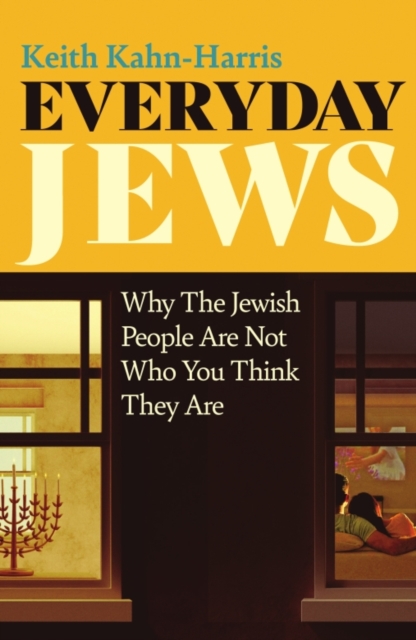
Everyday Jews, by Keith Kahn-Harris (Icon, £10.99)

Kahn-Harris, author of the Five Leaves’ title What Does a Jew Look Like?, and academic books on heavy metal, says that if someone came down from Mars they would think the most important ritual of observant Jews was the “supper quiz” at their synagogue. He wants Jews to get off the front pages and get on with the mundane if not boring life of being Jewish. Five Leaves organised an event on the book at the Liberal synagogue and it seemed appropriate that the other synagogue had a bus trip to Hull that day. At the London launch there was mention of a museum of crap Judaica and the worst kosher snacks he could find were passed round. Beneath the drollery, Kahn-Harris has a serious message about the role of Jews in the UK, wishing they could or would go back to being and be seen as being, well, everyday.

–Ross

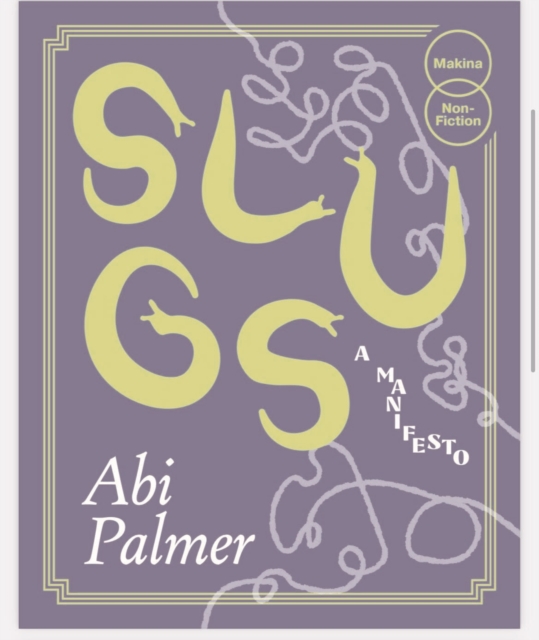
Slugs: a manifesto by Abi Palmer (Makina, £14)

This is one of the strangest and most beautiful books I’ve read. I was very excited for this release last year, and have returned to the book and reread it again several times. I wanted to highlight it in this newsletter because there’s currently an exhibition on at the brilliant Site Gallery in Sheffield, inspired by this particular work. Abi Palmer is a disabled artist and writer and this work asks us to consider loving bodies deemed unloveable. To move slowly and luxuriate in our time and connection with the world. To embrace our slimy natures! It is poetic and defiant.

–Sarah

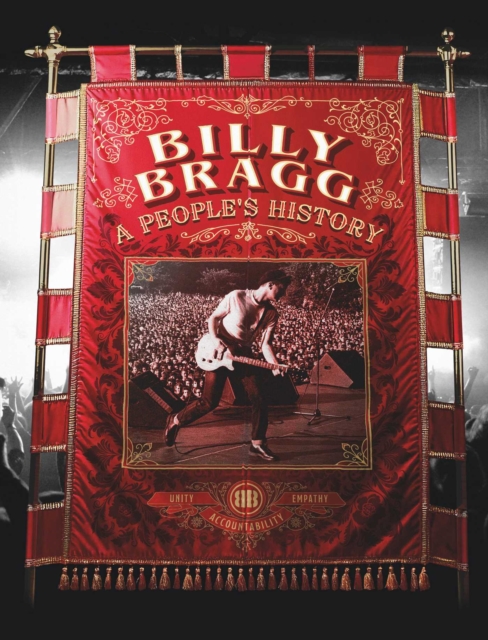
Billy Bragg – A People’s History by Billy Bragg & Richard Houghton, (Spenwood, £35)

If you can resist buying this for yourself, you may want to give it as a gift in a heavy duty stocking! It’s big, weighty and you could lose yourself in it and not reappear until spring. Fans and fellow artists, including the likes of Phil Jupitus and Chris Packham, combine to tell the definitive story of the Bard of Barking, with plenty of contributions from the man himself and an abundance of nostalgic photos and memorabilia. From the early days in Riff-Raff to today, via ‘A New England’ and ‘Levi Stubbs Tears’, a stellar career of four decades-plus is comprehensively and very enjoyably covered.

–Carl

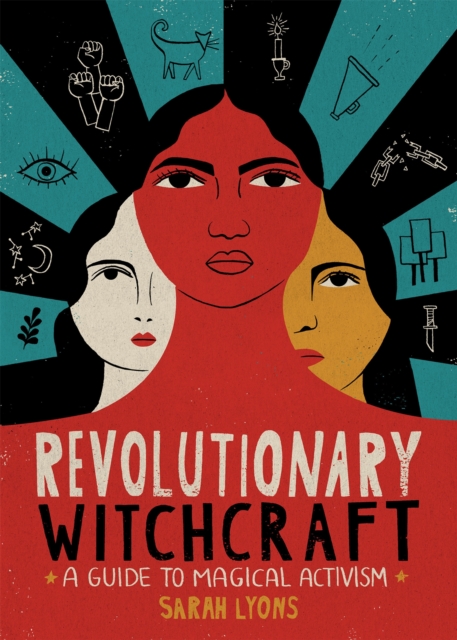
Revolutionary Witchcraft by Sarah Lyons (Running Press, £12.99)

Do you know someone who’s dying to hex the patriarchy? Then this is just the book they need in their stocking this year. This beautiful small format book gives an overview on how different marginalized groups have used modern witchcraft to effect political change, and to promote healing and solidarity within their groups. It mixes quick bite history lessons with practical exercises in modern magical techniques including meditations, a self-initiation ceremony and sigil-making. Oh, and the book is lavishly illustrated in black, white and red with the inspiring art of Hanna Barczyk, which alone is worth the price.

–Kate

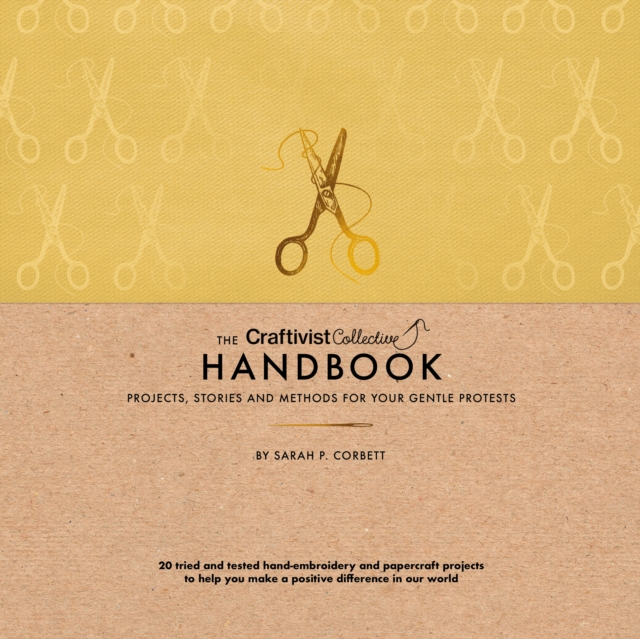
The Craftivist Collective Handbook by Sarah Corbett (Unbound, £22)

Sarah Corbett released How to Be a Craftivist a few years ago, emphasising the power of slow protest and offering ways to counter burnout in times of political strife. That message only feels more vital now, sadly. This handbook takes the theory from her first book and gives you 20 projects to do to help you reconnect with yourself and your politics through craft that is accessible regardless of prior experience. From small solo projects to public displays, collaborative pieces to protest gifts, the projects are varied and accompanied by further thoughts, tips and even craftivist playlists!

–Sarah

Crafting a Better World by Diana Weymar (Harper Collins, £18.99)

From the creator of the Tiny Pricks Project- which created a material record of Trump’s presidency and of the movement against it by stitching his own (vile) words into textiles- this pocket sized book is a collection of interviews, illustrations, records of exhibitions and also projects you can do at home as acts of material resistance. With contributions from 25 artists and activists, this little book can give you a physical project to channel your rage into as well as offering solidarity and hope through the work of others.

–Sarah

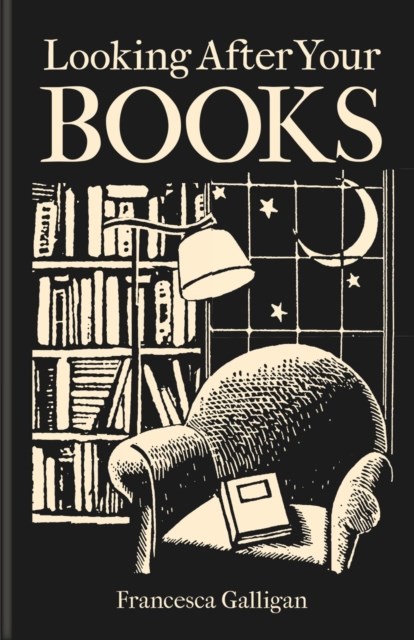
Looking After Your Books by Francesca Gilligan (Bodlean, £16.99)

Lots of our customers collect books (and keep us in a job), some are Collectors (with a capital C) and some work with Collections. Francesca Gilligan, who fits all three categories, manages successfully to make this book relevant to all three types.
She’s not precious about it all, noting the various ways those who collect for fun might develop a collection of Agatha Christie books. She writes about how we look after books – there are excellent tips on how to deal with wet books –  and where to find books to collect. She describes the second hand and antiquarian market and the history of collecting. The book ends with how to get rid of books. I guess we all have that problem. However, if you happen do have a first edition of The Great Gatsby in good condition I’ll take it off your hands for a tenner. Twenty if it has a jacket. And then resell it for £7-£9000 or, jacketed, a hundred grand. Such is the nonsense end of collecting. Appropriately, Looking After Books is a neat, sewn hardback with nice endpapers. It’s going in my collection of books about books.

– Ross

Inklings series (404 Ink, £7.50)

Whether you do jolabokaflod, are looking for a small secret santa gift, or the perfect stocking filler, I don’t think you can go wrong with one of the brilliant 404 Inklings series: palm-sized books on niche topics. I have relied heavily on their broad selection of excellently written books for all of the above, and have never had a disappointed gift receiver! My personal favourites are:
We’re Falling Through Space: Doctor Who and Celebrating the Mundane, by J. David Reed
BFFs: The Radical Potential of Female Friendship, by Anahit Behrooz
The Appendix: Transmasculine Joy in a Transphobic Culture, by Liam Konemann
The titles make the topics pretty clear! But each is also written with such clear passion as well as careful research and thought, reading them is a joy.

–Sarah

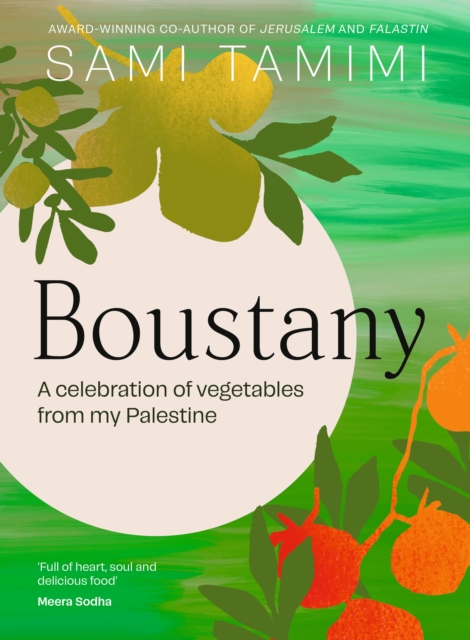
Boustany by Sami Tamimi (Ebury Press, £30)

Invariably, whenever a new Ottolenghi cookbook comes out, members of my family buy it for each other and we’re always delighted. However, this year I’m even more excited than usual for us to swap new copies of Sami Tamimi’s first solo book, Boustany. Tamimi, the Ottolenghi co-founder and co-author of FalastinJerusalem, and Ottolenghi: The Cookbook has long championed Palestinian food and culture and this is dedicated to celebrating dishes from his home country through vegetables. Sure to be packed with flavour to please all dietary preferences, this is a gift that keeps giving if you get invited round to dinner by whoever you gift it to!

–Sarah

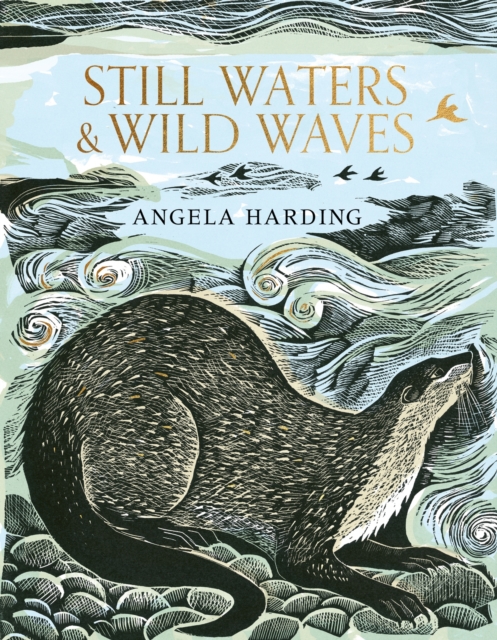
Still Waters & Wild Waves, by Angela Harding (Little Brown, £25.00)

Harding is a big favourite with our customers: cards, calendars, books of the season and there’s this (admittedly 2024) book of prints, personal notes and early sketches of seascapes, rivers, and the animals and fish that live in them. Very nice.

–Ross

Paula Rego: visions of English literature by Marco Livingstone, Marina Warner, Rosanna McLaughlin (Hayward Gallery, £25.00)

Though I never met the late Paula Rego, a friend of mine and publishing colleague Tony Rudolf, was her male model (and partner) for many years. In the summer at the Ben Uri Gallery there was an exhibition of sketches, paintings and prints that he had been given over the years.  Many included images of Tony which looked nothing like Tony, but someone had to sit or stand in an awkward position as Paula Rego drew her, sometimes disturbing, paintings. I like her work in exhibitions, but am not sure I would like many on my walls at home. But I might just accidentally buy this book of her work on Jane Eyre, Peter Pan and Nursery Rhymes in general. Of course many nursery rhymes are not always cheery little numbers, and in Rego’s hands they can be pretty grotesque. The three subjects are accompanied by illuminating essays. Rego’s works, as Rosanna McLaughlin says, “capture the violence and vulnerability that are tightly bound to the concept of innocence. In doing so they express something of of what it is to be a girl, a woman forever trapped in the battle between the two.”

–Ross

Fiction & Poetry

Lincolnshire Folk Tales Reimagined, eds Anna Milton and Rory Waterman (Five Leaves, £12.99)

If you’re like me and you love nothing better on a cold winter night than to curl up by the fire with a book of weird tales, this one won’t disappoint. The book was born out of the Lincolnshire Folk Tales Project which recorded and mapped stories from across the county. Then fourteen authors from the county dove into this trove to come up with modern versions of the tales, in a mixture or poetry and prose. Some are relatively straight-forward line the poem about the rude behaviour of the famous Lincoln Imp, while others weave several stories across time into one new tale. A perfect, and unusual gift for someone who appreciates a good yarn.

– Kate

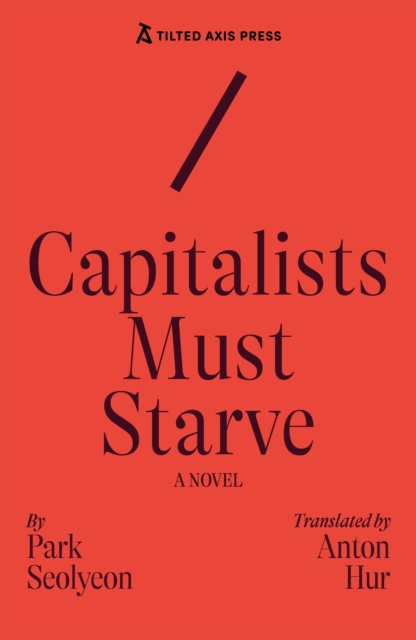
Capitalists Must Starve by Park Seolyeon, translated by Anton Hur (Tilted Axis, £14.99)

New from one of my favourite indie publishers – Tilted Axis Press – and a timely sentiment for the Christmas Carol season (muppet version only!). This is a novelisation of the life of real activist Kang Juryong, a Korean rubber factory worker who became a revolutionary. I learned a huge amount about the Korean independence movement and industrial revolution of the early 20th Century, while being completely invested in the fully fleshed out characters of the story.

– Sarah

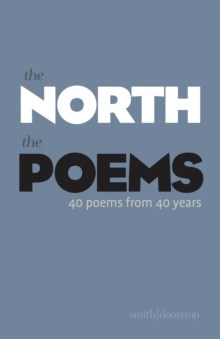
The Poems: Forty Years of The North, edited by Ann and Peter Samson (Smith/Doorstop, £10)*

The North is one of the most reliable poetry magazines, edited by that Nottinghamshire exile Peter Samson and his wife Ann. Forty years is a long time to be running any poetry magazine, but they’ve done it. This collection includes poems by those you might expect, Armitage, McMillan father and son, Helen Mort, Liz Berry, Hannah Lowe… and people from other cultures including Eavan Boland and the late Gboyega Odubanjo whose work has also graced the magazine.

– Ross
*not available on our website at time of posting, email or phone to order


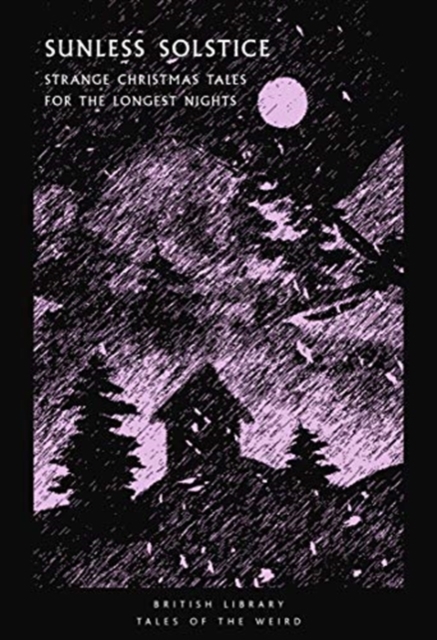
Sunless Solstice: Strange Christmas Tales for the Longest Nights eds  Lucy Evans, Tanya Kirk (British Library, £9.99)

I just wouldn’t be yuletide without me bullying my partner into reading me spooky stories while I keep us topped up on hot mulled beverages. This generally means an gift of one of the fabulous collections from the British Library’s Tales of the Weird series. A particular yuletide favourite is Sunless Solstice: Strange Christmas Tales for the Longest Nights, with a mix of well know early 20th century horror authors and some lesser known gems. Also in the series with a holiday theme are Chill Tidings and Haunters at the Hearth.

– Kate

Kids

_
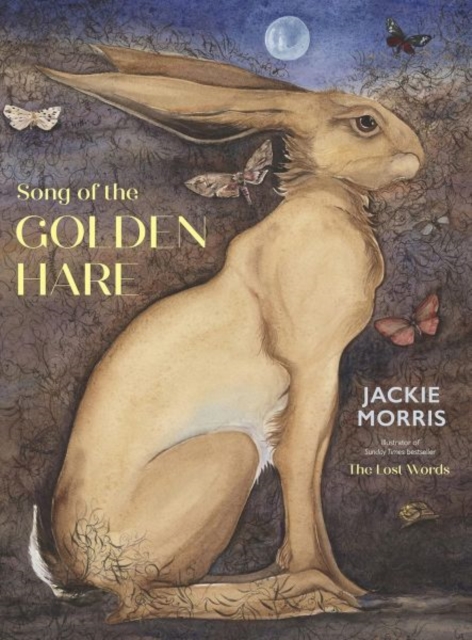
Song of the Golden Hare by Jackie Morris (Graffeg, £9.99)

One of the most beautiful books I’ve seen this year- both the illustrations and the prose are lush and gorgeous. Raising Hare meets Watership Down (without the lifelong trauma), this tells of a special family who care for orphaned leverets and know the secret song of the hares. They race against hunters (human and non-human) as they follow the old queen of the hares as she journeys to the sea.

– Sarah

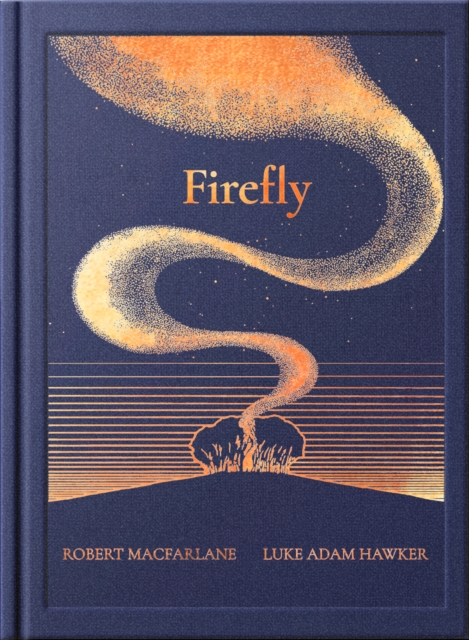
Firefly by Robert Macfarlane & Luke Adam Hawker (Magic Cat, £14.99)

This is sort-of a kids book, but honestly something I’d give to an adult as well. It’s a simple and poetic story about finding light in dark times. Hawker’s stunning etchings pair beautifully with Macfarlane’s emotionally evocative words, both filled with the beauty of nature.  It’s bound in blue cloth, stamped in shining copper making for a truly special-feeling edition.

– Kate

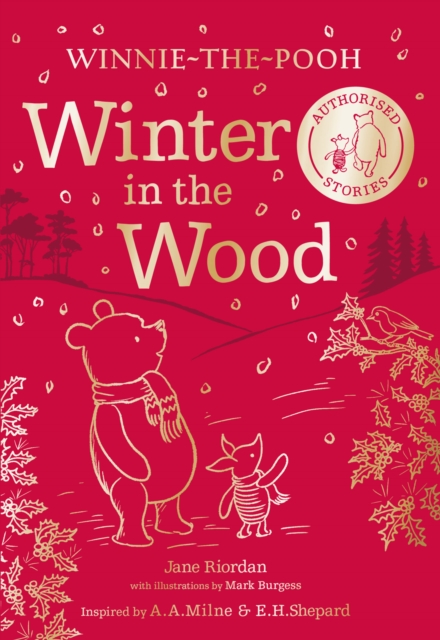
Winnie-the-Pooh: Winter In The Wood by Jane Riordan & Mark Burgess, (Harper Collins, £16.99)

Jane Riordan sympathetically takes the reins of A.A.Milne’s cosy world in Winnie the Pooh: Winter in the Wood. A charming, gentle return to the Hundred Acre Wood, capturing the warmth and whimsy of the original stories, creating a cozy winter tale filled with friendship, curiosity, and small adventures. The illustrations of Mark Burgess (in the style of E.H.Shepard) pair perfectly with the story’s calm, snowy atmosphere. It’s a delightful read for young children and a nostalgic treat for adults who love Pooh. Sweet, comforting, and full of heart, this book makes an excellent seasonal treat.

– Carl

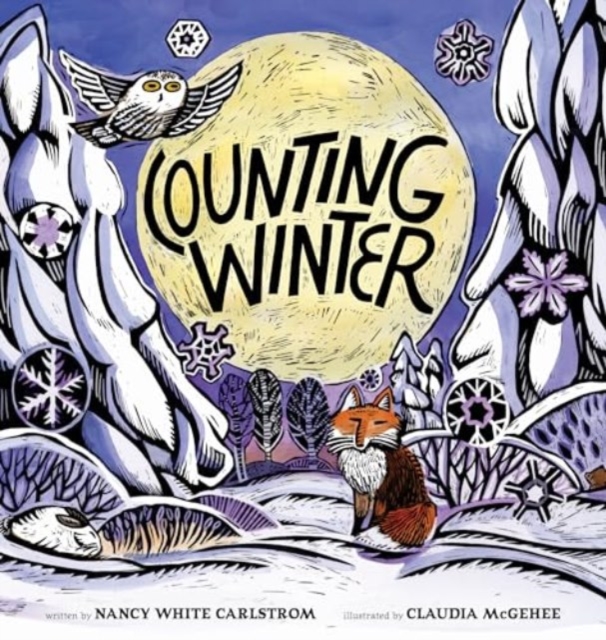
Counting Winter by Nancy White Carlstrom, illustrated by Claudia McGehee (Eerdman’s, £14.99)

Counting Winter – you can guess – is a counting book with nature scenes you will see in winter. “One red fox walks across the white snow…”, “Two ravens croak and gurgle…” You get the picture. It’s a North American book, and some of the animals might seem a bit unfamiliar to your average five year old. But they will be just as excited by the illustrations of musk oxen as owls because the illustrations are superb. All I need are some five year old relatives and we’re good to go on this one.

– Ross

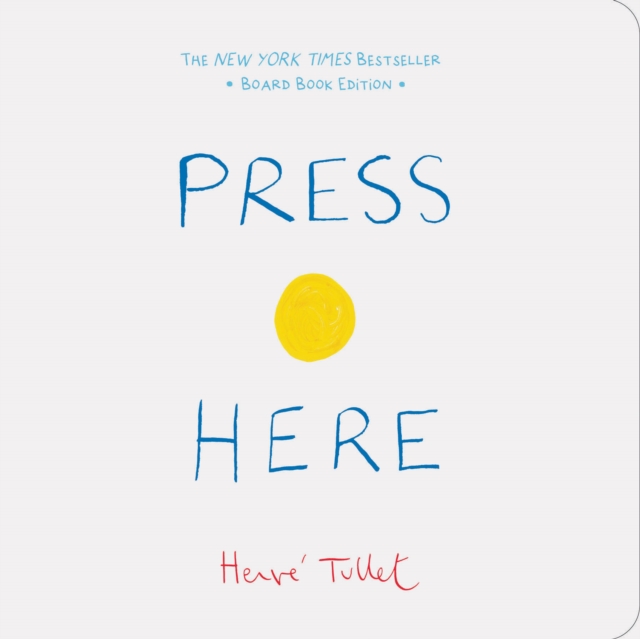
Press Here by Hervé Tullett (Chronicle, £6.99)

This board book is one of my favourite books ever. As you follow the instructions, turn the page and see what happens. Start by pressing the yellow button on the cover, then push more buttons, shake and tilt the book, and be surprised as the buttons multiply, move and change colour. I’ve read it over and over to myself, sadly it wasn’t published until my youngest child turned 24. If I ever have grandchildren this will be my first gift to them. And it will fit nicely into a stocking.

– Pippa

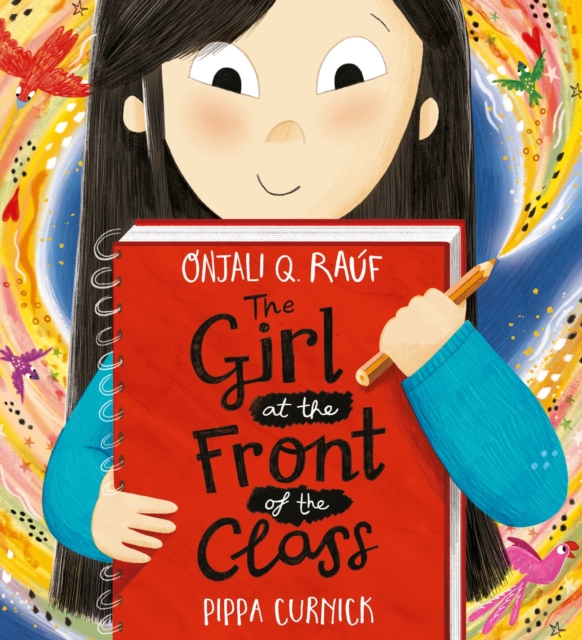
The Girl at the Front of the Class by Helen Cooper (Hodder, £12.99 HB, £7.99 PB)

I’ve read a few children’s books on the child refugee experience (which have occasionally resulted in customers coming into the shop to find a tearful bookseller) but this one is a different perspective. A new girl comes to the school but she seems sad all of time and doesn’t want to talk or engage with the other students. Another student wants to be her friend so he talks to the adults and tries lots of different ways to do it. Eventually she’s able to make friends with him and play with the other children. The book is hopeful and practical, and includes a list in the back of ways to befriend a refugee child, though the tips could apply to any child who’s become withdrawn because of difficult circumstances.

– Kate

_______________________ __

Staff Recommendations December 2025

This month we asked our staff what they were reading and for some seasonal reading recommendations. In true Five Leave fashion, we got back responses including featuring social justice, the Troubles, hellscapes, plague, and the odd spooky folk custom. Don’t say we’re not festive. Or do – there are some great books here either way. Look out later in the month for our holiday gift guide and our best of 2025 list.

Non-Fiction

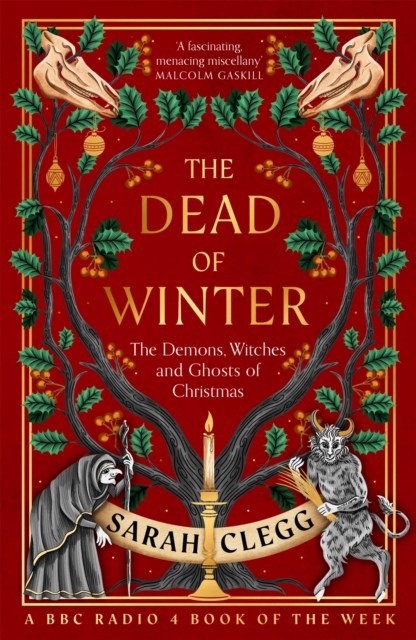
Dead of Winter by Sara Clegg (Granta, £10.99)

A fantastic exploration of the darker side of midwinter traditions.
Part history, part travel writing, Clegg takes us on her travels around the UK and continental Europe in search of the darkest folk practices of the festive season, served up with side of snarky wit. We meet anarchic horse skulls in Wales and Kent, go on a night walk in the cemetery to catch a glimpse of those who will die in the new year, attend a parade of horned Krampus monster who beat festival attendees with birch sticks. The book is at well researched without getting bogged down in academic language. Oh, and don’t skip the footnotes – they would make Terry Pratchett proud

–Kate

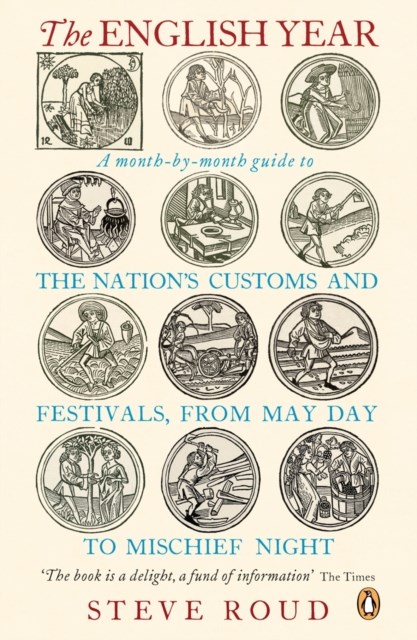
The English Year by Steve Roud (Penguin, £14.99)
A deep and rich guide to the customs, festivals, and seasonal traditions that shape the English calendar. Month by month, learn about the folklore, history and how celebrations evolved and what they reveal about everyday life. The book works equally well as a reference to dip into, or as a leisurely read from cover to cover. Ever informative for the many years I have owned a copy, it has always given me an appreciation for our national cultural rhythms.

Carl

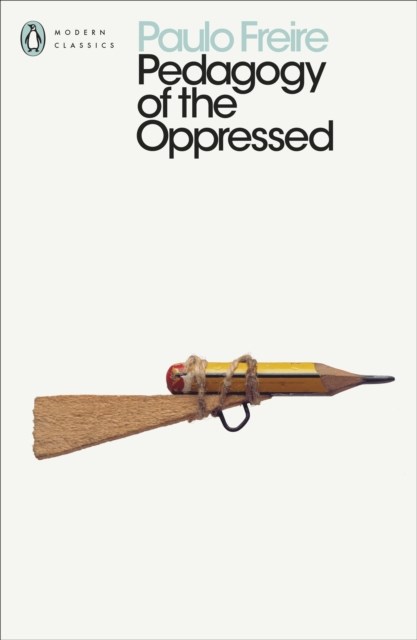
Pedagogy of the Oppressed by Paulo Freire (Penguin, 9.99)

Pedagogy is evergreen! Making this a seasonal pick not just because we’ve had two busy non-fiction book group discussions on it in the last month, but because it still feels so relevant to community organising and approaches to teaching and learning today. Within Nottingham we’re seeing huge changes proposed to higher education courses, including potentially losing all modern language degrees in the city. Thinking about alternative approaches to education, value and community feels more important than ever and Freire, although not the easiest to get into, sets out a roadmap for meaningful connection and transformation.

–Sarah

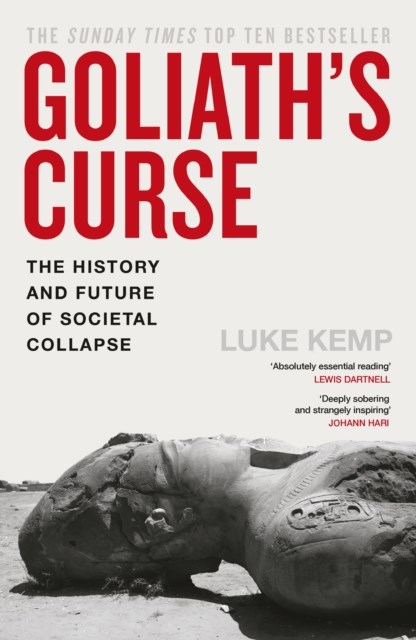
Goliath’s Curse by Luke Kemp (Viking, £25)

Unsettling, but also strangely hopeful, Goliath’s Curse is a history of societal collapse, tracing patterns from ancient empires to modern global states. He argues that extreme inequality and elite hubris have always weakened “Goliath” powers (Russia, China, the U.S. etc), making them fragile despite seeming invincible. The book mixes deep historical research with urgent warnings about possible ‘catastrophic collapse’ from the convergence of climate change, inequality, AI, and nuclear risk. A morbidly fascinating (not sure what this says about me) survival manual for the future. How likely? You can only judge for yourself.

–Carl

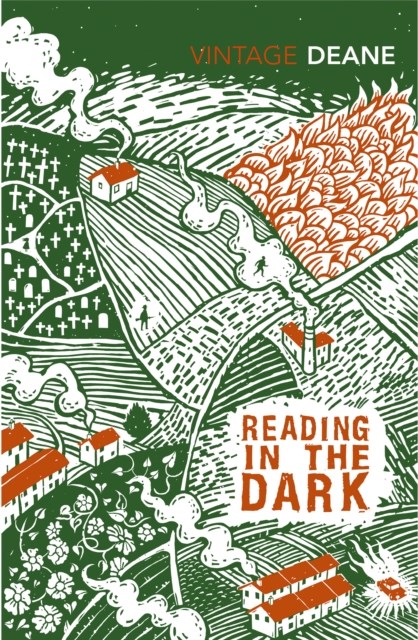
 Reading in the Dark by Seamus Deane (Vintage Classics £9.99)

This is Deane’s memoir of growing up in mid-twentieth-century Derry, in the heart of the Bogside. It’s the best book I’ve read about the Troubles, but also a terrific chronicle of boyhood. Deane was a published poet, and it shows. Each of the segments – some only a few pages long – works as a metaphor for the inscrutable society the narrator is growing up in. Deane was slow to admit that this was a memoir, so you will often find it in the fiction shelves.

Deirdre

Fiction

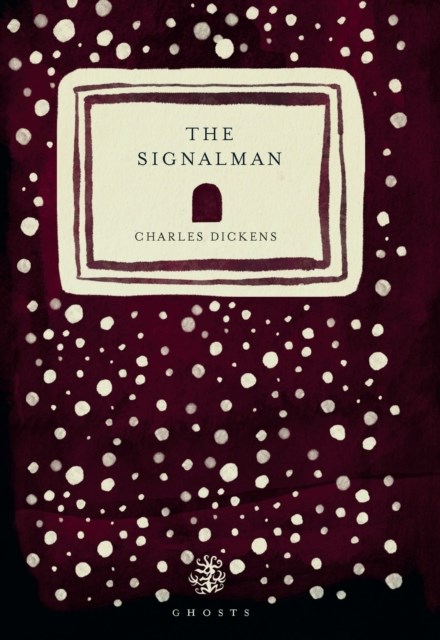
The Signalman by Charles Dickens (Galley Beggar Press £5.99)

Who doesn’t love a ghost story on dark winter’s nights? While A Christmas Carol is the obvious choice, The Signalman is also a haunting and atmospheric story of psychological tension and supernatural mystery. A troubled railway signalman sees a figure no one else can see, hears bells ringing in his signal box when no one else does… A cautionary reflection on technology and a warning against isolation. Short yet memorable, it is arguably Dickens’ most compelling exploration of fear and fate.

Carl

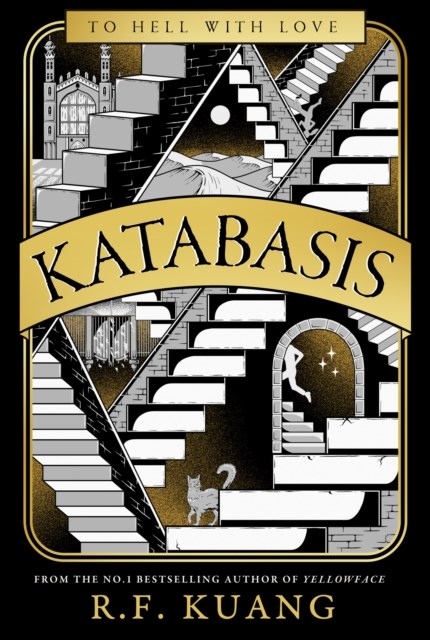
Katabasis by R.F. Kuang (Harper Collins £22)

Does a sojourn in Hell count as seasonal? I’m saying so (for this newsletter at least!). I think there’s something wonderful about delving into a chunky book as the evenings close in, and this one doesn’t take itself too seriously, while also pulling from a huge range of work on the afterlife. What’s a sleep-deprived perfectionist to do when they accidentally kill their thesis supervisor and one of the most renowned scholars to ever live? Go and bring him back from death, of course! If you’ve thought about reading Dante, but never quite got round to it, why not explore the underworld through this tongue-in-cheek Cambrigian iteration instead? You’ll have more fun!

Sarah

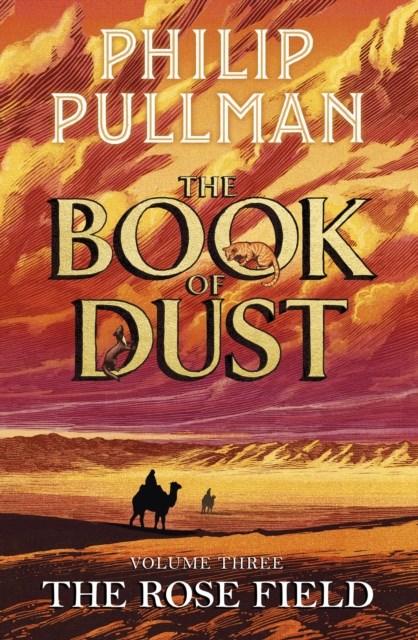
The Book of Dust trilogy

There was something not quite right about Northern Lights, I never worked out what it was although I read the trilogy twice. However, I love The Book of Dust. There is humour scattered throughout that makes me laugh out loud, and the commentary on our world sneaks through every now and then to make me think. And it’s a rip-roaring yarn, full of adventure and mystery. The first book tells how Malcolm Polstead and Alice Lawson save baby Lyra from the tentacles of the Magisterium’s CCD (secret police a la Stalin-era Russia). Then the second and third jump forward 20 years to tell what happens when Pantalaimon leaves Lyra to find ‘what she’s lost’, and Lyra hunts for him along the Silk Road, also following the trail of the rose trade, which is in danger from the unfathomable and violent Men from the Mountains.

–Pippa

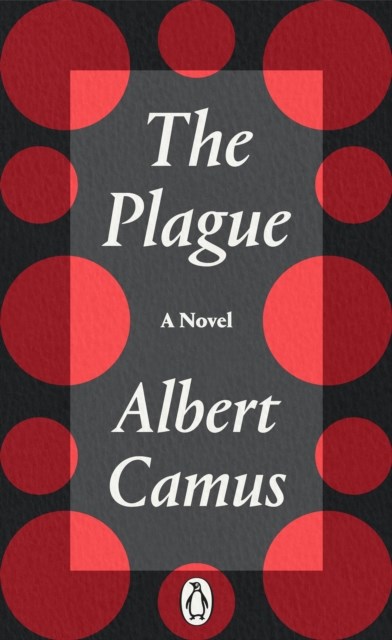
The Plague by Albert Camus

OK, it’s Christmas, but let’s pretend otherwise as I want to recommend The Plague, and it’s really just not that seasonal. Camus’ novel is about an imaginary plague in the real Algerian town of Oran, first published in French in 1947 and set in the forties. At first it was rodents coming out and dying, singly, then in numbers, then the first people started to get ill, and then… well, you can imagine the rest. How did people react? The main clergyman in town blamed the people for this wrath of God, Doctor Rieux does what he can to save people, a visitor tries to do everything he can to leave the town but nobody is allowed to leave. Meanwhile the body count rises, and the dead need to be buried. How do people cope?
It was hard to read this book post-COVID and at the time of the COVID inquiry and still see the book just as an historic classic. Everything we thought and felt during the pandemic is here. Camus was prescient, though writing about the plague of the far right of his time.
The most telling sentence in the book though is from the narrator, whose identity is revealed only late in the book. They remark “I had continued to be a plague victim for all these long years”.

–Ross

To Be Young, Gifted and Black by Kadiatu Kanneh-Mason

We went to hear Dr Kadiatu Kanneh-Mason talk about her latest book at Five Leaves Bookshop partly because two of our grandchildren are Black and we wanted to understand better how they might experience life here in Nottingham. She, and the book, certainly fulfilled our hopes.
    The book is inadequately classified by the publisher as “music/ memoir”. It is that, but it’s more than that, profoundly political at a time when the political narrative is being deliberately infected with racist notions of what it is to be English or British – other identities not welcome. Her description of the education system and its role in restricting opportunities by class and race, particularly in the arts, is equally political. And damning.
    The book is all about identity and who is “allowed” to play what music and be present in what musical surroundings (see also sofa adverts), with music as a representation of society at large, starkly highlighted by her family’s exceptional talents. It’s also about dual/ multiple identities and how we identify ourselves differently under different circumstances: national, local, football club, political affiliation, religious, race, class, gender, profession and more, by no means all mentioned in the book. It’s mostly the visible identifiers – like punk gear, t-shirt design, workwear and, of course, colour – that are immediately obvious and reacted to.
    The “memoir” format allows her, and her children in particular, to meditate on their own identities, experiences and perceptions, in a very relatable way. No academic jargon or polemic, just lived reality in relation to being Black – which is just what we were looking for an insight into. I hope that reading it will have helped prepare us for conversations that may come up in future.

Very glad I read it.

Kristian Ravnkilde

Staff Recommendations October 2025


Two Reviews for Halloween

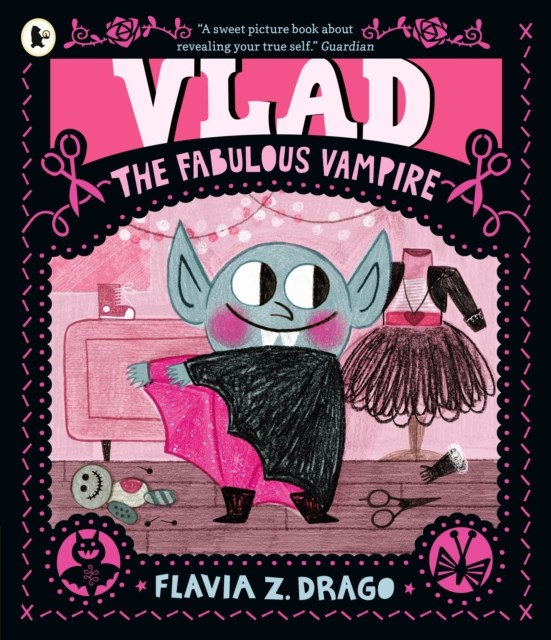
Vlad the Fabulous Vampire by Flavia Z. Drago – well, really (Walker, £7.99)

Vlad was an ordinary everyday, fashionista vampire. He looked cool dressed in traditional vampire black, except his rosy cheeks made him look horribly alive. It was really hard to keep his cheeks covered, so he became a shy vampire. Until an accident happened to the bat hat of his friend Shelley and her – aaargh – pink hair was revealed. With mutual support, the twosome realised that even the most stylish vampires could vamp it up without just being dressed in black, and a new world was open to them. With apologies to our Goth customers.

Ross

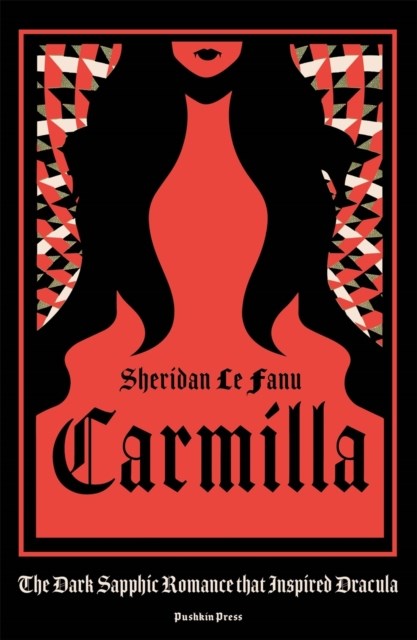
Carmilla by Sheridan Le Fanu (Pushkin, £8.99)

As Halloween and Samhain approach, and the weather turns grim, there’s nothing better than curling up with a book of spooky stories. One of my favourites is the classic vampire novella Carmilla. Considered to be the first literary depictions of a vampire it predates Bran Stoker’s Dracula by some 26 years, although stories in the oral folk tradition have been around for much longer. It’s an uncanny story of a friendship between two young women, fraught with sexual tension, and one is certainly taking more from the relationship than the other. Pushkin’s new paperback edition features a star red and black cover with red page edges, to help readers recover any Gothic image compromised from the book above.

Kate

…and more for the rest of the year

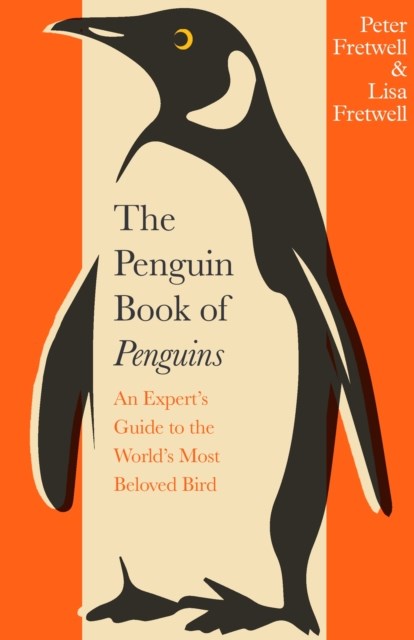
The Penguin Book of Penguins: An Expert’s Guide to the World’s Most Beloved Bird, by Peter Fretwell, Lisa Fretwell (Penguin, 14.99)

After ninety years, Penguin has come up with the most bleedin’ obvious Penguin book ever. We imagine everyone in the Penguin colony slapping their collective foreheads and shouting “Of course” and giving a promotion to the person who thought of it.
But is it any good? Yes, because apart from the delightful Penguin endpapers, scientist Peter Fretwell (with fine illustrations by Lisa Fretwell) plays it straighter than a penguin can walk covering the eighteen species of penguin, their habits, their environment, their evolution and their relationship to humans. Well, straightish, with just a few penguin-like waddles, because it would be a shame not to be diverted along the way.

Ross

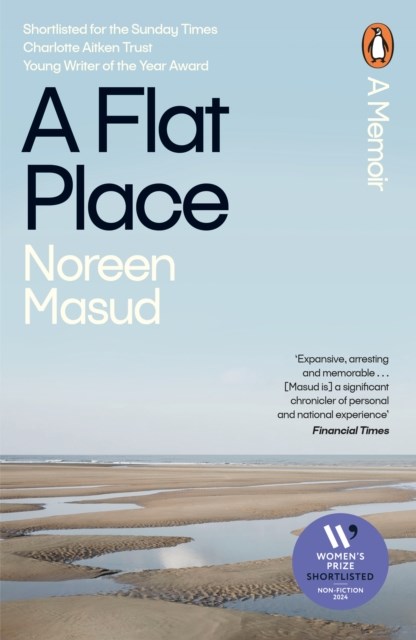
A Flat Place by Noreen Masud (Penguin, £10.99)

As someone who enjoys staring out of train windows at flat landscapes, this book intrigued me. The author identifies her traumatic childhood in Pakistan with flat landscapes, which become both an escape and a liberation. She visits flat places in the UK, including the Fens and Orkney, connecting them to her past. Her personal insights and observations on how who you are—like a weathered landscape—is shaped by your surroundings is fascinating. A great read!

Giselle

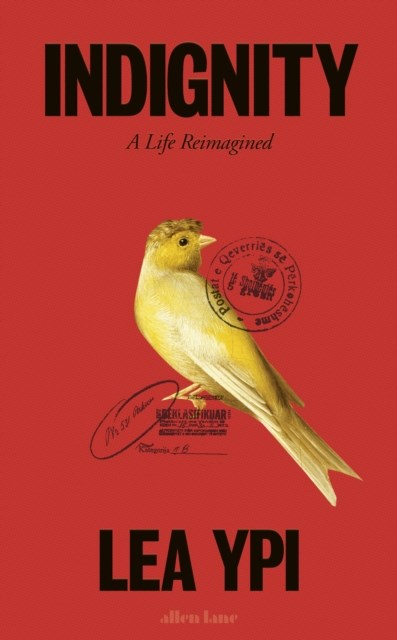
Idignity: A Life Reimagined by Lea Ypi (Penguin £22)

Ypi’s new book is a joy to read and a nightmare to know where to shelve in the shop! It’s a form of intensely researched creative biography, trying to both uncover truths and honour memories of her grandmother, Leman. Through following Leman’s journey, we’re offered an intimate insight into central European histories throughout wars, collapsing empires and occupations. An adventure through the archives, Ypi reconstructs and creatively imagines conversations and encounters that shaped her grandmother’s life, drawing from informant interviews and prison confessions, as well as family anecdotes and the author’s own memories. I listened to this as an audiobook on Libro.fm and really enjoyed hearing the author narrate such a personal account.

Sarah

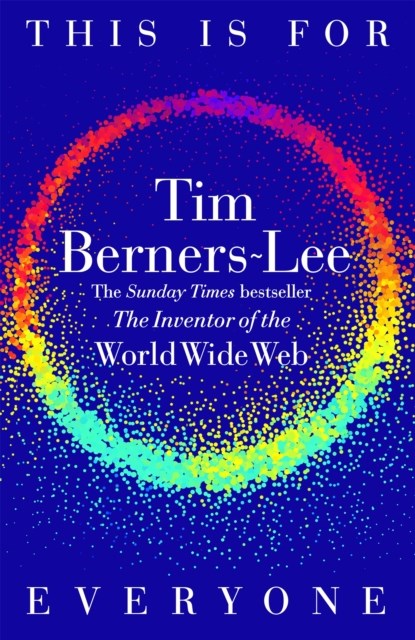
This Is For Everyone by Tim Berners-Lee (Macmillan, £25)

The inventor of the World Wide Web offers a reflective and questioning look back at the technology that now infuses all of our daily lives, for good or ill. Blending memoir, tech history, and a call to action, Berners-Lee reflects on the original ideals behind the web—openness, decentralization, and universal access—and how far we’ve drifted from them.
Covering ever relevant and pressing issues like data ownership, privacy, misinformation, and big tech, he reimagines the web not as a tool for exploitation, but as a force for good, and while some sections slip into technical jargon and ideas that only the geeks among us will find fascinating (yes, guilty!), it remains largely readable and remains highly relevant to all of us.

Carl

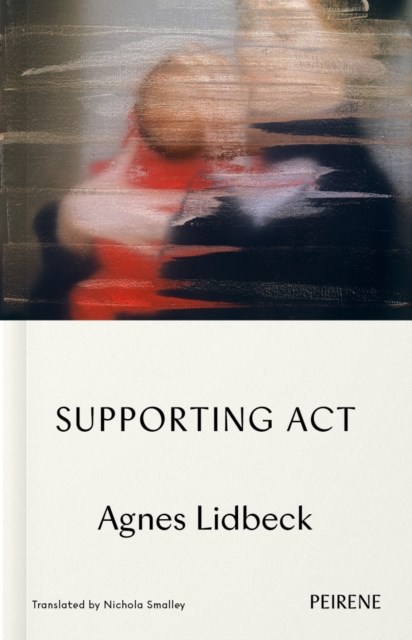
Supporting Act by Agnes Lidbeck, Trans. Nichola Smalley (Peirene £12.99)

We were lucky enough to have Agnes and her translator Nichola Smalley come to do an event on translation earlier this month- an evening which prompted me to read Lidbeck’s first book to be translated into English, Supporting Act. This book is brilliant! The writing is sparing with a dry sense of humour, conveyed brilliantly in the translation. The literary equivalent of splashing cold water on your face to wake you out of mundane patriarchal malaise. This is a feminist novel that took Sweden by storm – and for good reason. Our protagonist is trapped in societal expectations and demands on how she performs womanhood: her roles as mother, lover and carer; but the novel also challenges how self-imposed these trappings are by her own complacence and apathy. I raced through this and have bought two copies as presents since!

Sarah

Staff Recommendations August 2025


What We’re Reading

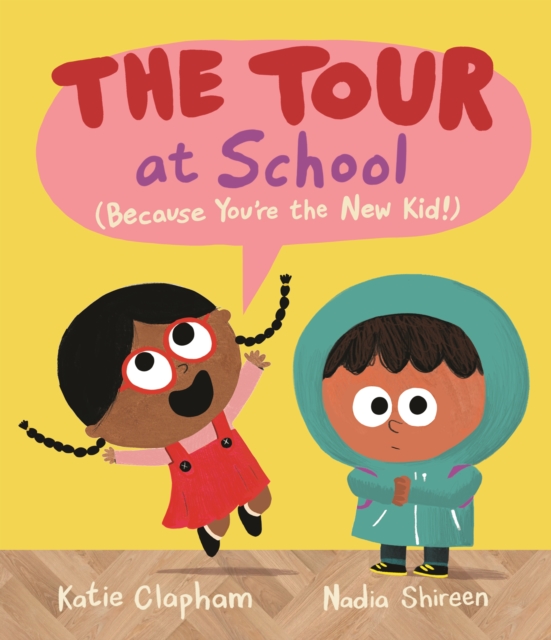
The Tour at School by Katie Clapham and Nadia Shireen (Walker, £12.99)

For the new kid in the school, get ready with this tour. Given the book is for small children, we start with the toilets. Great for singing in because the echo is amazing, but weeing is good too. The playground, an emergency place, Gary the fish, and – last but not least – the library. All you need now are some friends. The book is useful too to go back to after a year, say, so the child can talk about the things they know and perhaps give a tour themselves.


Ross

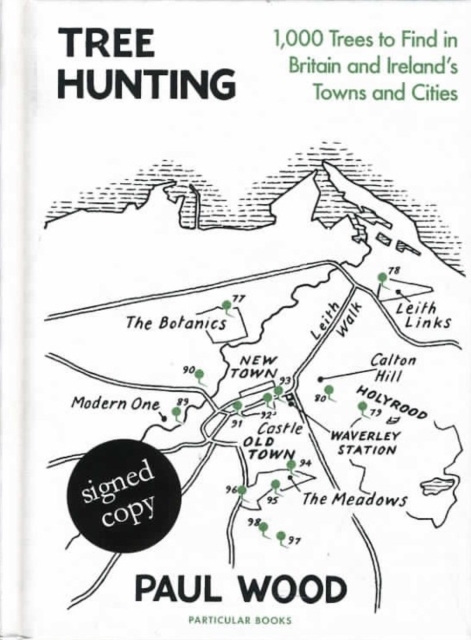
Tree Hunting by Paul Wood (Particular Books, £30)

1,000 trees to find in Britain and Ireland’s towns and cities is the subtitle, so, Nottingham then… And why not start from the bookshop.  Turn left out of our alley and in four minutes you can be looking at the Yellow Catalpa on Carlton Street at the start of Hockley. Turn right at the end of our alley and wander down to Castle Boulevard to find one of the best London Plane trees. And then there’s the Arboretum (the Arbo if you are young), and the huge fig tree hanging on a cliff beside the Contemporary, and the 500 year old oak at Woolly Park, the Medlar on University Park…
Pick a town or city and check out what’s there in this wonderful 500 page gazetteer.
Some places, said Paul Wood (a nice bit of nominative determinism there) have their own smaller tree guide. Anyone here want to write one?

Ross

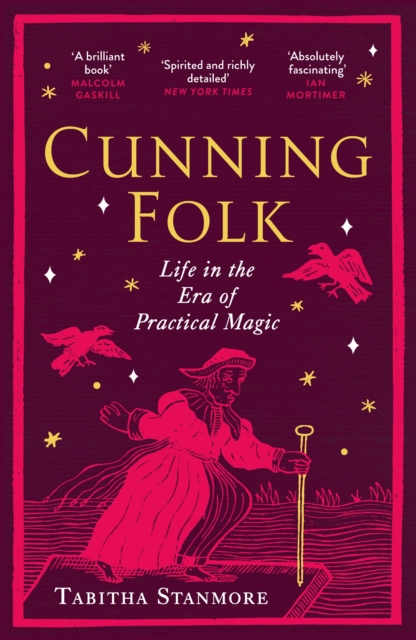
Cunning Folk by Tabitha Stanmore (Vintage, £10.99)

There’s been a lot of interest in recent years about the persecution of alleged witches, but until now, not much has been written about cunning folk, who were considered a different sort of magical practitioner and were more tolerated by society. Stanmore gives a highly entertaining account of the services they offered, including healing, recovering lost items, and even finding buried treasure, as well as an explanation of the roles they played in late medieval and early modern society.
There also some real oddities in here, like the man who returned from Spain with a human head in his luggage, to be used for divination. The authorities decided that since the head didn’t belong to one of the King’s subjects, no crime had been committed, but they did confiscate it none the less. I wonder if they just couldn’t work out the import duty to put on it…

Kate

Sweet Thames, Run Softly Till I End My Song by Frances Thimann (Big White Shed, £9.99)
Sweet Thames is the third thin collection of short stories by this Nottingham writer that I have read. All have been worth returning to, at least to pick out favourites to reread. In this collection all the stories have a classical music or opera connection, which works well, particularly ‘A world and one letter’ where a non-musical furniture repair worker discovers feelings of empathy for a singer who retired, having lost her voice. She sits alone listening to her old records. Records which the worker discovers have a great meaning for his partner, whose relationship with him is falling apart.

Ross

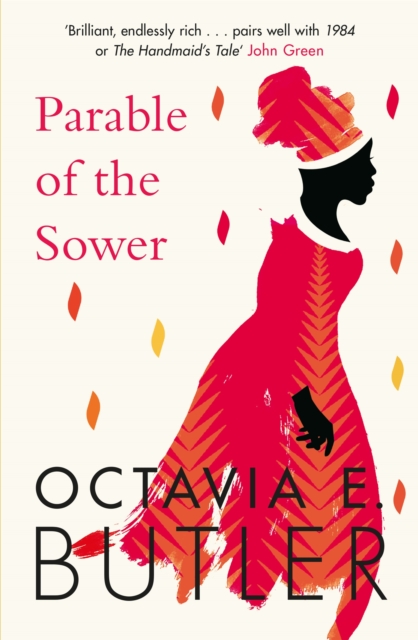
Parable of the Sower by Octavia E. Butler (Headline, £9.99)

I rarely reread books (there are so many more waiting for me!) but occasionally book club forces my hand. This month, I couldn’t be more grateful for that being the case. Returning to Butler’s dystopian world, set in our present, has been rewarding and haunting in equal measure. The text remains fresh, engaging and disturbingly prescient. Never has fiction felt more like a natural tool for survival.

Sarah

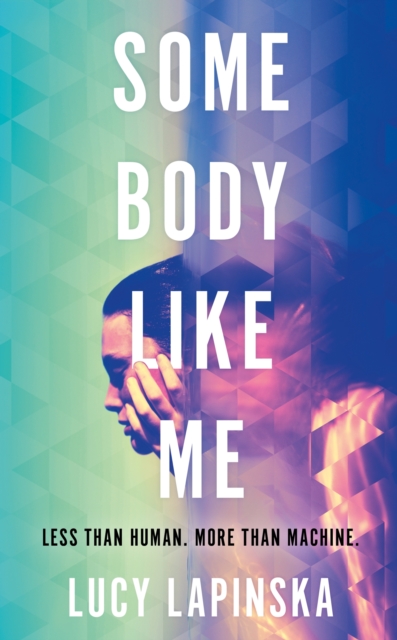
Some Body Like Me by Lucy Lapinska (Gollancz, £20)

Humans have pushed the planet close to the point where they cannot survive, and Personal Computer Companions (androids) have been developed to the point of sentience, although they are still subject to human orders. The story starts with Emancipation Day approaching, when all PCCs and humans will have equal rights. Abigail is David’s PCC, illegally made in the image of his dead wife. As her freedom approaches, it becomes increasingly important that PCC Abigail finds out what happened to human Abigail. This is a dystopian novel with a difference, examining what it means to be human and what it means to be a sentient non-human alongside a cracking plot full of twists.

Pippa

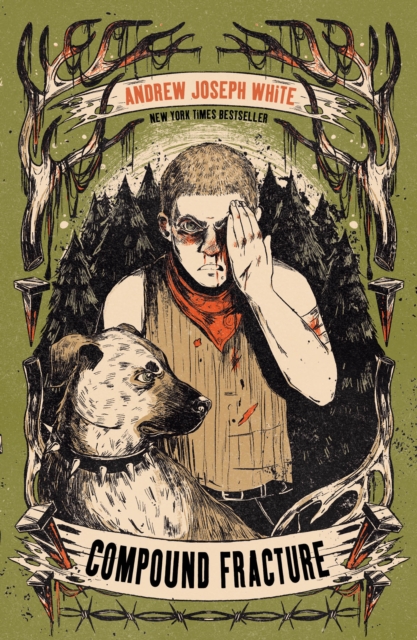
Compound Fracture by Andrew Joseph White (Daphne Press, £9.99)

Queer, trans, autistic and disabled people find community and fight the violent institutional powers in small town Appalachia. What’s not to love?! This YA book connects the rich history of working class resistance to today’s impoverished communities, abandoned and written off by many as “stupid rednecks”. Also, our protagonist is haunted by the ghost of a mining union organiser.

Sarah

Under review – Remembering by Julie Gardner (Five Leaves, £7.00)

Julie Gardner offers deeply personal insights that elegantly interweave to form emotionally resonant narratives. Remembering’s two main sequences, focusing on her mother and her own late husband, guide the reader through a wide emotional range, from sorrow to tenderness, and on to quiet reflection.

Whether in the hope-filled ‘Intermezzo’ or the quietly poignant ‘Embrace’, Gardner compels the reader to follow through each thread. While the individual poems stand on their own, the full impact of themes like time, legacy and love emerges most powerfully through the cumulative flow of the sequences.

Particularly affecting are the poems dedicated to her husband, Arthur, which leave a lasting impression without ever feeling overstated.


And when at first you began to slow,
in my new-found optimism, I believed
it was me who was getting faster.
(‘A New Year’s Resolution’)

The musically inspired titles that follow Gardner’s mother (‘Da Capo’, ‘Rondo’ and ‘Morendo’) add a layer of rhythm and song echoing the cadence of the poems themselves. There is a quiet innocence to the use of ‘Jack and Jill’ within these poems, who we are allowed to follow and imagine into adulthood, lending the reality of the situation yet more gravity the further you lean into the playful, rhyming lilts. Love and care shape every poem in the pamphlet, which is clear in the call-backs to the two bookending poems from Arthur Gardner himself (‘Blessings’ and ‘Messages’). This gives the feeling of a gently circular,
shared memory we’re revisiting. The moon through the window appears throughout the sequence, becoming the symbol of memories that are at once fleeting and constant, but ever luminous.

What would you say if you could
Come and see me now? I think I know.
You’d whisper blessings, show me how
the moon still shines into my room at night.        (‘For Arthur’)

Review by Nathan Fidler

fiveleaves.co.uk/product/remembering/