
Newsletter: 16 Sept 2026 News and Book Reviews
Hello Readers,
This newsletter concentrates on what some of us here are reading, and what we are publishing. Our events – as always – are listed on our website, and there’s plenty of them. Many sell out…as we go to press our talk by Owen Jones over at Himmah has just been booked out.
Publishing then…
 We have reprinted our Leaves of Southwell in paperback. This was a facsimile hardback of the 1945 edition, text by Nikolaus Pevsner and photographs by FL Attenborough (yes, father of…) with a new introduction by Gillian Darley. We should perhaps have continued to print the hardback as it was a nice chunky edition (mea culpa) but at least it’s out again! Winter in the Bookshop by Sylvia Riley has also been reprinted – our memoir of “poverty and politics” in the old St Anns, based round the second hand bookshop there, which was also the world headquarters of a Trotskyist movement. All life was in St Anns in the 60s. We have a new edition of Colin Wilson’s autobiographical novel Adrift in Soho. The title will do for a precis of the story, but for this edition Colin Stanley has written a new introduction.
Our recent Caribbean Pioneer Gardeners about the Windrush generation allotment-holders on Hungerhill Gardens, St Anns, is about to go into reprint after only a few weeks. We have 29 copies left, which will not be enough for the exhibition and event at Beeston Library… see our events pages. Thanks to all who have promoted this book, especially Kemet Radio, the local Black and Caribbean station.
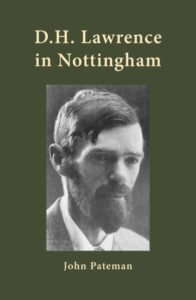 And then it’s our sixth, seventh and eighth book on D.H. Lawrence and his circle. D.H. Lawrence and the Gypsies has been mentioned before but we’ve only just done a talk on the book, at the D.H. Lawrence Birthplace Museum, which was full. Last Friday the author, John Pateman, ran a guided walk for his latest, D.H. Lawrence in Nottingham, which is out now. That walk ended with afternoon tea in the sunshine in our alleyway. We’ll run it again down the line. Finally, we have a new edition of Jessie Chambers’ memoir D.H. Lawrence: a personal record, with a new introduction by Kate Foster. Kate has done a lot to keep the memory of Jessie Chambers and Haggs Farm alive as an important part of the Lawrence story. To be launched in Eastwood, then later sometime here.
Poetry
We’re currently revamping our poetry section, having discovered we have so many books unsold for two, three, four or even five years. The good news is that our in-store sale of these books at between 25-75% has resulted in a lot of poetry books being sold. The sale continues (in-store only) until September 20.
If you want to talk about poetry, we recommend our friends at Nottingham Stanza – they are now meeting at the central library where they are already picking up new members.
What We’re Reading: Non-Fiction
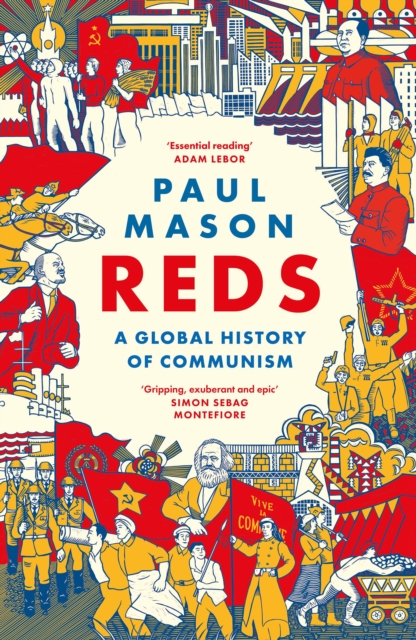 |
Reds: A Global History of communism by Paul Mason (Bloomsbury £30) A brick of book, which manages to be too big and too small at the same time. It’s a narrative history, starting with utopian thinkers and ending up with the current market communism of China. He races along, concentrating on the most important bits – the Russian Revolution, Stalin, Spanish Civil War, Mao, the hereditary communist kingship of North Korea, Prague Spring, it’s all there. Too big because it tries to do the impossible cramming everything in, yet too small as every story is only partly told. The Holodomor, for example, the mass famine in Ukraine gets two pages. Specialists will know this stuff. People who want a quick guide but who have done some weight-lifting will be happier. –Ross
|
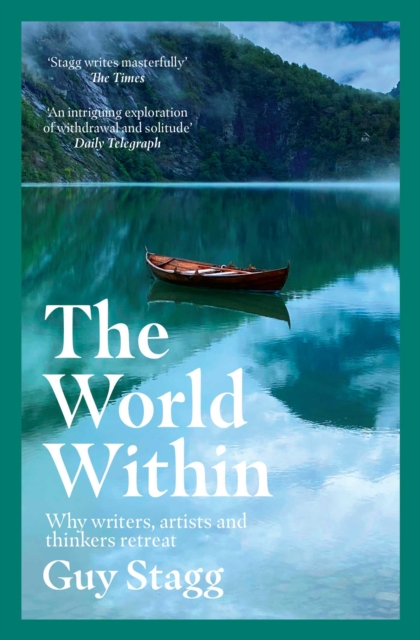 |
The World Within by Guy Stagg (Scribner £10.99) Guy Stagg takes a journey through the lives and minds of three of the last century’s most fascinating thinkers, the philosopher Ludwig Wittgenstein, the poet and painter David Jones, and the writer, philosopher and ‘secular saint’, Simone Weil. They all had one thing in common, the need to retreat and withdraw. Blending history, travel and biography, of himself as much as his subjects, it is also a literary pilgrimage of sorts, through a wandering, circuitous route, without a fixed destination. Both relaxing and meditative. Also a gentle call to ‘action’ and resistance through rest and inactivity. Not so much throwing yourself on the gears of the modern world, more ignoring them altogether and letting them rust. –Carl
|
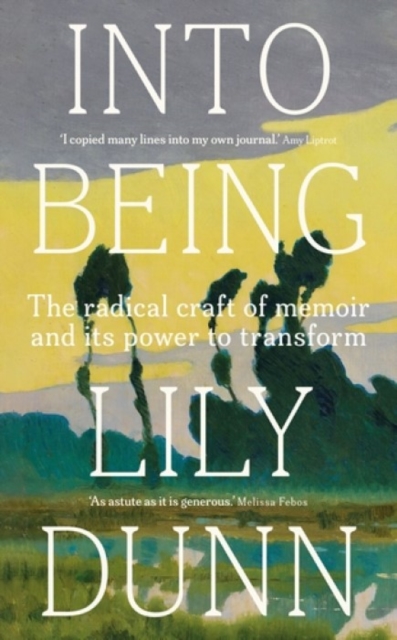 |
Into Being: The radical craft of memoir and its power to transform by Lily Dunn (Manchester University Press £10.99) I’m writing a memoir at the moment and have read a lot of how to books. This was my favourite and the one that got me unstuck when I was unsure how to proceed. Insightful and practical, it dives deep into why we write memoirs, how the writing changes us, and how to craft them, with lots of memoir examples and extracts from author conversations. Highly recommended. –Giselle
|
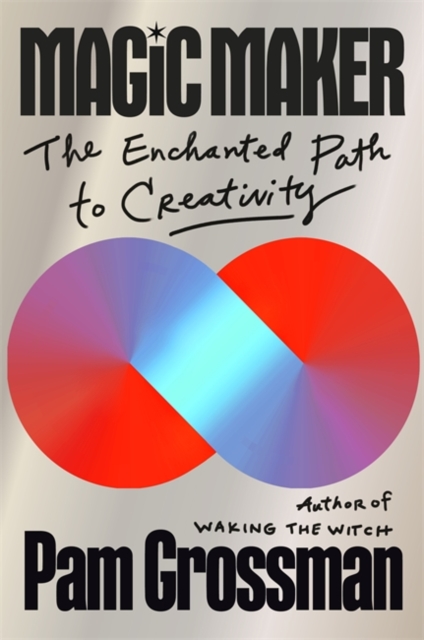 |
Magic Maker: The Enchanted Path to Creativity by Pam Grossman (Hay House £16.99) There are two main strands in this book: one looks at the creative and (in varying ways) magical practices of a wide range of culture makers including the likes of David Bowie, Sylvia Plath, Hilma af Klint, William Blake, and Beyoncé. The other is a practical guide to using magical techniques to unlock the reader’s personal creativity, whatever it is they’re creating, from music and visual art to writing and scientific innovation. The book is at once funny and light hearted – not taking itself too seriously, but also a powerful guide to getting on with turning our creative fantasies into real things, and launching them out into the world. –Kate
|
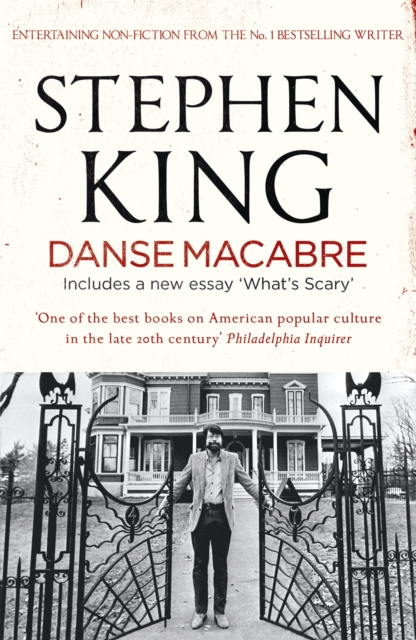 |
Danse Macabre by Stephen King (Hodder & Stoughton £13.99) I’m excited to see this book in the shop. An absolute must-read classic by the master of horror, Stephen King. A mixture of autobiography and observation on horror in popular culture it spans books, movies, radio and TV in King’s wonderfully relaxed style, including commentary on his own novels. It will keep you reading as much as his novels do. Originally published in 1981, this version includes a new essay called ‘What’s Scary’. What’s not to like? –Giselle
|
What We’re Reading: Fiction
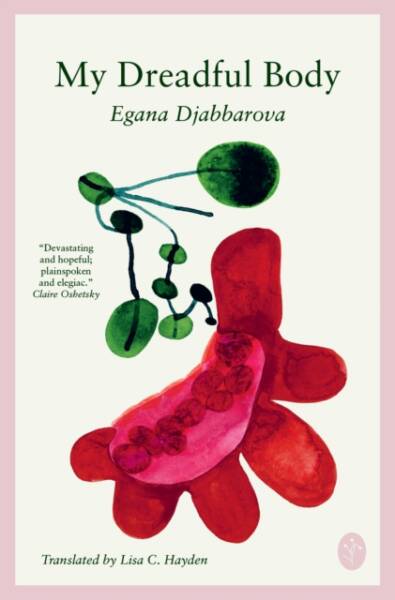 |
My Dreadful Body by Egana Djabbarova, translated from the Russian by Lisa C. Hayden (Linden Editions £12.99)* A brick of book, which manages to be too big and too small at the same time. It’s a narrative history, starting with utopian thinkers and ending up with the current market communism of China. He races along, concentrating on the most important bits – the Russian Revolution, Stalin, Spanish Civil War, Mao, the hereditary communist kingship of North Korea, Prague Spring, it’s all there. Too big because it tries to do the impossible cramming everything in, yet too small as every story is only partly told. The Holodomor, for example, the mass famine in Ukraine gets two pages. Specialists will know this stuff. People who want a quick guide but who have done some weight-lifting will be happier. –Sarah
*not available for web orders at time of posting, email us to order a copy |
 |
Convenience Store Woman by Sayaka Murata (Granta £9.99) Keiko, a 36-year-old woman who has worked in a convenience store for most of her adult life, finds comfort in the store’s routines and rules, but society views her as abnormal because she is unmarried, childless, and working a part-time job. In a short novel that I found sharp, funny, and quietly unsettling, Murata questions what is considered a “normal” life. Through the microcosm of the store, modern capitalism outside, plus the dichotomy of tradition and modernity in Japanese culture is critiqued with a razor sharp efficiency. –Carl
|
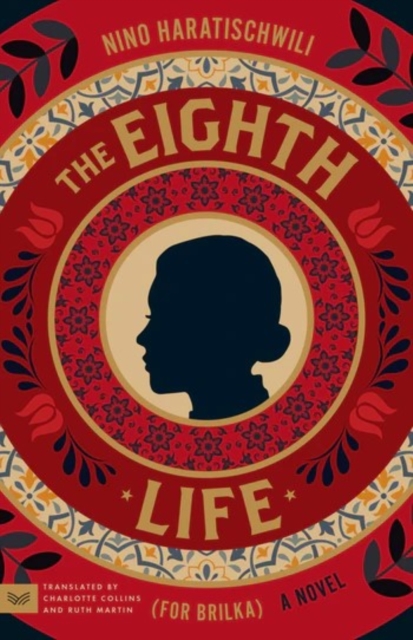 |
The Eighth Life by Nino Haratischwili, translated from the Georgian by Charlotte Collins and Ruth Martin (HarperCollins £20) August was ‘Women in Translation’ month, a favourite focus of mine. This book, which is just shy of 1,000 pages, took up a lot of my month, but I was very happy to spend that long in this sprawling family history. Haratischwili introduces us to a century of Georgian women living through tsarist Russia through to today. We move with them through their highs and lows, through huge political changes, brutal situations and family schisms. Don’t be intimidated by its size, embrace a big book! –Sarah
|
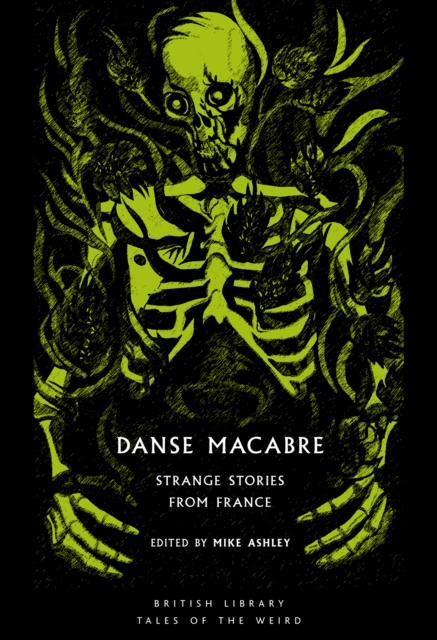 |
Danse Macabre: Strange Stories from France edited by Mike Ashley (British Library £10.99 ) In an unlikely coincidence, I’ll recommend you a second book called Danse Macabre. This is the latest from the wonderful British Library Tales of the Weird series. Almost as interesting as the chilling short stories are the short author biographies preceding each chapter, showing how writers of horror rubbed elbows with philosophers and other literary greats in the salons of Paris in the 18th and 19th centuries. I particularly loved Judith Gautier’s ‘The Serpent Flower,’ a story of botanical horror where a mysterious and lethal plant enacts the revenge of a long-dead, jilted lover. Perfect for reading before bed… if you want nightmares. –Kate
|
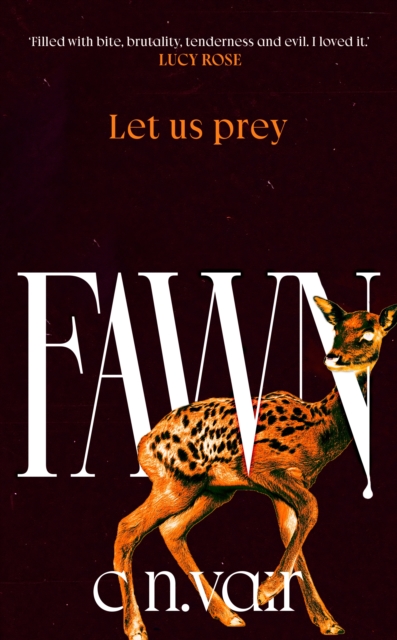 |
Fawn by C. N Vair (3AM Books £20) The first signs of rain and evenings closing in has me reaching for horror to snuggle up with. This is an atmospheric pastoral gothic and was the perfect ease into spooky season. Our protagonist runs a wildlife sanctuary and is called to rescue a fawn that there is something unnatural about. There’s a fight for land, a zealous pastor, witchcraft, greed and the devil himself. I really enjoyed the way Vair created a sense of quiet dread throughout this. The claustrophobia of small town politics, fickle friends and fighting for what you’ve built. –Sarah
|