All posts by

We are the Romani People by Ian Hancock (University of Hertfordshire, £9.99)

Five Leaves has a Roma and Traveller section. I’ve written elsewhere (http://fiveleavespublications.blogspot.co.uk/2014/01/five-leaves-and-traveller-books.html) about why we have the section, mentioning this book. And certainly if you want to read one book about Romanies this should be it. Ian Hancock is himself a Romani and a professor of linguistics at the University of Texas, his area being Romani linguistics. Indeed, this book has an interesting section on the Romani language. Though it is not covered in the book, Nottinghamshire has a particularly interesting Romani story. So much so that a few years ago some men in Newark decided to publish a dictionary of “Newarkese”, featuring a pile of words they thought were unique to the town. As far as I know their dictionary never appeared, but every single one of their reported “Newark” words was a standard Anglo-Romani word like jukel (dog) or yog (fire). And it is that town I first visited in 1978 or 79 which had signs, which would now be illegal, in pub windows saying No Dogs, No Gypsies.
Hancock traces Romani roots back to India, the story of the Romani journey to Britain, and the history of prejudice against Romani people, including, worst of all, the Porrajmos (“the devouring”), the Holocaust. More positively, there is a chapter about famous Romanies, including, for example, the actor Bob Hoskins, the singer David Essex and, on his mother’s side, Charlie Chaplin. This book was published in 2002, any later edition would surely have included Eric Cantona, a French Manouche (Roma). The book is particularly strong at images, usually not positive, of “Gypsies”. A later edition would have no problem adding front covers from the Daily Express as an example of prejudice. We Are the Romani people includes discussion points suitable for secondary school use.

Ross Bradshaw
Autonomy: the cover designs of Anarchy 1961-1970 (Hyphen, £25)

The bookshop stocks quite a few books that were turned down by the publishing wing of the Five Leaves empire, usually coming out from more appropriate publishers – some bigger, some smaller. This book is one of them. I loved the idea – colour images of Colin Ward’s Anarchy magazine, with supporting essays – I just could not see how it could be produced economically, 100+ full colour images and information about a long-dead magazine that never sold more than 2-3,000 copies. Anarchy was hugely influential though, taking up issues like adventure playgrounds long before anyone else, with lots of important writers cutting their teeth on the mag. The Rufus Segar covers were in advance of their time… but how to sell it?
Fortunately, Daniel Poyner found a much better publisher in Hyphen, which only publishes in the field of graphic design, and which can reach a market outside of political archaeologists.
And what a job they have made of it. £25 is a lot for a paperback book, but it is worth every penny. The supporting essays are by the late Raphael Samuel, who understood the importance of Anarchy and Colin Ward’s ideas, and Richard Hollis on Anarchy‘s design in relation to the 1960s. Ward and Hollis have, separately, had an involvement with the publishing side of Five Leaves but we had no role in putting this book, or the contributors together.
Last week someone came into the shop with a satchel full of library-borrowings, a sort of Wardist grab-bag. Did we know of any organisation locally or nationally that brought together those who followed Colin Ward’s constructive anarchism? I admitted failure on this. Ward remains influential – Lawrence and Wishart are bringing out a memorial volume for him this year, and Five Leaves is planning a final volume of his essays, but those who he influenced are scattered. This book – one of those shortlisted for the 2013 Bread and Roses Award for Radical Publishing – will make him better known in the design world. But it is hard to think how a permanent organisation promoting Wardism (a term he would have disliked) could survive as his own generation fades out and the generation he influenced most slip into retirement. But the bookshop is here, in part, because of his influence!

Ross Bradshaw

1948 by Andy Croft (Five Leaves)

Q. What do you get if you cross George Orwell’s Nineteen Eighty-Four with the Ealing comedy Passport to Pimlico?

A. Andy Croft’s 1948

Granted, that’s a glib opener for a review, barely scratching the surface of this inventive verse-novel. Let’s dig a little deeper: imagine a complete up-ending of Nineteen Eighty-Four where Winston Smith is a journeyman copper, O’Brien his world-weary boss, and Julia so impossibly chaste that there’s barely a suggestion of sexcrime on young Winston’s radar. Moreover, Croft swaps Orwell’s dystopian future for a rigorously imagined alternative history where a Labour-Communist coalition is the ruling party, the Royal Family have made a swift departure for the colonies, and America is threatening economic sanctions. Nonetheless, London is hosting the 1948 Olympics but murder, dockyard strikes and a glamorous Russian agent threaten to disrupt the opening ceremony.

Okay, that’s the Nineteen Eighty-Four part of it. Onto the Ealing: imagine Passport to Pimlico as a film noir directed by Edward Dmytryk or Jules Dassin, all fog and shadows, car chases, dames, handguns, and the occasional cosh applied to the back of the head.

Now take one final aesthetic leap and imagine the whole wacky confection drizzled with humour and served up as a sequence of 150 Pushkin sonnets. Picking perhaps the most obscure sonnet form available, Croft dazzles with his wit and wordplay, a feat made more impressive in that he doesn’t just narrate the entire seven chapter novel in verse: the dedication, contents page and acknowledgements are also sonnets. This is the kind of showmanship that could easily have been too clever for its own good, but 1948 remains entertaining and immensely readable throughout. If you’re a fan of Orwell, Ealing, contemporary poetry, or just plain curious about the kind of eccentric talent that throws all of these cultural touchstones into the blender, this is essential reading.

Neil Fulwood
Neil Fulwood has published three books on film. He is a member of Nottingham Poetry Society.

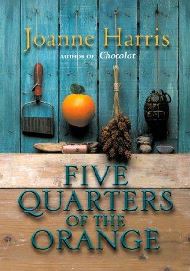
Five Quarters of the Orange by Joanne Harris (Black Swan)

Rhiannon Jenkins Tsang’s best read novel of 2013.

Five Quarters of the Orange by Joanne HarrisLooking back over the novels I have read in 2013, without a doubt my best read is Joanne Harris’s Five Quarters of the Orange; a bitter sweet unravelling of wartime secrets and taboos in northern France. The heroine, Framboise Dartigen, is the sort of dour old French widow I knew as a child in France. Yet even in the 1970s whether playing on the beach in La Baule, cycling round the salt marshes of Guerande, or hanging out in cafes in Tours, a sixth sense told me there were things that one did not ask about the War.

When Framboise buys up her mother’s abandoned farmhouse and returns to the village of her childhood, she takes care that no one recognises her lest they discover her terrible wartime secret. She has inherited nothing from her mother but her old recipe book written in a strange language. She uses it as a basis to start a Creperie, and the little restaurant becomes a success. When her nephew and his wife come down from Paris to persuade her sell her mother’s recipes so they can market them in their Paris restaurant, her cover threatens to be blown.
Just as the nine year old Framboise laid traps and lines to catch “Old Mother” pike on the River Loire, so Harris weaves her story lines around the war memorials, orchards, markets, cafes and farmhouses of the Loire. Deprivation, love, black market wheeler dealing and hardship; all the complex emotional landscapes of the characters are narrated through the symbolism of food and the rhythms of rural life. I tasted the buckwheat pancakes, cider, jams and rilletes. I shivered at anchovies drowning in barrels of olive oil in the cellar, in which the young Framboise hides the forbidden oranges she uses to torture her mother.

The storm scenes over the Loire and ruined harvest, which herald the unravelling of the tragedy, remind me of the best of Francois Mauriac; Mauriac’s Bordeaux pines and rain beaten grape vines are Harris’s Loire Valley fruit trees and wheat fields. I gasped when at last the identity of Framboise is revealed and formality falls away as someone simply calls the old lady by her childhood nickname, “Please Boise.”
This is a brutal yet gentle masterpiece on the nature of the hard part inside- grief. It is a story which in some ways answered some of the questions I myself as a child never dared to ask about life in German occupied France.

Rhiannon Jenkins Tsang

Rhiannon Jenkins Tsang is the author of The Woman Who Lost China, published by Open Books in June 2013 http://www.open-bks.com/library/moderns/the-woman-who-lost-china/about-book.html. She lives in Nottinghamshire.

Division Street by Helen Mort (Chatto Poetry, £12)

How to Thrive in the Digital Age by Tom ChatfieldStill only in her twenties, Helen Mort follows up her Tall-Lighthouse and Wordsworth Trust pamphlets with her first full-length volume. The opening poem, ‘The French for Death’ riffs on her surname and establishes a mordant sense of humour that infuses the collection. The humour is welcome; without it, Division Street might have been a hard slog.

The title poem references a street in Sheffield: “You brought me here to break it off / one muggy Tuesday. A brewing storm / the pigeons sleek with rain.” Location and personal experience stud Mort’s work like pins in a map. In ‘Take Notes’, there’s a sense of curtain-twitching parochialism: “… the checkout girl in the superstore / who didn’t look at me, only what I bought. / You pointed out each lit window in town. / Take notes, you said, one day you’ll write this down.” ‘Take Notes’, along with ‘The Girl Next Door’, ‘Thinspiration Shots’ and ‘Beauty’, forms a loose quartet on the nature of female identity and the struggle against objectification and expectation.

Always, though, there’s the sense of place: ‘Coffin Path’, ‘Brocken Spectre’ and the wonderfully surreal but understated ‘Items Carried Up Ben Nevis’ are anchored by the rugged physicality of the landscapes they describe, while ‘Scab’, the collection’s eight-page centrepiece, shows that the scars of the miners’ strike are still keenly felt and a part of Mort’s heritage: “A stone is lobbed in ’84”, the sequence begins: “hangs like a star over Orgreave. / Welcome to Sheffield. Borderland, / our town of miracles – the wine / turning to water in the pubs, / the taxman ransacking the Church, / plenty of room at every inn.” The sequence moves from alternative parable to Jeremy Deller’s 2001 re-enactment of the battle of Orgreave to the blunt interruption of the poet’s university days by the past: “One day, it crashes through / your windowpane; the stone, / the word, the fallen star. You’re left / to guess which picket line / you crossed …”

Division Street is rich in hard earned and unblinkered experience. It’s a rite of passage with not a single duff poem, announcing Mort as a major new voice.

Neil Fulwood

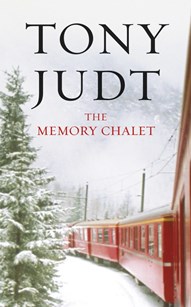
The Memory Chalet by Tony Judt (Vintage)

How to Thrive in the Digital Age by Tom ChatfieldIf my own personal library (God, that sounds pretentious) could have only one type of book, it would be essays. Accessible essays on all sorts of subjects. You can see where the annual Five Leaves essay collection comes from. At the heart of the collection would be a group of books like this one. Excellent essays, fairly personal in orientation, but grounded in experience and an understanding of history and politics.
Reading The Memory Chalet is difficult though, because you are aware that the author was dying when he wrote them. In fact he did not write them, he dictated them as motor neuron disease made movement impossible. The reader is always conscious that these were the last writings by a major writer occupying his well-ordered mind in a productive way. What else could he have done?
The essays I am drawn back to are the more personal accounts – of early travels in Europe, of his disenchantment with Zionism born out of living on a kibbutz, of London bus routes, of manual labour on board a ship, alternating “between scrubbing diesel boilers and throwing up in the teeth of a North Sea blizzard”.
Judt was of the left, at home mostly in the pages of the London Review of Books, but was quite clear about the kind of socialism he wanted – in the 1960s supporting Havel, Michnik, Kis and other “outcast” intellectuals who he saw as the best hope in replacing the “dead dogma immured in a decaying society” that was Eastern Europe under communism, and which also helped him reconnect to his East European Jewish origins.
Judt finishes the book with a chalet – a cafe at a small train stop In Murren, Switzerland – with the mountains falling away into the valley below, with the sight of summer barns you can climb up to. You can wait for the next train “punctual, predictable” or just wait, in a place where nothing goes wrong. Judt was rootless, lived in many places, but he ends “We cannot choose where we start out in life, but we may finish where we will. I know where I shall be: going nowhere in particular on that little train, forever and ever.” And that’s when you cry.

Ross Bradshaw

Gathering the Water by Robert Edric (Black Swan)

Gathering the Water by Robert EdricRobert Edric is a good example of a productive mid-list author who, perhaps unusually, continues to be published despite what can only be modest sales and limited reviews. Save for his three Hull-based crime novels, he is also unusual in that all of his novels seem to be utterly different to each other. His The Kingdom of the Ashes (Doubleday), for example, is set in Allied-occupied post-war Germany where a British officer tries to make sense of those in his charge while Gathering the Water (Black Swan) concerns a washed-up nineteenth century engineer supervising the flooding of a valley on behalf of an un-named Water Board.
Charles Weightman is never sure of his role, knowing only that those whose land is to be flooded resent him. Indeed, he is known as “flooder”. The Board is making money out of the dam, giving little compensation to locals for houses that anyway have little value other than that was their home. Few will speak to Weightman save for an older woman, Mary, recently returned to the area with her mad sister Martha, who we learn will shortly be returned to an asylum. Mary is the only person who sees that “Mr Weightman” as she always calls him, carries his own burden – the recent death of his fiancee – and has no responsibility for what is happening to the land. As the water rises steadily, so does the tension and people leave as refugees in their own country knowing they have been defeated by the Board. What will happen to Mary once her sister goes back to the asylum?
Gathering the Water is – as I’ve indicated – a sombre book. It is a short book, easily read in an evening, which, with only a rare intrusion of an inappropriately modern-sounding word, carries the feel of mid-nineteenth century industrialisation clashing with its victims, including Weightman himself.

Ross Bradshaw

The Examined Life: how we lose and find ourselves by Stephen Grosz (Chatto and Windus)

The Examined Life by Stephen GroszPsychoanalytic writing is not usually for the likes of us, the common reader. The tradition of read papers at conferences even less so. The jargon is often hard to penetrate (no Freudian reference here), but this book was one of my favourites this year. There are thirty or so chapters, case studies drawn from the author’s private and NHS careers. Some resolved problems, some were unresolved. Some of the chapters start with the patient but are perhaps more about the writer. There is no blank canvas here, Grosz is ever-present, not least as he writes about psychoanalysis as a skilled short story writer, but his stories are based on reality, or at least the patient’s perception of reality. This man can write.
Grosz is aware of the basic difficulties for the patient – a friend of his, on his first visit to another analyst’s couch does not know whether it is best to take off his shoes or keep them on. Does either choice convey any meaning? Most of the stories, of course, have deeper problems, rooted in loneliness, bereavement, preparing oneself for death, inappropriate love, the loss of self, abuse. In some cases the patient is a child, and one not-quite-patient is a chance encounter on a long flight who opened up to Grosz.
Most, if not all, of the stories are interesting in themselves – making this the kind of book you want a friend to read (or a book group) then discuss with you.
It also raised the question, if Grosz can write plainly and interestingly about psychoanalysis, could others not try too?
The Examined Life is out in a paperback edition in January 2014.

Ross Bradshaw

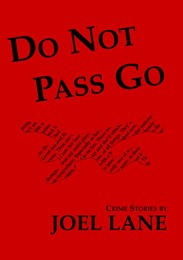
Do Not Pass Go: crime stories by Joel Lane (Nine Arches) and Crime (NWS)

Do Not Pass Go by Joel LaneI read this collection of short fiction by Joel Lane the day after his funeral. I knew Joel slightly and he was a good friend of others I know in Birmingham. His sudden death at fifty was a shock. Joel was starting to make a reputation as a writer of dark fantasy, moving on from his previous work as a poet and a crime writer. His poetry and crime has been published by several good small publishers, this collection coming from the West Midlands’ Nine Arches. Save for the rather utilitarian cover, Do Not Pass Go is a nice pamphlet-with-endpaper production, part of Nine Arches Hotwire series of pamphlet fiction – a series that deserves to succeed.
This collection of five stories is set in the seedy underworld of Birmingham; a place of run-down pubs where one-night-stand pick-ups are best avoided, where blues clubs can give you the blues big time, where builders’ yard tarmac is used other than for road surfacing, where the Gents is awash with drug-dealers and little mercy is given on jobs that could have come from the annals of Murder Inc. And it is always raining. Joel presents the literary equivalent of a what you fear might happen on a late night wait for a long-delayed train on one of the more obscure and badly-lit platforms of Birmingham New Street station.

NWS CrimeNottingham Writers Studio has produced its first sampler – Crime – featuring short fiction by several of its members. The stand-out story is by Alison Moore of Lighthouse fame, much less noir than her usual fare, but a rather tender story which leaves you wanting to know more. It opens in the wake of a minor burglary. As so often with Alison’s stories, her attention to domestic detail creates the atmosphere.

Both collections cost a fiver each.

Ross Bradshaw

Undercover: the true story of Britain’s secret police by Rob Evans and Paul Lewis (Faber)

UndercoverIt’s not often I read a book with a raised cover – you know the sort, the title being a bit bumpy. Clearly Faber thought this book would reach the mass market – the sub-heads “They steal identities. They break the law. They sleep with the enemy.” are also a bit bumpy in another way. And then the cover image of that stupid Guy Fawkes mask, beloved of (some) protesters and (most)  press photographers everywhere. But this book is sensational, and “they” did all of these things, in some cases not just sleeping with their enemy but fathering a child with that enemy.  And a lot of  the action was in Nottingham. If you were on another planet you might have missed the fuss about Nottingham’s Mr Mark Stone/Mark Kennedy, the copper who infiltrated and made himself central to local protest groups over many years. He also made himself central to the lives of the core individuals involved, and had several sexual relationships while undercover. He and the Special Demonstration Squad were eventually exposed. Almost all the policemen and one of the policewomen who were deep undercover, also mostly for many years, had sexual relations with members of the groups they infiltrated. In some case they became instigators of illegal action. It now appears that the famous McDonald’s/McLibel leaflet was written mainly by a policeman and that the tiny London Greenpeace Group who produced it had almost as many infiltrators as activists. Perhaps McDonald should sue the police. The story of the SDS is fascinating reading, though the question remains as to how, psychologically, these long-terms undercover police spies could live with, act with and sleep with people yet have “normal” lives too. What kind of person could do this?

Ross Bradshaw