logo-cropped

Nottingham’s independent bookshop | 14a Long Row, Nottingham NG1 2DH | 0115 8373097

Talking to the Dead by Gordon Hodgeon (Smokestack, £4.99)

If anyone mentions writer’s block, I’d be minded to recommend Talking to the Dead by Gordon Hodgeon (Smokestack, £4.99), just to say, come on, get on with it… Because Gordon, once healthy, writes his poems one letter at a time. He cannot speak, he can only breathe with a ventilator. He writes his poems and communicates with the outside world by blinking at a computer screen. This really is writing at the furthest edge of human endurance.  At least the wonderful historian Tony Judt, who was also incapable of moving, dictated his last essays, having memorised the text during the long nights. Gordon can only blink and his condition has deteriorated since his last, ironically-titled collection Still Life.

Inevitably, Gordon mines his condition for material. The fly that lands on his scalp appears more than once, the second time the poem being in the voice of the fly which ‘taste[s] your sweaty pores/harvest the flakes of skin’ feeling though that his ‘…days diminish, / the rusting leaves spell autumn, / the end of our dominion.’ But ‘We shall return, always, / the world requires us. / We shall assist you, save you, / we shall see you through.’

Perhaps equally inevitably, Gordon mines the past – he has time to think and remember, the time that is lost to us in our more hurried lives. There’s George, the author’s parental grandfather, remembered, and Fred, from the generation when ‘There was your weekly flutter on the Pools. / You sat by the wireless Saturday tea time / checking the results, a win, a draw, a loss… Your winnings fifteen quid over some thirty years. ‘  and then there’s Percy Stott , left behind when Gordon ‘…was the only one to scrape a pass’ in the ‘Mid-fifties, sons of Lancashire, Leigh Grammar’ with poor Percy the targets of schoolboy ‘bloodsport’.

Gordon can no longer speak, but his poems do.

Ross Bradshaw

Poems by Iain Banks and Ken MacLeod (Little, Brown, £12.99)

Poems Iain Banks Ken MacLeodOf all the writers taken from us in the last few years, it’s Iain Banks whose loss I feel most deeply. That loss was compounded on buying Poems, selected and edited by Ken MacLeod and including a sampling of his own work (as per Banks’s instruction). That was when it hit me: this was the last time I’d get to buy a new book by Iain Banks.

Allow me to contextualise: Banks was one of a very few authors whose new book I had to buy on the day of publication; if this dictated a trip out in inclement weather, an early skive from work or a utilities bill ignored for a couple of weeks, then so be it. My fervour extended to signed copies. When Banks’s publicity tour for The Steep Approach to Garbadale didn’t bring him anywhere near Nottingham, I had no annual leave remaining to cover a 600-mile round-trip to Plymouth and my car was off the road following an accident. Undaunted, I hired a car, booked a Travelodge and threw a two-day sickie.

Banks is remembered primarily as a novelist – a writer of both contemporary fiction and, as Iain M Banks, sci-fi. His poetry, as MacLeod acknowledges upfront in the introduction, has been limited to a single piece in a poetry magazine, two poems incorporated into his novel Use of Weapons, and a few lines of verse infusing The Crow Road and Song of Stone.

Poems, then, charts unexpected territory. Unexpected, but not unrecognisable. The best of the poems gathered here – ‘Extract Solenoid’, ‘Mediterranean’, ‘Exponential’, ‘Caucasian Spiritual’ – embody the expansive imagination and spiralling wordplay that characterise his highest achievements as a prose writer; the latter in particular could almost be a dry run for ‘Scratch’, the mind-bendingly experimental short story that closes his collection The State of the Art.

The 45 pages of MacLeod’s poetry accounts for less than a third of the book yet comprises much of its most effective work. MacLeod takes a more traditional approach and is often at his best when he keys into other voices: ‘After Burns: 11 September 2002’ homages both Burns and W.H. Auden in the service of an absolutely contemporary aesthetic, ‘Scots Poet, Not’ is redolent of W.N. Herbert’s loquacious wit, and ‘A Fertile Sea’ (dedicated to Banks) is a sinewy answer-back to T.S. Eliot’s ‘The Waste Land’.


A comparison is worth making: MacLeod’s poetry spans thirty years, Banks’s less than a decade – from 1973 to 1981. It’s as if, for Banks, the form were a proving ground, an experimentation with language, and once he’d set off on the path that would lead to the publication of The Wasp Factory in 1984, it was prose all the way.

I did a stupidly sentimental thing on buying Poems: I posted a photograph of the cover on Facebook with the legend “the swansong”. But it isn’t. Banks’s novel The Quarry, published just after his death, was his true swansong. Poems falls halfway between juvenilia and a glimpse down a path not taken; what’s beyond doubt, though, is that it represents the first great firework blast of Banks’s brilliant and incessant creativity.

 Neil Fulwood

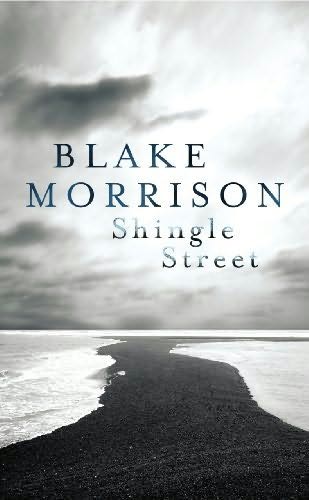
Shingle Street by Blake Morrison (Chatto, £10)

ShingleStreetWe’ll put a copy of this book in “landscape” as well as poetry…

For many years I’d holiday in Suffolk, walking the salt marshes, risking all as the old seafarers’ paths changed with the tides and the storms, under big skies, flat seas and always with a consciousness that the sea was winning, most famously at Dunwich.

One day my then partner, dog and I came across Shingle Street, a hamlet facing the sea on one side or, as Blake Morrison says “A row of shacks in stone and wood, / The sea out front, the marsh out back, / Just one road in and one road out, With no road in and one road out, / With no way north except the spit, And now way south except on foot … A wrecking ground, that’s Shingle Street.” It’s a place where, for a moment you think you would like to live, but know you never will and never could. Like WG Sebald, I never saw a soul there – a position Blake reports then negates with reference to an article by the writer Tim Miller, who does live there.

Shingle Street opens with a “ballad” of the street, which leads on to other Suffolk poems. The collection then turns to a sequence, This Poem, whose star poem is Redacted, the report of a death of a soldier in Afghanistan. The collection concludes with a selection of individual poems, but most readers will return to the opening, elegiac sequence which gives the book its title.

Ross Bradshaw

A Modern Don Juan, ed. Andy Croft & N.S. Thompson (Five Leaves, £14.99)

Modern Don Juan

I
A book judged by its cover, this one’s cute:
…..Byron on the phone. Judged by its pages
(A whopping three hundred and fifty), it’s a beaut –
…..The best epic narrative poem in ages,
Co-written by fifteen poets of good repute.
…..Their versifying excites, provokes, engages
As they resurrect Lord Byron’s anti-hero.
He’s not changed much. Morals still count for zero.

II
The neat conceit behind these ribald rhymes
…..Is a case of o tempora … wotsit? … mores:
The book reflects the hours and the times
…..As our anti-hero romps through fifteen stories
Set in the present day. These modern climes
…..Are taken in his stride as Don Juan forays
Between London, Amsterdam and Budapest
While a spell in prison puts him to the test.

III
Elsewhere, our mad bad lad is quite tech-savvy
…..(Via internet he lines up all his lays)
While another tale subverts his cocksure happy-
…..go-lucky bed-hopping escapades –
Through his interactions with another chap, he
…..Seems to be a Don who swings both ways.
But whichever conquest appears to him like Venus,
The book’s more than just One Man and His … Libido.

IV
Satirical, artful: this book’s the cream – a
…..A cornucopia of style and wit,
Reinventing Juan as DJ, statesman, schemer,
…..Likeable rough diamond, total git.
Rendered in dodgily rhymed ottava rima,
…..Folks, you’ll have a lot of fun with it.
The cover price couldn’t be a fairer deal.
A quid per canto: lovely! It’s a steal.

Neil Fulwood

The North, edited by Jonathan Davidson and Jackie Wills (Issue 52, £8.00)

North_52_coverI know it’s nearly October, but the spring issue of The North has just come through our letterbox, a voucher copy sent because the mag contains a review of Five Leaves’ Things of Substance by Liz Cashdan. An excellent review at that, by John Killick, who remarks “One always knows where one is with Cashdan, she is a kind of verse journalist, and you can piece together most of her life, places she has been, persons she has known, interests she has pursued, by following through this collection. And she has the journalist’s quality of clarity, concision and curiosity.” Killick concludes by praising Liz’s ‘The Names of Wool’, eleven verses of names of wool, when she “achieved a tour de force which should be in all the anthologies.” That would be nice.

Five Leaves – as a publisher – is only a part-time visitor to the poetry world, but this issue also includes an article by Mahendra Solanki about his life’s reading of British, American and Indian poets. Robert Lowell comes out as most returned to, but Mahendra also introduces the work of AK Ramunujan and Arun Kolatkar, new to me at least and perhaps most Western readers of the journal. His article will be useful in preparing an intro for Mahendra’s reading on October 1st at  the bookshop.

There are quite a few poems in the issue from that loose group of “friends of Five Leaves” – Robert Hamberger, who we used to publish; Maria Taylor, due to read in the shop next year; John Harvey, one of our irregulars; David Cooke, who read at out place recently and shared the launch of Liz Cashdan’s collection in Sheffield; Bill Herbert from our new A Modern Don Juan… as well as quite a few others who we’ve anthologised or with whom we have loose connections.

This issue of The North was guest edited by Jonathan Davidson and Jackie Wills and is well worth buying, not least for the longer, thoughtful articles about the craft and the business. My only criticism is that four of the reviewers – Malika Booker, David Cooke , Wendy Klein and Maria Jastrezbska also have books under review in the same.

The North is normally on sale at  Five Leaves Bookshop or from www.poetrybusiness.co.uk and costs £8.00.

Ross Bradshaw

The Hundred Years’ War, edited by Neil Astley (Bloodaxe, £12.99)

the-hundred-years-war-anthology-001Marking not only the centenary of the Great War, but acknowledging that conflict – be it global, civil or religious war – has been a constant for the last century, Neil Astley’s major new Bloodaxe anthology takes us from the trenches to post-millennial terrorism.

As a discourse on both people’s inhumanity and the struggle to retain humanity in terrifying and desperate circumstances, The Hundred Years’ War is best read in sequence – though at nearly 600 pages this presents a daunting challenge. Daunting, but rewarding.

Opening with a 100-page selection from the Great War that eclipses the recent Faber 1914: Poetry Remembers anthology, the expected works by Owen, Sassoon and Rosenberg are supplemented with French, Italian, German and Russian perspectives: poems by Albert-Paul Granier, Giuseppe Ungaretti, Wilhelm Klemm and Aleksandr Blok are hugely powerful and will deservedly find a larger readership. In particular, the twelve no-punches-pulled lines of Klemm’s ‘Clearing-Station’ are an unflinching distillation of his subject.

Poems on Ireland and the Spanish Civil War (Machado’s ‘The Crime was in Granada’, a threnody to the murdered Lorca, is a poignant inclusion) take us up to World War Two. Of the English poems in this section, the weary pragmatism of Keith Douglas and the brutal directness of Randall Jarrell are startlingly distinct voices. Pieces by Brecht, Akhmatova, Zbigniew Herbert and Miklós Radnóti widen the demographic and deliver unforgettable images and eye-witness accounts.

World War Two accounts for almost a quarter of the book. Smaller sections follow on the Korean War (William Childress, Keith Wilson and Thomas McGrath provide American viewpoints, but the weight of this section is borne by Ko Un) and the Cold War.

 Vietnam, The Troubles, and the continuing Israel/Palestine/Lebanon situation offer a broader spectrum of work. The excerpts from Mahmoud Darwish’s ‘A State of Siege’, a piece written more than a decade ago, could have been shaped from this week’s news coverage. Naomi Shihab Nye’s ‘For Mohammed Zeid of Gaza, Age 15′, in which she rails against the throwaway term “stray bullet” sets up a forceful precedent for Brian Turner’s ‘Here, Bullet’ later in the anthology. Turner, of course, writes from the perspective of a US soldier serving in Iraq. Ditto Kevin Powers. Their pieces dominate the Iraq Wars section, although Iraqi poet Saadi Youssef is well represented. Still, the book isn’t about us-and-them dynamics and Astley keeps what Owen called “the pity of war” foremost in mind for the majority of his selections.

The Hundred Years’ War is balanced, sober and reflective. Astley provides a general introduction as well as introductions to each section. Annotations on the poets’ lives and personal experiences of war are informative and unobtrusive. This could easily become the keystone war poetry anthology for this generation.

 Neil Fulwood


It Goes With the Territory: memoirs of a poet by Elaine Feinstein (Alma, £20)

it goes with the territoryElaine Feinstein is the author of sixteen collections of poetry, three collections of poetry in translation, fifteen novels, two short story collections and seven biographies but has chosen “memoirs of a poet” as the sub-title of this book rather than a “writer”, giving away immediately her main interest and leading us to the world in which she made an unlikely entry so many decades ago. Against her was that she was Jewish, provincial, female, unconnected and married with three children before she could really call herself a poet. In her favour, however, was that as a teenager “while other girls dreamt of princes and Hollywood stars, I dreamt of dead poets.”

Elaine went to Cambridge where she wrote for Granta and set up Prospect, publishing Harold Pinter, Denise Levertov and Donald Davie, amongst others, and made friends with Allen Ginsberg. Her influences as a poet were from the west, the Black Mountain poets and Charles Reznikoff and, later, from the east, when she made another reputation as a translator ,particularly of Marina Tsvetieva. Along the way Elaine brought up her children, met internationally famous poets such as Yevgeny Yevtushenko, who kept her up all night drinking, and Joseph Brodsky, who she fell out with over translation.

Her novel Russian Jerusalem manages to bring together all her favourite Russian interests, from Isaac Babel on, and her memoir reveals not a few scrapes as she tries to work with refuseniks in broken down flats in Moscow suburbs. Some of her work reveals profound melancholy, and one reason, outlined in her memoir, was often her difficult but fifty-years long marriage to Arnold Feinstein, a scientist, who was unfaithful and, at times, threatened by her successes. Yet she loved Arnold despite everything, which led to her most recent book of poems Talking to the Dead, a group of elegies for him. The book more or less ends with Arnold’s death in 2012.

It Goes With the Territory will be of particular value to those concerned with the history of twentieth century poetry, but of a wider value to those concerned about how women moved into the world of men in the 1960s and 1970s.

Ross Bradshaw

Bloomsbury and the Poets by Nicholas Murray (Rack Press, £8)

9780992765460For some years Rack Press has been producing quality content poetry pamphlets. Two bookshops stock them – the London Review Bookshop and Five Leaves (not that we are boasting or anything). With this title Rack takes a step forward, with a spine, a barcode and a title guaranteed to sell well in Bloomsbury bookshops at any rate.

The book is short – 52 pages – but packs in a lot of information for people who want to know more about that interesting area ten minutes from St Pancras. An area that Christopher Reid described as “a district of literary ghosts/that walk in broad daylight”.Ian Nairn was pretty dismissive though, saying that “As anything more than an area on a map, Bloomsbury is dead. Town planners and London University have killed it between them – a notably academic victory”. Maimed, but not killed, in my opinion. You can still buy hardware, books and wholefoods in Marchmont Street, sit for free in most of the parks, but the houses that literary Bloomsbury used to inhabit have long become university departments, pack ’em in lodgings, or upmarket hotels. And everywhere is under pressure from the landlords who know the price of everything and the value of nothing.

There’s some proletarians over at Somers Town and odd patches of Council housing, but if a poetry bookshop was to open – like the Poetry Bookshop of Harold Monro of a hundred years ago there would not be many places in the modern Bloomsbury where “The shop was located in a rough area where the policemen preferred to patrol in pairs and the street urchins ran along behind Rupert Brooke when he arrived in his characteristic broad-brimmed hat chanting ‘Buffalo Bill! Bufallo Bill!'” Brooke was only one major figure who read in the dingy back room of the Poetry Bookshop, but the area has many links with good (and some delightfully awful) poets of the past, including the room where Ted Hughes and Sylvia Plath spent their wedding night in a single bed and the house where Andrew Marvell died.

Ross Bradshaw

Survivors: Hungarian Jewish Poets of the Holocaust, edited and translated by Thomas Orszag-Land (Smokestack Press, £8.95)

SurvivorsI J Singer, the lesser known brother of Bashevis Singer, also a Yiddish novelist, wrote in an essay in 1942 of the “tsvey toyznt yoriker toes”, the two thousand year mistake – the thought that Jews could be accepted in Gentile society. Whether Jews sought assimilation or separation, whatever they did, the Gentile world would not accept them. He held this position only briefly, drawing the conclusion that only Jewish nationalism would resolve this situation. This is not a view I share, yet looking at the last hundred years of Jewish life in Hungary, it becomes harder to argue – over that country if nowhere else.

Partially as a direct result of previous oppression, Jews were over-represented in the failed 1919 Hungarian revolutionary government which was followed by two years of anti-Semitic “white terror”.  Jews were just too left wing. The impact of the Holocaust is well known, some 600,000 Jews being killed, with the direct involvement of Hungarian fascists. Many were Christians as the Hungarian laws defined Jews by ancestry rather than religion. This number included the poet Miklos Radnoti, a Catholic, whose poems are included here. Some Christians were just too Jewish. In the wake of the 1956 uprising against the Communists there were further pogroms. And now we have Jobbik, which sees Jews everywhere, including, again, those whose families are long converted to Christianity. It wants them out.

It is with Jobbik in mind that I read this new collection of Holocaust poetry by Hungarian Jews, some of whom were not, unfortunately, as the title suggests, survivors. The poems are more than ably translated and the collection edited by Thomas Orszag-Land, himself a hidden child in Hungary during the Holocaust. The stand out poets are Radnoti and – new to me – Andras Mezei, who did survive the war. But it is a collection that is hard to read, remorseless in tone. In a rare positive moment Mezei concludes a poem “For love redeems the fence of death”, but it really is hard going. Perhaps it has to be.

Ross Bradshaw

Light at the End of the Tenner by Andrew ‘Mulletproof’ Graves (Burning Eye, £10)

Light at the End of the TennerAlready a local legend on the performance scene, Mulletproof’s first full-length collection stakes an immediate claim to cool based on the cover alone. A striking image by Mark Dickson is capped with this quote from Jim Bob (of Carter the Unstoppable Sex Machine fame): “Like finding a great lost Roger McGough collection in a box in the loft.”

It’s a good call: the poems on offer here are as grounded in reality and conversational in their aesthetic as anything by McGough. But the ghost of Adrian Henri suggests itself in ‘Wings’, ‘The Love Tree’ and ‘It’s No Longer Tomorrow, Yet…’ – the latter the most nakedly experimental piece in the collection. In fact, Light at the End of the Tenner is thronged with ghosts: Soviet cosmonauts, rock ‘n’ heroes, suicidal comedians, B-movie casualties, and Jimmy from Quadrophenia riding Ace Face’s Lambretta over the cliffs and into eternity.

 Mulletproof’s subjects are certainly eclectic. From a geriatric Elvis swapping Graceland for a trailer park to deer armed with Kalashnikovs squaring up to their erstwhile hunters (“no more roof rack mortuaries / or tailgate processions // just the sun shot green canopy / and the assurance of a fair fight”), the poems bristle with attitude as they blaze their way through half a century of pop culture, span the globe and (quite literally) shoot for the moon.

But Mulletproof’s hometown is always the anchor. ‘Radford Road’ is an impressionist portrait of Nottingham in all its on-the-streets glory, while ‘Rammel Nitrate: Nottinghamshire Kisses and Laced History Lessons’ whizzes slap-bang through the county’s history, picking out a through-line of what made it the place it is today, while ‘The Loneliness of the Long-Distance Rumour’ sees Alan Sillitoe’s racing-throwing anti-hero eternally on the run.

Clocking in at a chunky 116 pages (steroid poetry in a culture where most collections barely tap out at half that length), Light at the End of the Tenner captures on the page what anyone who’s seen Mulletproof live cherishes about the man: flair, fury and flippancy in roughly equal measures.

 Neil Fulwood