logo-cropped

Nottingham’s independent bookshop | 14a Long Row, Nottingham NG1 2DH | 0115 8373097

My Life, My Body by Marge Piercy (PM Press, £8.99)

For people of a certain age and a certain background, Marge Piercy was an important writer. Her feminist utopia Woman on the Edge of Time is perhaps still read but, at least as a novelist, her star has faded. I’ve read thirteen of her seventeen novels and used to read Vida every year or two, Piercy’s book about a woman in America’s illegal political underground of the 60s and 70s, but the stream of novels seems to have ended.

Some years ago Five Leaves published two collections of Marge Piercy’s poetry. In America she is still renowned as a poet but her collections did not travel well. I met her once, prior to publishing the books. It would be fair to say it was probably not a memorable occasion for either of us. I hope I did not behave like some of her fans described in “Fame, fortune and other tawdry illusions” who expect more from Piercy than the normal relationship between an author and a writer. She writes in that chapter about the way some of her readers would over-personalise the author/reader relationship. Indeed she details the views of her academic feminist critics who thought that she was not living up to their expectations.

Yet it’s precisely her involvement in the causes she writes about that made her books important to so many people, and in this book – a set of essays – she reinforces what perhaps we instinctively knew. She describes her Jewish working-class, hardscrabble background which led her, as a writer, to give voice to women workers on whose labour, for example, universities depend. She describes the reasons she became a feminist, an essay that should be widely circulated, and she describes her involvement in the anti-war scene in America. Unusually for an American writer she also describes herself as a socialist.

Of equal importance to the historical essays are “Gentrification and Its discontents” and “Housewives without houses”. In the latter she talks about meeting homeless women, the hidden homeless of America and in the former – one of the causes of such homelessness – the way cities have become gentrified. In this essay she works her way through the cities she has lived in – Detroit, Paris, New York – talking about the rents she once paid and the rents now charged for the same flats showing how working class people and lower-earning bohemians are forced out. Even in Wellfleet, her Cape Cod home for many years, which has been famed as an artists’ colony, the area has been taken over by people with summer houses. Ironically, a committee set up to look at how to bring more year-round employment to the area had difficulty meeting as several of the committee themselves were only part-time residents.

For those of us who read Marge Piercy in the 70s and early eighties the “personal is political” strap-line mattered. And in America it still does as witnessed by the title essay in the book, “My life, my body” which is about abortion. Piercy talks about her own abortion and her active involvement in supporting women before the landmark 1973 Roe Vs. Wade case which made abortion legal in America. For the pro-life, pro-gun, pro-death penalty right abortion rights are at the cutting edge of their politics with clinics being picketed and pro-abortion doctors being attacked (and in some cases killed). At the same time as the right acts against women’s right to choose welfare is attacked, daycare is limited and Obamacare is threatened. Piercy reminds us who suffers most here.

Ross Bradshaw

Fug You, an informal history of Peace Eye Bookstore, the Fuck You Press, the Fugs and Counterculture in the Lower East Side, by Ed Sanders (Da Capo, £17.99)

FugI came to adulthood just after the 1960s, at the tail end of the Vietnam War, and like many of my generation regret having just missed out on the 1960s. Though I was fined £1 in Glasgow for flyposting against the war, which still raged, the main countercultural changes in the USA, the draft resistance, the Civil Rights Movement, flower power were all over.

Not that I’d like to live through a war like Vietnam again or to have to fight segregation and there were terrible things within the counterculture – another Ed Sanders book was about The Manson Family. In this book he gives his take on the 1960s, a detailed history. Sanders was, with Tuli Kupferberg, the main character in The Fugs, a political rock’n’roll band, and a poet. He was the proprietor of the Peace Eye Bookstore, the editor of Fuck You magazine, a friend of everyone from Janis Joplin to Allen Ginsberg. And when he came to Britain he visited Stonehenge with the poet Michael Horovitz, who I know, which makes me only two steps of separation from Janis Joplin!

Ah, the 60s. This was a period, under Johnson’s Great Society when he introduced “Medicare, Medicaid, the Freedom of Information Act, the Voting Rights Act, a law setting aside millions of acres of public land as permanent wilderness, and [his] executive order on affirmative action.  … At the same time Johnson started up a ground and air war in Vietnam – with napalm, Agent Orange, fragmentation bombs… ” In response The Fugs tried to levitate the White House with the chant “Out, demons, out”.

Ed Sanders lived through it all, but more, in that he was a living link between the Beat generation of Jack Kerouac and the hippie era. Unfortunately, from this bookseller’s point of view, his promised history of the Peace Eye Bookstore is missing. Though the shop is constantly referred to we are left no wiser about what it stocked, other than at one stage he turned the shop over “to the community”. On his next visit he “noted that there were a lot of books in the garbage cans out front.” He was told that “the needed the wall space for psychedelic designs” and the floors were covered in mattresses as “what the community needed was space to crash”. Never anyone suggest Five Leaves is turned over to the community… At least he mentions a book party for the launch of Abbie Hoffman’s Revolution for the Hell of It. 

Apart from campaigning against the Vietnam War and trying to make a hit record Sanders campaigned for the legalisation of marijuana. Drugs were important to him and campaigns for legalisation took up much of his time. That had its dangers – the poet John Sinclair got ten years for supplying a couple of joints “to an undercover cop in Detroit who was pretending to be a volunteer from the Committee to Legalise Marijuana”. The drug parts of the book reminded me of the tedious parts of the counterculture, in Sanders case also hanging round with people who injected harder drugs and who used amphetamines. In my day I was partial to the odd joint (who wasn’t?) but making it the centre of your life seems pretty boring.

Having not read much about the counterculture of late, what is also striking is the awful, awful sexism of the men. Save for his comments that he would not have been so positive about the use of needles  in the Fuck You artwork – Sanders reports what happened, often in great detail and with lots of archive and fugitive material, without  judgement. I found it hard not to be judgemental. I’m glad I read the book but will not be rushing out to find his nine volume verse history of America.

Ross Bradshaw


An Everywhere: a little book about reading by Heather Reyes (Oxygen Books, £8.99)

An EverywhereHeather Reyes is a contributor to the Five Leaves’s book London Fictions, writing about Virginia Woolf, and is the editor of the city-pick collections of literature from the world’s best loved cities. Our paths have crossed a few times over the years so I could hardly resist picking up her book on reading. I picked it up some months ago but have just got round to opening it to discover that it is not just a book on reading, but a meditation on reading in relation to her discovering she was very ill, with a prognosis of four to five years. How did I not know? I felt I should get to work immediately and read it in one sitting. Somehow that felt important.

This is not a maudlin book, far from it, and though Heather writes that it is not a book about illness but a book about books, there’s always a sense of time running out – indeed, talking about Turkish literature she ends the chapter lamenting her lack of reading with “…there is so much … so much … And that’s just one country. What about all the others I’ve missed out on or scarcely touched at all. So much to know, still, so much to enjoy, understand, experience. I want more time. More time.” And discussing an early incident when she was asked to dispose of an elderly person’s books she remarks “What will happen to my books?”

Not that this stops her buying. In the period she is writing she buys forty books, many of which she discusses here. The start of the book was picked for her – when she was facing a time when it was unlikely she’d have the energy to do more than read so she opens with a pre-treatment French holiday which includes stocking up on those beautiful austere French books with just their author, publisher and title on the cover (Heather reads easily in French). This is the hardest chapter, partly because of the shock of the illness and partly because the average reader – well, this very average reader – did not know any of the writers mentioned and can’t speak a word of French. But stick with it. Along the way I drew up a little list of must reads, including a travel writing book about France itself and was reminded to read Alberto Manguel’s books on reading, one of which is buried in a pile somewhere at home.

But for me, the most interesting parts of the book were not about reading or about not reading. She writes about her father, an immigrant who left school at thirteen but became a successful businessman, an adviser to the UN, who crafted a roll-top desk with his hands. After his death Heather found an inscribed copy of her first novel on his shelves with a bookmark between pages twelve and thirteen. He was an autodidact who could not read fiction. I wanted to know more about him, about her family.

Along the way we learn the first book she bought independently – a Penguin Classics book of essays by de Montaigne (to my shame, I can remember the first record I bought, by one Elvis Presley, but not my first book) and share with her pain at revisiting the burning of the library at Alexandria. We discuss books that change your life, including Heather’s daughter reading To Kill a Mocking Bird and deciding on a career in law. She is a Human Rights lawyer.

There is more to discuss of course, and more to read. The book ends with Heather’s husband Malcolm pouring her a glass of white wine while she gets on with her reading party – her guests ranging from Aeschylus to Zola.

Ross Bradshaw

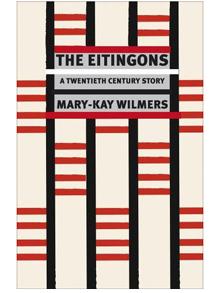
The Eitingons: a twentieth-century story by Mary-Kay Wilmers (Faber, £9.99)

The_EitingonsI read this book after reading Nina Stibbe’s Love Nina about her time as a nanny for Mary-Kay Wilmers’ (MKW) family. Mary-Kay came across as so delightful I took the opportunity to find out more about her family history.

The Eitingons is a big book – 476 pages including the index and references. There are a few personal references but mostly this is a well-researched book about three figures in the Eitingon family who achieved fame or notoriety in very different ways: Max, a psychoanalyst and close colleague of Sigmund Freud; Motty, a fur manufacturer, who achieved great fortune; and Leonid, an important member of the Soviet Secret Service (latterly the KGB). From time to time, MKW tries to find connections between the three, and although none are documented, she allows herself a little speculation.

These are weighty stories of the twentieth century and I found out stuff I hadn’t previously known, including detail about how the assassination of Trotsky (in which Leonid was involved) was managed. This part of the book is thrilling – even though I knew how it ended. Perhaps there is too much detail in some parts of the book as a result of MKW’s extensive research and from time to time I had to check back to remind myself who some of the characters were but MKW’s intelligence and charm is always there in the background.

They sound a clever bunch these Eitingons – they all seemed to know several languages and to be pretty successful in their chosen careers. Mary-Kay herself studied Russian although she ended up not using it and instead ended up as longstanding editor of the London Review of Books. One of my favourite bits of the book is where she describes her role as “obsessively attending to other people’s English words – washing them, ironing them, preparing them for publication.”

 Myra Woolfson


Women Against Fundamentalism: stories of dissent and solidarity, edited by Sukhwant Dhaliwal and Nira Yuval-Davis (Lawrence and Wishart, £17.99)

Women_against_fundamentalismIn the mid-80s, for my sins, I joined the Labour Party in Nottingham. Several inner-city wards were riven by two competing Kashmiri factions, groups of men who voted as a block depending on what their leader said. These whipped votes were, at times, obeyed by “members” who did not speak English and who had little idea what they were voting for. I say “members” because often their membership was paid for them by their wealthy leaders. Kashmiri women were almost entirely absent. In return, Nottingham Labour parcelled out favours to these “community leaders”. Similar things were going on nationally, not just with Kashmiris, and not just with Labour. Community leaders could get some of what they wanted by packing meetings and delivering the votes come election time.

It was something of a tradition – in certain areas it used to be the Irish, now it was the Kashmiris, Bangladeshis and, in some areas, strictly Orthodox Jews.

In the outside world there were some feminist women from ethnic minorities who were less than keen on these, invariably male, community leaders. After 1989 these women came together as Women Against Fundamentalism. Many had already been in local groups such as Southhall Black Sisters or in distinct ethnic groups, but WAF brought together women of Hindi, Muslim, Jewish, Irish Catholic and other backgrounds who had a history of opposing communalism and religious orthodoxy and could see the similar patterns across different communities.

Women Against Fundamentalism waxed and waned and waxed and waned again. This book marks the end of WAF as a campaigning group, but draws together many of their members’ individual stories and revisits the many campaigns they fought.

The group was sometimes seen as “anti-Muslim”, which was convenient, but a quick look at the individual stories contained here shows how wide the group’s background was and the wide canvas on which members operated.

What marks out the stance of many members is that while many of them did work and campaign within general groups – CND, Israel/Palestine or whatever – they chose to remain within their communities rather than become outsiders. The first choice was often personal, as Sukhwant Dhaliwal puts it “On not becoming a Southall Stepford wife”.

Since the high water mark of WAF some things have changed for the better – the power of the Catholic church in Ireland has been much reduced whereas there really are UK supporters of the Islamic State and, hilariously, some people are currently boycotting the Jewish Chronicle because it is not just not right wing enough.

Just as the current wave of feminism in dominated by young women, it feels (to this male outsider) that we would all benefit for a new wave of women against fundamentalism. This book provides a fascinating and personal history on which to draw.

Ross Bradshaw


The Sun Bathers by Roy Marshall (Shoestring, £9.00)

the sun bathers

Roy Marshall’s debut collection takes its title from the linocut by Leonard Beaumont that is reproduced on the cover. Marshall imagines the 1930s bathing beauties as sisters – “let’s call them Dora / and Emily. Both warm-drowsy, both eighteen, / born on the eve of a war they’re told / their fathers fought” – and captures them in a last summer of innocence before global conflict again explodes: “none of us can say / who’ll be a WAAF or WREN, working the land / or in a factory”. Marshall concludes the poem with a grimmer prediction for the carefree lads hovering near them on the beach, their minds on romance and not the immanence of war.

‘August 31st, 1961’ similarly places a perfectly captured moment in time (the birth of his sister) against the bigger picture of the history books. “In the hospital car-park in Surrey / our Dad is watching the moon rise, / already a target for Kennedy”. Here, Marshall’s style is sparse, the maximum communicated with an economy of language. A sense of precision, of words carefully and purposefully chosen, characterises The Sun Bathers. Which is not to suggest that Marshall is a minimalist: these are poems that have depth and weight; their author’s skill in structure and lineation ensures they have room to breathe on the page.

Subjects are diverse, and Marshall certainly knows his history (pace the sequence about da Vinci that forms the collection’s centrepiece), but he’s arguably at his best when memory and autobiography infuse his work. ‘The Bow Saw’ became an immediate favourite on first reading and I’ve gone back to it several times: a simple recollection of father and son collecting fallen branches from the local woods, its half dozen quatrains are a masterclass in tactile evocation, taut use of poetics and how to achieve poignancy without succumbing to nostalgia. “I learnt the languages of wood: / dense oak coughing fine dust, jamming / the blade in the cut, asking more from / an aching arm, a racing heart and lungs”.

 The Sun Bathers is accessible without sacrificing erudition, sensitive yet muscular when it needs to be. Marshall has a fine talent for elegance and clarity. His poetry exerts a very quiet, understated spell: it keeps drawing you back.

 Neil Fulwood


It Goes With the Territory: memoirs of a poet by Elaine Feinstein (Alma, £20)

it goes with the territoryElaine Feinstein is the author of sixteen collections of poetry, three collections of poetry in translation, fifteen novels, two short story collections and seven biographies but has chosen “memoirs of a poet” as the sub-title of this book rather than a “writer”, giving away immediately her main interest and leading us to the world in which she made an unlikely entry so many decades ago. Against her was that she was Jewish, provincial, female, unconnected and married with three children before she could really call herself a poet. In her favour, however, was that as a teenager “while other girls dreamt of princes and Hollywood stars, I dreamt of dead poets.”

Elaine went to Cambridge where she wrote for Granta and set up Prospect, publishing Harold Pinter, Denise Levertov and Donald Davie, amongst others, and made friends with Allen Ginsberg. Her influences as a poet were from the west, the Black Mountain poets and Charles Reznikoff and, later, from the east, when she made another reputation as a translator ,particularly of Marina Tsvetieva. Along the way Elaine brought up her children, met internationally famous poets such as Yevgeny Yevtushenko, who kept her up all night drinking, and Joseph Brodsky, who she fell out with over translation.

Her novel Russian Jerusalem manages to bring together all her favourite Russian interests, from Isaac Babel on, and her memoir reveals not a few scrapes as she tries to work with refuseniks in broken down flats in Moscow suburbs. Some of her work reveals profound melancholy, and one reason, outlined in her memoir, was often her difficult but fifty-years long marriage to Arnold Feinstein, a scientist, who was unfaithful and, at times, threatened by her successes. Yet she loved Arnold despite everything, which led to her most recent book of poems Talking to the Dead, a group of elegies for him. The book more or less ends with Arnold’s death in 2012.

It Goes With the Territory will be of particular value to those concerned with the history of twentieth century poetry, but of a wider value to those concerned about how women moved into the world of men in the 1960s and 1970s.

Ross Bradshaw

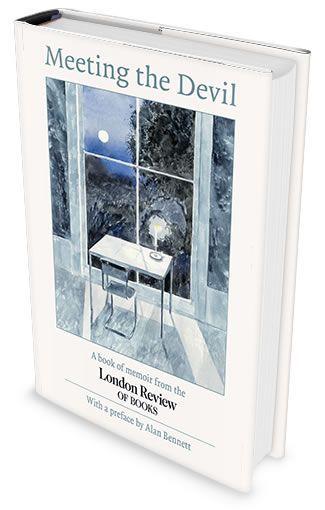
Meeting the Devil: a book of memoir from the London Review of Books (Heinemann, £25)

meeting the devilThe London Review of Books has a more or less permanent place on the front counter at Five Leaves Bookshop. Hopefully we will become intellectuals by osmosis, but more importantly it is a reminder of the best bookshop in Britain – the London Review Bookshop. Oh, if only we were in London, three minutes from the British Museum with a major international magazine behind us. Still, we have LeftLion and we are next to a bookies.

The LRB can be quite hard to read at times. A little too much on German philosophy after Hegel in the current issue, but, like the recent looong article on Julian Assange, David Renton’s article remembering the murder of Blair Peach will stay long in the memory. The LRB is like that, annoyingly over-intellectual and obscure one minute, with searing articles the next. And the authors are given enough space to develop their articles. The mag is serious about what it does. One of the best features is the inclusion of memoir, often lengthy pieces – which have been collected in this book. The title memoir is by Hilary Mantel, on a medical crisis. Others memoirs that will stick with me are by Edward Said on trying to live in the space between his role as an academic and as a campaigner for Palestine and, especially, Joe Kenyon on his days as a miner prior to nationalisation. Other pieces have become familiar – Alan Bennett on “The Lady in the Van” and Lorna Sage’s “The Old Devil and His Wife”. The latter is a demolition job on her awful grandparents which (I am almost certain) appeared as part of her family memoir Bad Blood which could be described as mis lit but transcended the genre. Not all the pieces are so good. A.J.P. Taylor’s “Breakdown” needed a paragraph or two of explanation while, surprisingly, the LRB’s long-standing editor Mary-Kay Wilmers’ article about her attitudes to the women’s movement was one of the weakest in the book.

Some of the pieces reach into the past, such as Tariq Ali writing about his strange visit to North Korea forty-odd years ago but the collection ends with Jenny Diski visiting the future – planning her own funeral.

I could say this is a book to dip into… but I’ve been reading it steadily, article after article. And I want more.

Ross Bradshaw


Reading Barry MacSweeney, edited by Paul Batchelor (Bloodaxe, £12)

readingbarrymacsweeney

The essays Paul Batchelor has assembled in this volume hide behind a prosaic and somewhat misleading title. This is not so much a reader’s guide as a series of specific responses to MacSweeney’s life and work, some defiantly cerebral, some forged in personal memory and anecdote.

MacSweeney was post-war British poetry’s lone wolf: a journalist rather than an academic, an endlessly self-reinventing experimentalist, a man who rejected trends and movements. It’s no coincidence that his earliest important poems was called ‘Brother Wolf’, and his Selected Poems was issued as Wolf Tongue. MacSweeney had bad experiences with mainstream publishers; much of his output was via small presses. Even the release Wolf Tongue and its preceding volume The Book of Demons under the Bloodaxe imprint was bittersweet: they’d previously rejected his 1985 sequence Ranter.

Perhaps it’s appropriate, then, that the ten essays in Reading Barry MacSweeney add up to a fragmented, troublesome and argumentative book. Harriet Tarlo’s placing of MacSweeney in an “old-new” poetic tradition has a lot of thought behind it but reads like a first year university student thesis, overburdened with assertions of “I shall demonstrate” variety. John Wilkinson’s aggressively academic analysis of MacSweeney’s political poems is made from an ivory tower, demonstrating abject naivety regarding the British political landscape of the 1980s. His essay is full of statements like “the power of Barry MacSweeney’s best poems lies in their creative and integrative summons to the reader, surprised into poetic activity which has not been advertised according to post-authorial dogma”. And that’s one of the easier sentences to parse!

On the plus side, W.N. Herbert offers a highly readable overview of The Book of Demons; Matthew Jarvis evocatively maps the Northern landscape that provides a rugged backdrop to the best of MacSweeney’s work; editor Paul Batchelor relies on close reading and textual reference, hewing as close to the poetry as possible; Andrew Duncan brings insight and empathy to the story behind the unfinished Black Torch sequence; and Peter Riley and William Walton Rowe offer coolly objective analyses of MacSweeney’s heroes and nemeses respectively.

 The two best pieces are by the contributors who knew him. Terry Kelly considers MacSweeney’s musical influences in a warm, poignant and beautifully understated mini-memoir. S.J. Litherland, MacSweeney’s partner in the last decade of his life, lovingly reconciles the different aspects of a troubled and brilliant individual, citing instances of MacSweeney the journalist using his position to champion the underdog that will make you want to stand up and cheer. These two essays alone make Reading Barry MacSweeney a worthwhile purchase. They bring you MacSweeney the human being in all his conflicted and vulnerable glory.

 Neil Fulwood


The Richard Burton Diaries, edited by Chris Williams (Yale University Press, £12.99)

BurtondiariesNearly thirty years after his death, The Richard Burton Diaries gives us a portrait of the actor so illuminating and no-holds-barred honest that it’s a tragedy he never marshalled his reminiscences into an autobiography. The book is edited by Chris Williams, whose love of footnotes is as all-consuming as Burton’s torrid passion for Elizabeth Taylor.

Clocking in at nearly 700 pages, the diaries are ordered into six main sections: 1939-1940, in which a series of regular but short entries give a snapshot of his childhood and a burgeoning love of literature; 1960, which is little more than an appointments diary; 1965-1972, which spans almost 500 pages; 1975, documenting his brief remarriage to Taylor and an unhealthy amount of drinking; 1980, centring mostly on his theatrical tour with Camelot; and 1983, which ends as he’s about to take to the stage again in Noel Coward’s Private Lives, an ill-fated production that co-starred Taylor.

As one would imagine, the Burton-Taylor years occupy centre stage. Cineastes will regret the lack behind-the-scenes on some of Burton’s most celebrated performance – there’s barely a word on The Spy Who Came in From the Cold, Becket or Night of the Iguana – but what there is, in plenitude, is an account of Burton’s life – the travel, the glamour, the fabulous restaurants, the glitzy hotels, the premieres and hobnobbing. He almost casually records his acquisition of extravagantly priced jewellery, a yacht and a private jet. “I did something beyond outrage,” he says of dropping $960,000 for the latter – this in 1967, the equivalent of $6.5million today!

In the wrong hands, this could have been the stuff of gloating. But everything Burton writes is tempered with his background, the poverty of his childhood, the admission – made repeatedly – that he’s been lucky. Moreover, fame and materialism didn’t lull him into intellectual moribundity. Throughout Burton demonstrates an inquiring mind, a thirst for knowledge, a keen engagement with the written word and a fascination with linguism.

I haven’t enjoyed an actor in his own words this much since Ever, Dirk, John Coldstream’s volume of Dirk Bogarde’s waspish and unmediated correspondence. Bogarde, of course, enjoyed a second career as a memoirist, novelist and reviewer in the last two decades or so of his life. It’s a damn shame Burton didn’t get to tread a similar path.

Neil Fulwood