logo-cropped

Nottingham’s independent bookshop | 14a Long Row, Nottingham NG1 2DH | 0115 8373097

Hamnet, the film… though you have probably also read the book

I wrote this after seeing Hamnet (thrice).
Paul Mescal is a wonder to behold in Hamnet.

I taught Shakespeare’s work many times during a part-time but full-on lecturing life at Loughborough University (c. 1993-2024); occasionally the plays, but most often recently (before I retired in Dec ‘24), a selection of Shakespearean sonnets. I loved lecturing; rediscovering the sonnets and passing that enthusiasm on to students in our lively seminars. If I were teaching them now, I’d tell them to go and see Paul Mescal in this film. Maybe we would have had a class outing to the cinema.

What surprised me about Hamnet-the-movie? I knew on one level of course that Will was once a young and sexy man, in love. How could you read/see Romeo and Juliet, hmm and not know WS was in love as a teenager? You could not see/read ‘Much Ado About Nothing’ and not realise that WS, like Benedick, is captivated by the sort of witty, feisty, independent woman like Beatrice (or Agnes) who, as my Mam would say, ‘has far too much oul guff out of her’ and ‘sez more than her prayers’.

But that huge overwhelming ‘William Shakespeare’, colossus of Stratford / The Globe/ England-land, and especially that weird balding ‘portrait’, had sort of obscured in my mind that WS was, of course, once an educated but intensely curious and, crucially, *young* and yes, attractive, man. I made someone laugh recently when I said we find it easier to accept David Mitchell as WS in Upstart Crow.
I am a big fan of both Mitchell and this well-written show. Of course I am: Literature and Literary Culture is the world I live in. Besides, it is very funny, and it’s on BBC. If Mitchell fits only too well into the ‘Will’ of your imagination, remember this: Mitchell is in his 40s, playing Will in his late 20s (in the early timescape of the TV series ).
In Hamnet, 30-year-old Mescal is, for me, totally believable as the 18-year-old falling for the slightly older Agnes, and as the older, but definitely not middle-aged looking, Will. Literary Historians reckon WS wrote and first produced Hamlet when he was in his late 30s.

Like every Irish teenager, I studied a WS play each year at Secondary School. I learned off lots of speeches. There were painful … er… Readings. I am not sure ‘drama’ is quite the term, but the pain was real. A classroom of teenagers murdering the Comedies/Histories/ Tragedies? I would like to say we showed some discretion or discrimination. We didn’t. Yea, alas, we murdered them all, forsooth. The classroom floor was strewn with mangled and broken verse, comparable to the final scene of Hamlet. You’re thinking ‘the lady doth protest too much’? Ha! If only. I could act a bit, then and now, but something about reading Shakespeare aloud in class turned us all into wooden bores.

I distinctly remember learning about the Dark Lady and the Fair Youth, objects of inspiration and attraction in the sonnets. (Sorry if I’m upsetting your notions of 1960s-70s Irish convent schools. We learned about Oscar Wilde and Bosie too.) Overwhelmingly, I would say, the sonnets express desire. Paul Mescal brings that to life on the screen: desire for love, for connection, for freedom; the desire to write and be successful, to have your worth acknowledged. To be ‘seen’. as they say these days.

Yes, I *am* aware that Will-who-wrote-the-sonnets was at the other end of his life to the-Writer-figure-in-this-film. All those sonnet lines about wanting to be remembered, to leave a legacy, to achieve immortality, would be unlikely coming from a young man (as we first meet WS in Hamnet the film).

I think what comes across most strongly in Hamnet-the-movie, a quality I would have liked my students to discern, is that the passionate will (pardon pun) to matter, to make a mark, was always there. Yes, I realise also that speculation about a writer’s motivation is always going to be just that: speculative. As my favourite tutor used to say, “It’s not as if we’re going to dig him up and ask him”!

I loved the tearing-up-paper-at-night scene, and the thrumming out of the rhythm of a sonnet, because, though I wouldn’t call myself A Writer, I’ve been there, done that, got the jerkin. I am grateful for better pens, paper, lighting and heating, and my non-communal living. I, like Agnes, am a farmer’s daughter. I have a lot in common with a young woman who is scruffy, untidy, a bit grubby, seen as a (w)bitch, unmanageable, unmarriageable. Yes, Co Carlow farmfolk, I knew well what you thought of me . . . and probably still do, like I fkn care.

I was intrigued by the casting of Hamnet. I don’t want to sound like a mad Irishwoman (that ship has sailed, I can hear my beloved Brian comment), but I was delighted by the success of Hamnet the novel, by Maggie O’Farrell, 2nd-generation Irish. I moved ‘over’ from Carlow in 1988. I am Irish, yes, but also Irish-in-Britain, part of a community I somewhat inadvertently joined back then. I have not met O’Farrell but I am proud to be part of the same community. The Kerrywoman Jessie Buckley brought the strange, fey, otherworldly quality of O’Farrell’s Agnes from page to screen. In a way, Buckley and the director could create Will’s partner from scratch, as little is known about the original AH. There’s marvellous material in the novel, and, I’m sure, in the film script, and hence, wider scope for the imagination, but we the audience don’t all think we know who Hathaway is.

Paul Mescal had, arguably, a much more difficult role. Each of us has our own version/vision of William Shakespeare, greatest writer of English ever, the GOAT, the inimitable unassailable Bard/ Swan of Avon, and so on. Mescal had to put “too too solid flesh” on the bones of the screenplay, but also on the skeletons we carry around in our closeted brain-cells, the Shakey Bones of our preconceptions.

Paul Mescal’s role as Shakespeare will outlast Oscars 2026.

“So long as men can breathe or eyes can see,
So long lives this, and this gives life to thee.”
(Sonnet 18)

Sonnet 55 even mentions statues:

“Not marble nor the gilded monuments
Of princes shall outlive this powerful rhyme,
But you shall shine more bright in these contents
Than unswept stone besmeared with sluttish time.
When wasteful war shall statues overturn,
And broils root out the work of masonry,
Nor Mars his sword nor war’s quick fire shall burn
The living record of your memory.
’Gainst death and all-oblivious enmity
Shall you pace forth; your praise shall still find room
Even in the eyes of all posterity
That wear this world out to the ending doom.
So, till the Judgement that yourself arise,
You live in this, and dwell in lovers’ eyes.”

Thanks, Paul Mescal, for your phenomenal performance.

F**k the Begrudgers.
——

Deirdre O’Byrne
Knows all the words to her tribal song , ‘Follow Me Up To Carlow’. Likes books, dogs,
cinema. Dislikes people commenting on her Irish accent. Runs monthly book at Five
Leaves Bookshop.
Staff Recommendations October 2025


Two Reviews for Halloween

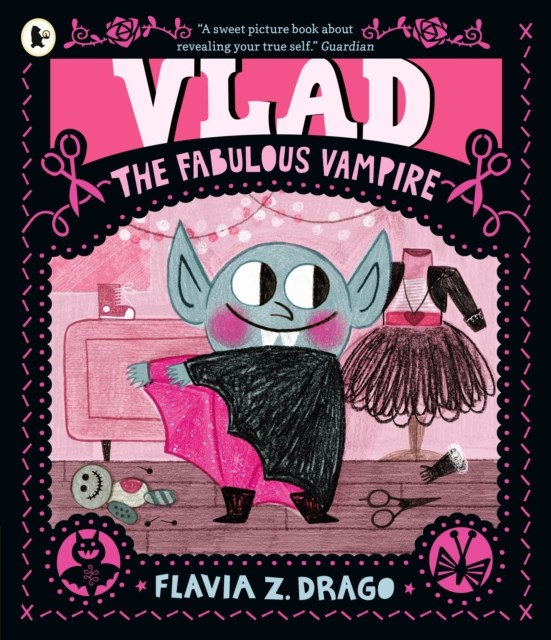
Vlad the Fabulous Vampire by Flavia Z. Drago – well, really (Walker, £7.99)

Vlad was an ordinary everyday, fashionista vampire. He looked cool dressed in traditional vampire black, except his rosy cheeks made him look horribly alive. It was really hard to keep his cheeks covered, so he became a shy vampire. Until an accident happened to the bat hat of his friend Shelley and her – aaargh – pink hair was revealed. With mutual support, the twosome realised that even the most stylish vampires could vamp it up without just being dressed in black, and a new world was open to them. With apologies to our Goth customers.

Ross

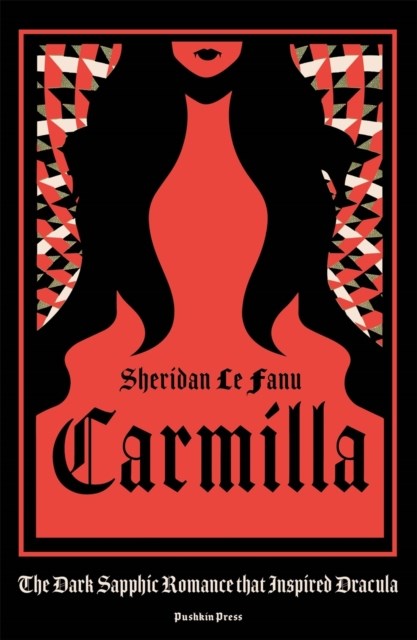
Carmilla by Sheridan Le Fanu (Pushkin, £8.99)

As Halloween and Samhain approach, and the weather turns grim, there’s nothing better than curling up with a book of spooky stories. One of my favourites is the classic vampire novella Carmilla. Considered to be the first literary depictions of a vampire it predates Bran Stoker’s Dracula by some 26 years, although stories in the oral folk tradition have been around for much longer. It’s an uncanny story of a friendship between two young women, fraught with sexual tension, and one is certainly taking more from the relationship than the other. Pushkin’s new paperback edition features a star red and black cover with red page edges, to help readers recover any Gothic image compromised from the book above.

Kate

…and more for the rest of the year

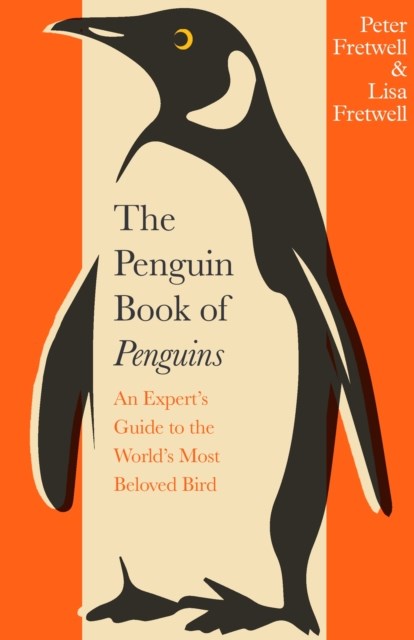
The Penguin Book of Penguins: An Expert’s Guide to the World’s Most Beloved Bird, by Peter Fretwell, Lisa Fretwell (Penguin, 14.99)

After ninety years, Penguin has come up with the most bleedin’ obvious Penguin book ever. We imagine everyone in the Penguin colony slapping their collective foreheads and shouting “Of course” and giving a promotion to the person who thought of it.
But is it any good? Yes, because apart from the delightful Penguin endpapers, scientist Peter Fretwell (with fine illustrations by Lisa Fretwell) plays it straighter than a penguin can walk covering the eighteen species of penguin, their habits, their environment, their evolution and their relationship to humans. Well, straightish, with just a few penguin-like waddles, because it would be a shame not to be diverted along the way.

Ross

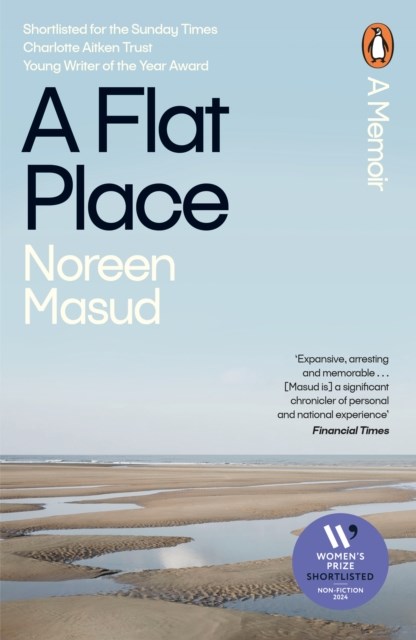
A Flat Place by Noreen Masud (Penguin, £10.99)

As someone who enjoys staring out of train windows at flat landscapes, this book intrigued me. The author identifies her traumatic childhood in Pakistan with flat landscapes, which become both an escape and a liberation. She visits flat places in the UK, including the Fens and Orkney, connecting them to her past. Her personal insights and observations on how who you are—like a weathered landscape—is shaped by your surroundings is fascinating. A great read!

Giselle

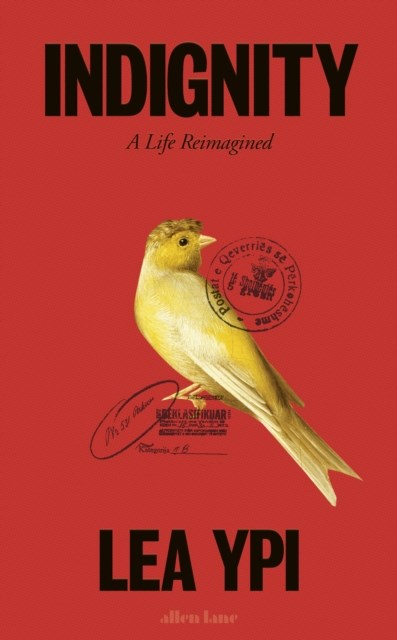
Idignity: A Life Reimagined by Lea Ypi (Penguin £22)

Ypi’s new book is a joy to read and a nightmare to know where to shelve in the shop! It’s a form of intensely researched creative biography, trying to both uncover truths and honour memories of her grandmother, Leman. Through following Leman’s journey, we’re offered an intimate insight into central European histories throughout wars, collapsing empires and occupations. An adventure through the archives, Ypi reconstructs and creatively imagines conversations and encounters that shaped her grandmother’s life, drawing from informant interviews and prison confessions, as well as family anecdotes and the author’s own memories. I listened to this as an audiobook on Libro.fm and really enjoyed hearing the author narrate such a personal account.

Sarah

This Is For Everyone by Tim Berners-Lee (Macmillan, £25)

The inventor of the World Wide Web offers a reflective and questioning look back at the technology that now infuses all of our daily lives, for good or ill. Blending memoir, tech history, and a call to action, Berners-Lee reflects on the original ideals behind the web—openness, decentralization, and universal access—and how far we’ve drifted from them.
Covering ever relevant and pressing issues like data ownership, privacy, misinformation, and big tech, he reimagines the web not as a tool for exploitation, but as a force for good, and while some sections slip into technical jargon and ideas that only the geeks among us will find fascinating (yes, guilty!), it remains largely readable and remains highly relevant to all of us.

Carl

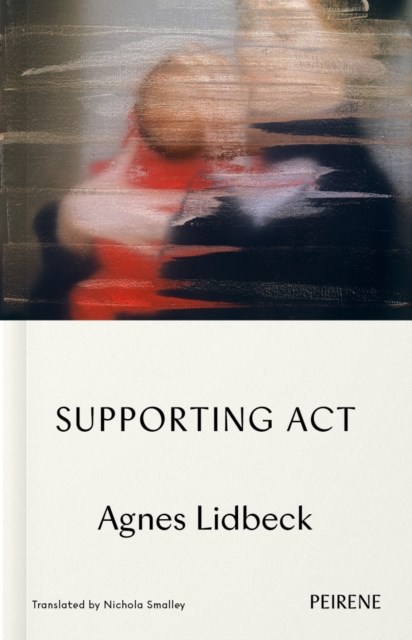
Supporting Act by Agnes Lidbeck, Trans. Nichola Smalley (Peirene £12.99)

We were lucky enough to have Agnes and her translator Nichola Smalley come to do an event on translation earlier this month- an evening which prompted me to read Lidbeck’s first book to be translated into English, Supporting Act. This book is brilliant! The writing is sparing with a dry sense of humour, conveyed brilliantly in the translation. The literary equivalent of splashing cold water on your face to wake you out of mundane patriarchal malaise. This is a feminist novel that took Sweden by storm – and for good reason. Our protagonist is trapped in societal expectations and demands on how she performs womanhood: her roles as mother, lover and carer; but the novel also challenges how self-imposed these trappings are by her own complacence and apathy. I raced through this and have bought two copies as presents since!

Sarah

Cinema Love by Jiaming Tang

Cinema Love is the impressive debut novel by Chinese American writer Jiaming
Tang. The book’s blurb and the opening chapters may lead readers to believe that it
primarily explores the lives of gay men in post-Mao China, a period when
homosexuality was still a criminal offence. That portrayal includes the imagination of
a nondescript cinema functioning as a queer utopia and a Stonewall-type riot in
which gay men courageously resist the police—both of which lack historical
accuracy. However, as the narrative transitions to 1980s Chinatown and
contemporary, post-pandemic New York, the novel’s true strength emerges: a
poignant story of migrant lives, women’s agency, and the reconciliation of traumatic
pasts.

The tentative, fearful gay characters eventually give way to resilient female
characters who dare to love and hate with intensity. The book becomes most
relatable and evocative when read as a chronicle of the migratory experiences of an
older generation of (often undocumented) migrants from China to the United States.
These individuals carry buried but unforgotten traumas, endure shattered ‘American
dreams’, and yet persist in valiantly holding on to their aspirations, hopes, and
desires. The novel stands as a love song to Chinatown and the Chinese diaspora
community that the author knows intimately.

The introduction of ghostly elements might initially seem disorienting in a narrative
grounded primarily in social realism. Nevertheless, readers are encouraged to
embrace the supernatural—ghosts, destiny, and other ethereal forces—to make
sense of the novel’s many twists, turns, and coincidences. Accepting these elements
opens the door to intriguing insights into the mundane, everyday dimensions of
religion and spirituality in Asia, as experienced by some.

The title, Cinema Love, primarily references gay men’s affection for one another
within the Workers’ Cinema, where mainstream war films created an ideal backdrop
for clandestine cruising in the shadows. Tang’s writing is strikingly cinematic, deftly
cutting between scenes, characters, and perspectives—from intimate close-ups of
individual lives to expansive long shots capturing the social panorama and
communal mobilisation. At times, the story risks lapsing into melodrama,
sentimentality, or even kitsch. However, written in an era when diasporic Chinese
communities in the United States and worldwide are grappling with the historical and
contemporary traumas of homophobia, xenophobia, migration controls, and anti-
Asian racism, this gut-punching melodrama serves as a potent and necessary salve
for its characters and readers alike.

The sophistication of the novel’s narrative structure and character development
belies the fact that this is Tang’s debut work. Cinema Love is a substantial contribution to Asian American literature and provides a strong foundation for an inevitable feature film adaptation.

Source: Bao, Hongwei. “Gut-punching Melodrama: Jiaming Tang’s Cinema Love.” Cha: An Asian Literary Journal, 9 Jan. 2025, chajournal.blog/2025/01/09/cinema-love.

Hongwei Bao

Cinema Love is available from fiveleavesbookshop.co.uk/product/cinema-love-not-just-an-extraordinary-debut-but-a-future-classic-jessamine-chan/.

The novel is also published in paperback at the end of January 2025

Wish You Were Here by Nicola Monaghan (Verve, £9.99)

Nicola Monaghan is Nottingham-based and someone I know but do not be put off by any potential bias I may have, she stands very tall without my recommendation. Her debut novel The Killing Jar won the Betty Task award and is an amazing and disturbing read. She has since published novels, novellas, short stories and screen plays. Wish You Were Here is her second in the Dr Love Mystery Series. The first being the well-received Dead Flowers published in 2019.

Wish You Were Here is a crime mystery set in Nottingham, with a strong female lead, Dr Sian Love, a DNA expert, and ex-copper. The story centres on a child who went missing over fifteen years ago and a young woman who thinks she may be the adult girl. The plot adeptly takes you through a labyrinth of clues filled with contemporary and local references, and the interweave of factual and fictional, adds authenticity, pulling you into the centre of the story. Dr Love has complexity and intelligence and as she develops, the mystery unravels. This is a multi-layered story including celebrity scandals, a German Shepherd dog called Elvis*, undercover policing, the hippie and rave scene, Nottingham, London and Bexhill on Sea, with some class politics thrown in. There is tension and shock, and you will be pleased to hear that I swore loudly, on at least a couple of occasions. This is the second book in a series and the story, and characters easily stand alone. I am not a great reader of mysteries /crime fiction, yet this book reminded me why I used to pick up the odd Ruth Rendall. The story is fully engaging and has a pace and tension which is escapism at its best. The end leaves you with both resolution and curiosity for more.

Which takes me to the Nottingham link. My only criticism of this book is the proposition that Dr Love could go undercover in Nottingham when we all know that we all know each other. Someone would definitely have come up her and said ‘ay up, what are you doing here?’ When Nicola Monaghan was writing this book, she was living down the road from me which is why Dr Sian Love gets the same bus into town as I do. The first novel in this series was based in the Loggerheads, a pub that used to stand off Cliff Road in the centre of town. Wish You Were Here references Broadway, The Old Angel, The Sumac centre amongst many other familiarities, all of which add to an additional level of pleasure for Nottingham readers and are well enough described to become real for those from out of town. Just as Nottingham and the Peacock pub hosted Resnick on our TV screens in the 1990’s, I have hope for Dr Sian Love be visioned off the page. If you are Nottingham-based – it is time you got to know this excellent local writer and if you are out of town and like a good mystery with a great female lead, then this also for you.

Cathy Symes

*A silent tribute to Nicola’s own dog called Elvis

Wish You Were Here is available instore and here: fiveleavesbookshop.co.uk/product/wish-you-were-here/


The Island of Missing Trees by Elif Shafak (Penguin, £8.99)

The Island of Missing Trees by Elif Shafak (Penguin, £8.99) was Five Leaves’ best selling fiction novel last year. Have you read it?
I was mixed about it. If I were to say that one of the main characters in the book was a fig tree that might put you off. It would have put me off, but I went with the flow.
The fig tree in question lived in Cyprus, originally, but was transplanted to a north London suburb by Kostas, a Greek in exile from home.
There he had a youthful relationship with Defne, a Turkish woman, both crossing the boundaries of their ethnic groups, secretly meeting in a tavern run by another couple, who had their own secret. They were gay men. The fig tree was a feature of the taverna, and it had its own views and internal life and its own perspective on the relationship between trees and humans.
Of course it all goes wrong. The conflict between the Greek and Turkish community ends the relationship. And the gay men are… well, spoiler alert, what so often happens in fiction?
Years on, Kosta returns to Cyprus for a conference – trees are, not surprisingly, his special acadamic interest. There he meets Defne again, working to find the graves of the disappeared in the conflict. There is more in their past that they need to revisit than he knew.
This is starting to read like a blurb, but it would be too easy to give more spoilers.
Island of Missing Trees is written as popular fiction, and is in serious need of an editor to get rid of some of the cliched writing. But Shafak tells a good story, and the fate of other characters drew me back to look up the half forgotten but vicious conflict that has kept the island divided.
A companion book if you want to read further is Nicosia Beyond Borders: voices from a divided city (Saqi, £12.99), with pieces by writers on both sides of the last city in Europe that remains divided.

Ross Bradshaw

French Braid by Anne Tyler (Chatto, £16.99) and Bourneville by Jonathan Coe (Viking, £20)

Both of these books are intergenerational novels – family sagas if you like, by long-established writers, Tyler from America and Coe from the UK. Coe’s novels are often described as state of the nation novels, and he and we follow the lives of his chosen family down the generations, their lives punctuated by incidents in modern British history – VE Day in 1945, the Coronation of 1953, England’s 1966 World Cup win, Charles’ investiture, his wedding, the funeral of Diana and, finally the anniversary of VE Day, 75 years on.
Tyler starts in 1959 and American history is entirely absent. Her family is unaffected by, don’t talk about, the Cuban Missile Crisis, the Vietnam War, the war in Iraq… Kennedy, Nixon, Reagan, Bush one and Bush two, Clinton, Obama, Trump – who they? Mind you, they talk about next to nothing anyway when they meet up, save for whether the traffic on Baltimore’s Beltway is bad or really bad. Nor do they go out much or have a cultural life save for one son who teaches drama and acts. But he’s the outcast who never quite recovered from a childhood trauma when he thought his father did not love him, so he is allowed.
The one real life intrusion in Tyler’s book is Covid, where the – now retired – drama teacher takes in his grandson for a while, the child’s mother working flat out in the health service, and there are tender scenes as the child meets local children but keeps his distance, and is given the task of making masks to involve him in Covid protection. Coe’s book also ends with Covid and the book turns on this from an understated domestic history to a final section of absolute passion when the key character Mary Lamb’s experience of death during the Covid era mirrors that of Coe’s own mother. I shy away from reading Covid fiction, it’s still too raw, but these are the best sections of both books.
Unfortunately Jonathan Coe signals the changes in the state of our nation too well. Early on, in Bournville itself, people drive past a house with its curtains closed. The man who lives there had been caught cottaging, having sex with another man in a public toilet. You can guess that later this will be mirrored by a modern gay affair. This last is the only sex scene in Coe’s book, and it is well done. The family in question is all white… but you can feel the moment coming when one of the younger members of the family has a new girlfriend. People have not met her yet and he passes a photograph around. One person says she looks lovely and, really, you don’t have to wait until – was it Doris? – blurts out about her being Black, naturally in an uncomfortable way. Brexit is there of course… but the scene where a chocolate factory representative (Bournville, remember!) meets a smarmy Labour MP to talk about European trade issues to do with chocolate is overwritten.  I would not say that Labour is completely smarm-free, but this Labour MP… though Coe might have met him in real life. Must ask.
Domestically Anne Tyler’s family changes too. America in the 1950s gradually recedes; the family hardware store is taken over by a woman; the family becomes a little more diverse; the most boring character – an estate agent, naturally – goes to bore the socks off other realtors in their special place in hell; and along comes the gay man. He has kept his secret from the family, but when he is found out by accident he realises that the whole family knew anyway and were not bothered.
And Mercy Garrett, married to Robin, who we meet at the start of the book, gradually moves out. She takes up painting, rents a studio and ever-so-gradually-ever-so-slowly stops coming home. Again, everyone knows, but nobody really talks about it. Her hapless husband organises a fiftieth wedding anniversary party for the family. It’s grim, but not so grim as their other gatherings and Mercy and Robin spend the night together. It’s another tender moment, but in the morning she returns to the studio before breakfast.
Neither of these are the best of the author’s work. But I dug through my shelves to find Tyler’s Dinner at the Homesick Restaurant, the only survivor of a period in the early 1980s, when I was regularly reading her work. It’s a family saga set in Baltimore and I remember nothing of it. And I’ll read that again shortly.
Ross Bradshaw
Both books are currently only in hardback, French Braid is published in paperback on 16 March while Bournville comes out in paper in September. Email us on bookshop@fiveleaves.co.uk

After Sappho by Selby Wynn Schwartz, published by Galley Beggar Press

Fragment 147
For someone will remember us / I say / even in another time

After Sappho tells the stories of a group of women artists, feminists, writers, actors, most of them lesbians, networked across Europe and the US but centered mainly on Italy and Paris from the late 19th century up to 1928 (when Orlando by Virginia Woolf was published). Orlando is significant as in many ways this book riffs on the structure of Orlando. Each ‘chapter’ is headed by a fragment of Sappho’s poetry and that too is significant in how the book is written.
Many of the women in the book are wealthy women, but not exclusively and Schwartz tells their stories, parts of their stories, interweaving the characters in both time and space in small chunks. Little sketches. Almost threads. She structures it around fragments of Sappho’s poems… and riffs on those themes. So there is much to discuss about the structure of the book but there is also the history, the rich history.

For me, this was a page turner. Yes, there is some exasperation at the entitlement and wealth of some of the characters. And some of them frankly behaved badly. Our characters were often privileged but almost all of them had escaped abusive fathers, husbands and/or rapists. They found ways to escape and ways to be with each other. To find a way of being lesbian. Some had no resources and were supported by those that did. Throughout the book Schwartz uses an authorial voice that includes us in the ‘us’, like a chorus, I thought. The lesbians in particular, were trying to ‘make us’, make a way of being. They were all brave and I found this very moving.

Interwoven with the stories of the women are snippets about the latest theories on lesbians and legislative attempts to outlaw and silence them. The Italian codes of law affecting women (as property) were an eye opener, but shouldn’t have been surprising. As a reader you get a full sense of the rising feminism, especially in Italy, and the very real dangers to women.

As we get towards the end of the book, we hear the drumbeat of fascism. Some of these women became involved in that and some were annihilated by it. The many different stories here and the times they lived in led me to want to know more and to look things up. In particular I was lead to read a book I should have read long ago, No Modernism Without Lesbians by Diana Souhami.

Fiction or not? It is an alternative way of writing history. Schwartz riffs on facts, on Sappho, on Greek nouns and, I think, on the structure of Orlando. I’ll leave you with this. She refers to the ‘kletic’ in Greek. The kletic poem is one that calls or summons assistance. This book is maybe that. An invocation. A conjuring. I do think this book is about remembering. A colossal sweep that invites us to remember these women. And I’m thankful to the author and to the wonderful Galley Beggar Press for bringing it in to being.

Jane Anger
Illustration: Romaine Brooks called Peter, A Young English Girl – a portrait of the artist Gluck (Hannah Gluckstein)
After Sappho is available here: https://fiveleavesbookshop.co.uk/product/after-sappho/

Elena Knows by Claudia Piñeiro, translated by Frances Riddle (Charco, £9.99)

Claudia Piñeiro is best known as a crime writer, and you can see that in this book as the main character – Elena – takes herself across Buenos Aires on a mission to help solve the mysterious death of her daughter, Rita, who hanged herself in the belfry of a church. This dramatic suicide act happened three times in the author’s home village, I believe. But it was raining and Rita had a phobia about going into the church in the rain. Elena knows she could not have committed suicide, but does she really know? Does she really know anything?

It’s a painful book to read as Elena has debilitating Parkinson’s, being active only in the times between taking her medicine and the book is structured in the times between her pills being taken. Even then, her head is bent down so she cannot see other than downwards – she sees a lot of shoes, but not faces.

Her daughter is her carer, who hates looking after her, who rages against what she has to do as her mother deteriorates. It’s a tough read, with but brief moments of tenderness when, finally, Elena is offered some help by the health service and when – it sounds absurd – she strokes a cat at the home of the woman she has been seeking. For, despite everything, Elena wants to live.

The three main characters in the book are women but this is not a book about women’s solidarity; all of them have been hurt by other women. And by institutions such as the church. The book also talks about things we would prefer to avoid – family carers having no choice but to care for a parent, women having anti-abortion views and some women who are mothers never bonding with their children.

The book is well written, translated sensitively and our bookshop book group found plenty to discuss in the text.

Ross Bradshaw

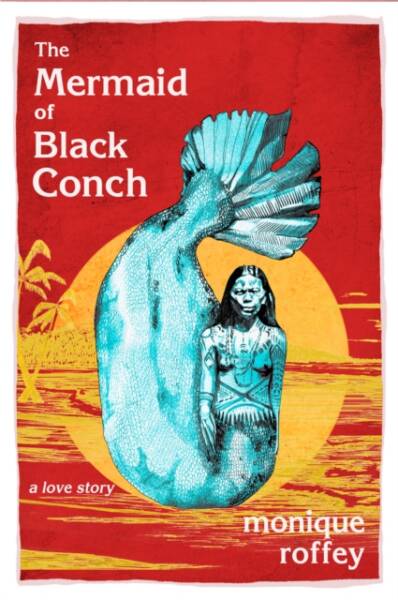
The Mermaid of Black Conch by Monique Roffey (Peepal Tree, £9.99)

Patience is a virtue… After thirty-five years, the tiny team at Peepal Tree has finally hit the big time, with their novel Mermaid of Black Conch winning the Costa Book Award at the same time as their Green Unpleasant Land, on the links between slavery and country houses, is debated, well, attacked, by the paragons of virtue at the Daily Mail and Daily Telegraph. I’m not sure if the DM/DT are angry that someone has noticed these links or whether they are angry that someone did not think such links were a good thing…. This less than two years since Roger Robinson won the TS Eliot Prize for poetry with Portable Paradise, Peepal Tree’s previous best seller.
For Robinson, his portable paradise, stitched into his family memory is “white sands, green hills and fresh fish.” He could easily have been describing the small island of Black Conch. There, in 1976 David Baptiste was out in his boat doing a bit of leisurely fishing, in his favourite quiet area, playing his guitar and smoking the odd spliff. And it is there he finds an audience – the mermaid who comes to listen. To be honest I had doubts about the book in advance, well, mermaids… but I was hooked. As indeed was the mermaid who would get caught by some Yankee sports’ fishermen. Roffey’s description of their struggle – or rather the struggle of the two white men, first the son, then the father – to reel her in was gripping. They had to be tied into the “fighting chair” as they would to bring in, say, a marlin. But this was a mermaid. Their crew of local fishermen were aghast, they wanted none of it, but the father could see the money that the mermaid would bring him.
The mermaid is hung up on the dock but is rescued by Baptiste who takes her home, putting her in his bath. However, this was no ordinary mermaid for she was Aycayia, one of the original residents of the Caribbean who had been condemned to roam the sea for thousands of years by a spell. She speaks no English, remembering only a few words of her original language. Nor does she know anything about clothes, of cooked food or of, well, how to go to the toilet when you no longer live in the sea. The book is earthy. Aycayia gradually turns back into a woman – her scales fall off, her tail rots, her feet and hands become less webby, but she never quite loses her mermaid characteristics including her odour of the sea.
Here the other two main characters of the book appear – Arcadia and her born-deaf son Reggie, who communicates in sign language. Arcadia is the only white person on the island, the last of the Rain family which once owned most of the area. But Arcadia speaks the Caribbean dialect of Black Conch, which suffuses the book. She comes to the door with a poetry book by Derek Walcott in her hand. The father of her child is Black. She has no interest in her estate, selling it off cheaply in parcels, bothering little about collecting rent, but there is still the issue of the rich woman on the island being white. Arcadia and Reggie help Aycayia – Arcadia teaches her English, Reggie sign language. She becomes his friend.
How does all this work out? I can’t do spoilers here but can a mermaid really adapt to life in the small town of St Constance on Black Conch? What do the neighbours think – it’s not like you can keep the whole incident a secret. So read the book. It’s the best novel about fish since Moby Dick.
Despite my reserve because of the subject I was able to suspend belief and cared about all the characters and whether the growing love (OK, a bit of a spoiler) between David and Aycayia could possibly work. There is drama in that Aycayia still feels the call of the sea and those who condemned her to live forever in the sea are watching and angry.
This is Monique Roffey’s seventh book and the one that will have made her name, being already shortlisted for other prizes. She will be reading and being interviewed by Deirdre O’Byrne at a Five Leaves online event on 14 April.

The book is available here:fiveleavesbookshop.co.uk/product/the-mermaid-of-black-conch-a-love-story/

Ross Bradshaw

Dead Land by Sara Paretsky (Hodder, £8.99)

Crime writer Sara Paretsky has caused me many late nights and forced me to lie in many lukewarm and colder baths down the years. She writes short, often wittily-titled, chapters that have a cliff-hanger component that make you think “I’ll just read one more…” again and again. Her latest paperback, her 24th, is no exception.
Paretsky’s female Private Eye is V.I. Warshawski and her milieu is Chicago. Dead Land is up to date with a throwaway comment about the legal problems of a couple of Trump’s advisers and a sub-plot about armed militias and people believing right-wing conspiracies. But some things don’t change: her support group of an elderly doctor and a cranky neighbour and her frustrating relationship with a local journalist. And the basic storyline of big money ruining her city. Somehow you just know that if Warshawski turns up at a small community meeting about Chicago maybe redeveloping a shoreline wildlife park that dark money has changed hands, someone will be bumped off and that Warshawski will be in peril. Formulaic? Maybe, but you get to know the city – you can almost hear the planes coming in to land at O’Hare – and in this book she causes you to search your memory about what the Chicago School of economists were up to in Chile in the 1970s because the past is never just the past. The Chicago Boys – as they were called – have a lot to answer for.
Chicago is of course not Nottingham but is it really true that heads of Council departments (in this case Parks) go round with hired muscle and police protection? Maybe, it is America… It’s certainly scary when she includes the sentence, justifying her unofficial crime fighting that “Chicago police clear only 17% of our homicides each year.”
If I had a criticism it is that like other semi-formulaic books (I’m thinking of Robert Parker) there comes a moment when you feel you have had enough; enough of Warshawski’s neighbour Mr Contreras and her guardian angel Charlotte Herschel (both of whom must be about 105 by now), her running to the Lake with her dogs, the mentions of her opera-loving late mother and her late Chicago policeman father.
But after a few books away, this is what drew me back, comfort reading, and the promise of a bath that starts off hot and ends lukewarm at best.
Ross Bradshaw
Orderable here: fiveleavesbookshop.co.uk/product/dead-land-v-i-warshawski-20/