logo-cropped

Nottingham’s independent bookshop | 14a Long Row, Nottingham NG1 2DH | 0115 8373097

Staff Recommendations October 2025


Two Reviews for Halloween

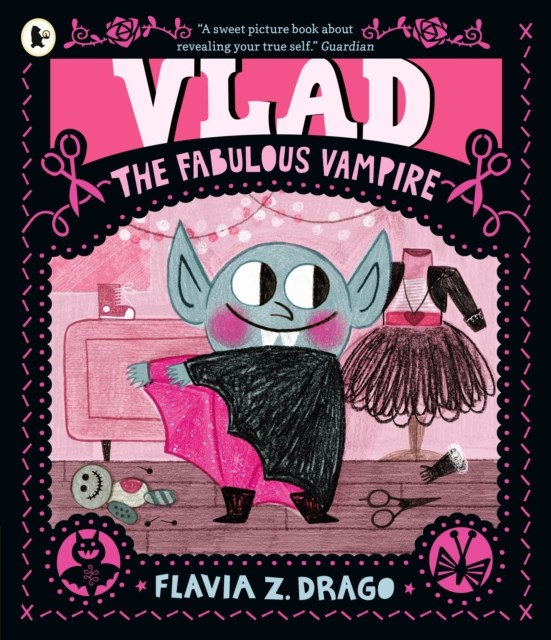
Vlad the Fabulous Vampire by Flavia Z. Drago – well, really (Walker, £7.99)

Vlad was an ordinary everyday, fashionista vampire. He looked cool dressed in traditional vampire black, except his rosy cheeks made him look horribly alive. It was really hard to keep his cheeks covered, so he became a shy vampire. Until an accident happened to the bat hat of his friend Shelley and her – aaargh – pink hair was revealed. With mutual support, the twosome realised that even the most stylish vampires could vamp it up without just being dressed in black, and a new world was open to them. With apologies to our Goth customers.

Ross

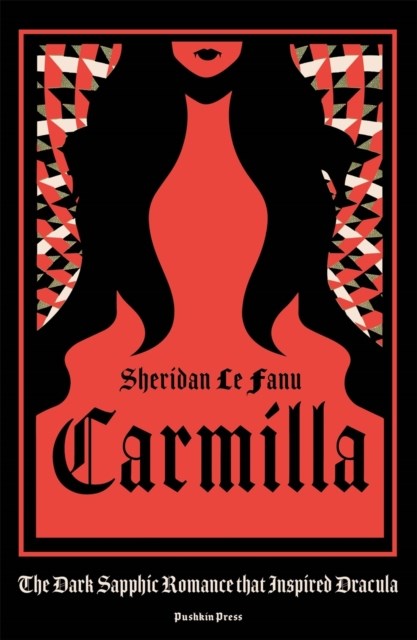
Carmilla by Sheridan Le Fanu (Pushkin, £8.99)

As Halloween and Samhain approach, and the weather turns grim, there’s nothing better than curling up with a book of spooky stories. One of my favourites is the classic vampire novella Carmilla. Considered to be the first literary depictions of a vampire it predates Bran Stoker’s Dracula by some 26 years, although stories in the oral folk tradition have been around for much longer. It’s an uncanny story of a friendship between two young women, fraught with sexual tension, and one is certainly taking more from the relationship than the other. Pushkin’s new paperback edition features a star red and black cover with red page edges, to help readers recover any Gothic image compromised from the book above.

Kate

…and more for the rest of the year

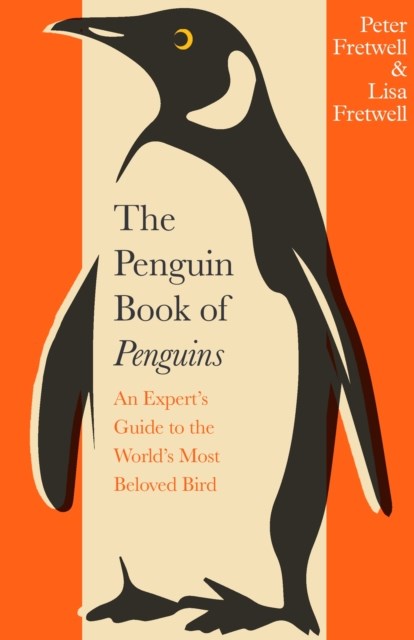
The Penguin Book of Penguins: An Expert’s Guide to the World’s Most Beloved Bird, by Peter Fretwell, Lisa Fretwell (Penguin, 14.99)

After ninety years, Penguin has come up with the most bleedin’ obvious Penguin book ever. We imagine everyone in the Penguin colony slapping their collective foreheads and shouting “Of course” and giving a promotion to the person who thought of it.
But is it any good? Yes, because apart from the delightful Penguin endpapers, scientist Peter Fretwell (with fine illustrations by Lisa Fretwell) plays it straighter than a penguin can walk covering the eighteen species of penguin, their habits, their environment, their evolution and their relationship to humans. Well, straightish, with just a few penguin-like waddles, because it would be a shame not to be diverted along the way.

Ross

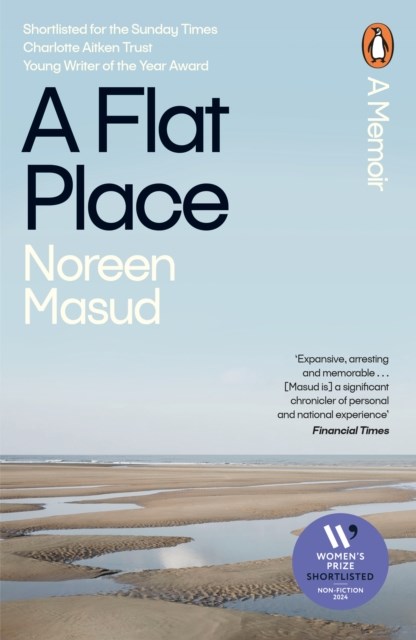
A Flat Place by Noreen Masud (Penguin, £10.99)

As someone who enjoys staring out of train windows at flat landscapes, this book intrigued me. The author identifies her traumatic childhood in Pakistan with flat landscapes, which become both an escape and a liberation. She visits flat places in the UK, including the Fens and Orkney, connecting them to her past. Her personal insights and observations on how who you are—like a weathered landscape—is shaped by your surroundings is fascinating. A great read!

Giselle

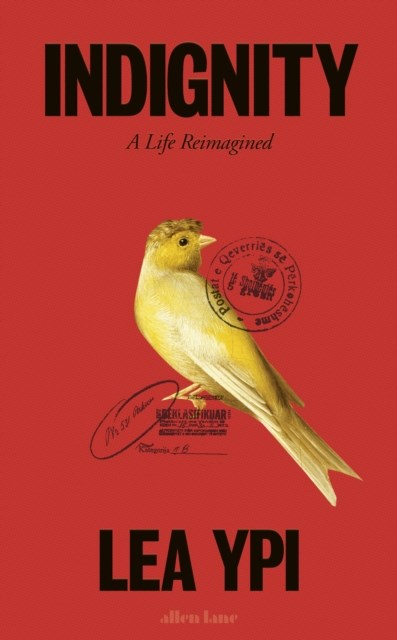
Idignity: A Life Reimagined by Lea Ypi (Penguin £22)

Ypi’s new book is a joy to read and a nightmare to know where to shelve in the shop! It’s a form of intensely researched creative biography, trying to both uncover truths and honour memories of her grandmother, Leman. Through following Leman’s journey, we’re offered an intimate insight into central European histories throughout wars, collapsing empires and occupations. An adventure through the archives, Ypi reconstructs and creatively imagines conversations and encounters that shaped her grandmother’s life, drawing from informant interviews and prison confessions, as well as family anecdotes and the author’s own memories. I listened to this as an audiobook on Libro.fm and really enjoyed hearing the author narrate such a personal account.

Sarah

This Is For Everyone by Tim Berners-Lee (Macmillan, £25)

The inventor of the World Wide Web offers a reflective and questioning look back at the technology that now infuses all of our daily lives, for good or ill. Blending memoir, tech history, and a call to action, Berners-Lee reflects on the original ideals behind the web—openness, decentralization, and universal access—and how far we’ve drifted from them.
Covering ever relevant and pressing issues like data ownership, privacy, misinformation, and big tech, he reimagines the web not as a tool for exploitation, but as a force for good, and while some sections slip into technical jargon and ideas that only the geeks among us will find fascinating (yes, guilty!), it remains largely readable and remains highly relevant to all of us.

Carl

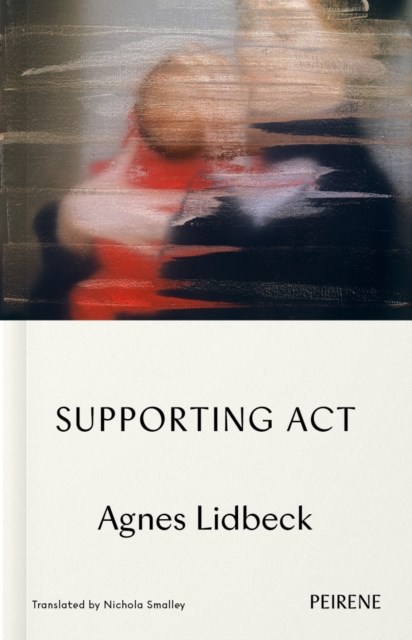
Supporting Act by Agnes Lidbeck, Trans. Nichola Smalley (Peirene £12.99)

We were lucky enough to have Agnes and her translator Nichola Smalley come to do an event on translation earlier this month- an evening which prompted me to read Lidbeck’s first book to be translated into English, Supporting Act. This book is brilliant! The writing is sparing with a dry sense of humour, conveyed brilliantly in the translation. The literary equivalent of splashing cold water on your face to wake you out of mundane patriarchal malaise. This is a feminist novel that took Sweden by storm – and for good reason. Our protagonist is trapped in societal expectations and demands on how she performs womanhood: her roles as mother, lover and carer; but the novel also challenges how self-imposed these trappings are by her own complacence and apathy. I raced through this and have bought two copies as presents since!

Sarah

Smart, by Kim Slater (Macmillan Children’s Books, £6.99)

Kieran lives in the Meadows in Nottingham with his mother, who he loves, a bully of a step-father and his waster son. Life’s not easy like that – his step-father orders him about, barely allows him to be fed and calls him a retard. The waster son watches violent stuff on Xbox all day and joins in with a bit of bullying on the side too.

It’s even harder if you are a bit different. When you’re a child whose favourite artist is LS Lowry, when you know the rules of grammar and your specialist teaching assistant helps you get by at school, but wants to know what is going on in your homelife. In the playground you learn to stay on the outside, to keep away but the bullies still find you. Your mum tries to protect you but even she loses patience sometimes, telling you she doesn’t have time for that when you have to make your special moves when you get near home. Kim never uses words like autistic, but Kieran’s problems are clear enough. The problems are other people.

The book opens with Kieran finding a body in the Trent, a tramp who the police, when they arrive, think simply fell in and drowned. The tramp’s friend, Jean, knows otherwise but nobody listens to her apart from Kieran. One of his obsessions is CSI so he sets out to solve the crime, which he does with the aid of his own drawing skills and the help of Karwana, a Ugandan boy who turns up at his school.

Kieran – the book is in the first person – feels the need to explain everything to you, and tell you the ways you can win, even when you are losing. Along the way he sets out to visit his grandma in Mansfield. She’s banned from the house because she took on Tony, the step-father so he gets a bus to visit her.

I sat near the back. It was 4.45 p.m.
I tucked the ticket inside my notebook and refastened my satchel.
At 4.45 p.m., I walked down the aisle to the driver.
It was difficult walking when the bus was moving but not as hard as you think it would be, because there are silver rails to hold on to, all the way down.
‘Are we nearly there?’ I asked…. ‘I’m worried the bus will go past my stop.’

There’s a lot going on. Kieran drops by the homeless shelter to seek clues and finds the security man acting suspiciously. Wasn’t he the one he saw speaking to his mum? Tony – the step-father is dealing rocks from home, and there’s Tony’s vicious dog, confined to a shed since he bit the wrong person. There’s hints that Ryan, the waster son, is perhaps not as bad as he seems. But if you are Kieran you also need to find the special pencil sharpener that vanished from the kit you won for your art. No other pencil sharpener will do. Finding a murderer might just be easier.

Smart is Kim Slater’s first book for older children. There’s two more I’ll be reading soon. Impressed.

Ross Bradshaw

Copies of Smart are available from £6.99 post free from Five Leaves Bookshop, 0115 8373097

The Red Tree and The Lost Thing by Shaun Tan (Hodder, £7.99 each)

Red TreeThese books are labelled as children’s books but, without dissing children, they would be wasted on them. They are both beautiful pieces of art for adults, with lovely messages. The Red Tree is the first of Tan’s books I came across. It’s perfect to give to someone who has been a bit low (OK, even a child). The illustrations describe the days when you wake up and everything is just awful and then it gets worse. Nobody understand, nothing ever happens. You are on the inside looking out at the nice things out there but you know that the mechanical monster is your fate. This goes on all day… but, however awful it gets you do know, don’t you?, that The Red Tree will be there at the end. Aaah.

Even better is Tan’s The Lost Thing, which is a bit steampunk. You know how it is, you are on the beach and there is this lost thing there, which you need to take home. Except what do you do with this thing? It’s too big, your parents (nope – forgot – this is for adults, let’s say partner) don’t really understand and you would be stuck with it, but you are not the right person. You really need to take it to the land of lost things to be among friends. And you do. Because every lost thing has a home somewhere, with friends just as oddly shaped as them.

You are reading this on your computer so make a cup of tea and click to this: https://www.youtube.com/watch?v=t1YG7ZXfC6g. The Lost Thing lasts about fifteen minutes. Then this, for another five: https://www.youtube.com/watch?v=PrmMFFpKxgw. If you are in the bookshop, The Red Tree lives in self-help and The Lost Thing lives in our little steampunk section.

Neither of these books is new, though Shaun Tan was new to me. His illustrations are simple, but often in tremendous detail. I find myself going back to the videos and the books again and again.

Ross Bradshaw

War and Peace by Jack & Holman Wang (Simply Read Books)

War and Peace by Jack and Holman WangThis is not the overlong, padded out, translated version by that Tolstoy bloke, but the twelve word board book by Jack and Holman Wang. Suitable for small children and those who always wanted to read War and Peace but never got round to it.

Andrei and Pierre love their country and the same woman. Which knitted-felt man will knitted-felt Natasha choose? I’d pick the knitted-felt horse myself. Utterly charming.

Copies of what must now be the canonical version of War and Peace are available in the bookshop at £6.99.

Ross Bradshaw