Best Books of 2025
This is our last post before Christmas, so it’s an opportunity to thank you for your support throughout this year – as customers, colleagues, librarians and friends.
We *might* do a separate report on the year, but we’ll just mention a few things. On publishing, we had a big success with CJ DeBarra’s first Queer Nottingham going into reprint weeks after publication. There were around 150 people at the launch at the Central Library and it was such a fun event with people from their teens to their eighties. The second volume, taking us from the 90s up to date comes out in February.
Lincolnshire’s ours too of course, thanks to Rory Waterman. Lincolnshire Folk Tales Reimagined has sold over 500 copies in a short period.
Six new Five Leaves New Poetry pamphlets appeared, thanks to Tony Challis, Tara Singh, Ramisha Rafique, Elizabeth Drummond and Sue Forrester. We also produced a new edition of Poems of a Nottingham Lace-Runner, by Mary Bailey thanks to John Goodridge, Karen Winyard and Nottingham Women’s History Group for that.
Of course we’ve had dozens of events. It would seem wrong to pick any out as “the best”, but certainly the most emotional was one of the smallest, with Janet Alder talking about the twenty and more years she has spent trying to get justice for her late brother, who died in police custody. The range has been immense. Just looking at a random month last year, March’s events included talks by the musician Boff Whaley, the Chinese novelist Xiaolu Guo, the Romany-now-thriller writer Louise Doughty and an in-house talk on Irish comedy. We are often fully booked or have to hold the talks in bigger venues.
Speaking of which… we now have a growing monthly Irish book group to add to our fiction, Pagan and serious non-fiction group. Every month the Irish group gets bigger.
There have been setbacks. Three authors published by us in the past have gone to the big bookshop in the sky – Michael Baron (who edited two of our poetry books), Zoë Wicomb (author of a book of short stories for us) and John Lucas. John wrote or edited several books for Five Leaves over the years and spoke or read regularly in the bookshop. He also ran Shoestring Press and worked with us on project after project.
So many of our communities feel under pressure, whether that be our colleagues at the University of Nottingham fighting to save jobs and the status of the university through to those worried about the men who paint roundabouts and shout at hotels. But we are where we are, and we are proud to stand with you, changing the world one book at a time, or just reading a good novel!
from the Five Leaves Team: Carl, Costanza, Deirdre, Giselle, Kate, Pippa, Ross, Sarah, and, at this time of the year, Rosa the Reindeer.
Non-Fiction |
||
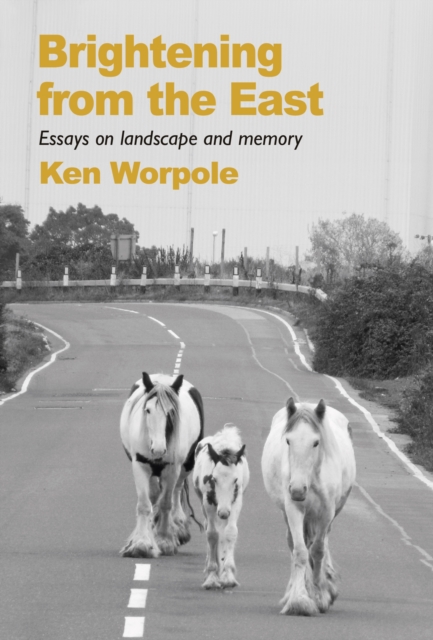 |
Brightening from the East: essays on landscape and memory by Ken Worpole (Little Toller, £16)Transparency… I’ve been reading Ken Worpole’s writing for decades, published a book of his in 2008 and he is part of the select Five Leaves’ London gang. The first time we met, decades ago, we were on opposite sides of a bitter argument at the Federation of Alternative Booksellers but became friends and comrades. But I would have read this book anyway as it ticks all my boxes… social history, landscape, cityscape, obscure stories about even more obscure organisations and communities, in this case mostly in Essex, often the playground for another interest, London’s East End. I’d always wished Ken would write an autobiography, but he does, here, include some autobiographical pieces including of his teenage years in Southend where he met Larraine, his wife of sixty years. Larraine was a photographer and some of her work appears here, including the cover image. Sadly Larraine died recently. Ken’s book ends with a set of essays on people important in his world including John Berger, Roger Deakin, Doreen Massey and Colin Ward. If that list means anything to you, get in. –Ross |
|
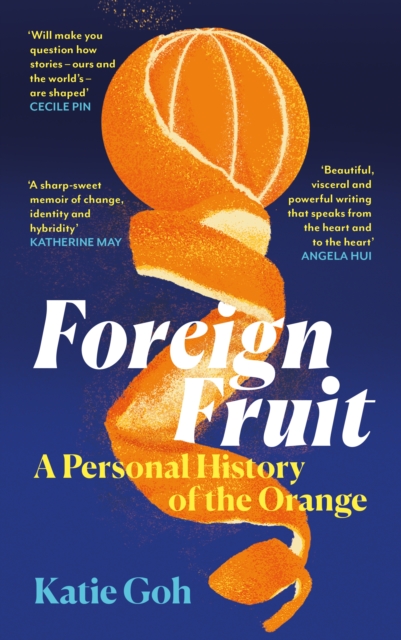 |
Foreign Fruit: A Personal History of the Orange by Katie Goh (Canongate, £16.99)I think this is my favourite book of the year, and also one I think deserves so much more attention! I don’t expect many people to have thought – I wish I knew more about oranges! But after reading this, you’ll be telling everyone you know facts about their fascinating history. I swear. It’s not just me! Goh blends memoir with a cultural history of the orange; successfully connecting trade routes, colonial legacies, mythology and her family’s history. I texted the opening line to my best friend, and then didn’t put the book down! Goh’s writing is captivating, vulnerable, and incredibly researched as she weaves the history and journey of the orange with her own Irish Chinese Malaysian heritage. Think: Amitash Ghosh’s Curse of the Nutmeg meets Crying in H-mart by Michelle Zauner. –Sarah |
|
 |
The Invention of Infinite Growth: How Economists Forgot About the Natural World by Christopher F. Jones (Oneworld, £28)A meticulous yet readable history of modern economic thought, showing us how the notion of ceaseless expansion (“Growth at all costs”) has become the single and only political imperative. A critical, but accessible book, urging a shift away from the “growth fetish” toward new models that prioritize ecological and human well-being. –Carl |
|
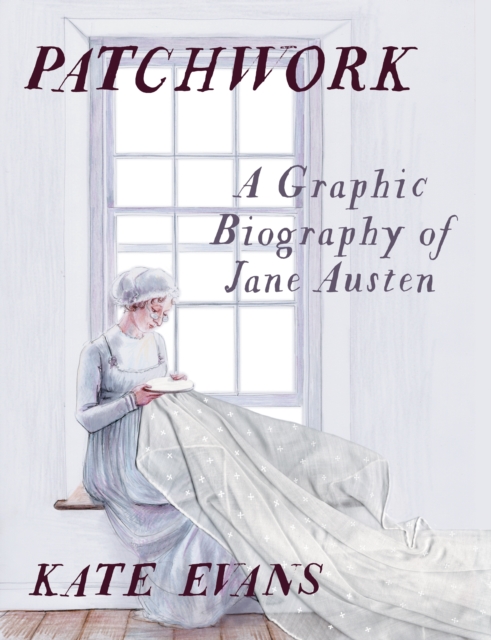 |
Patchwork: a graphic biography of Jane Austen, by Kate Evans (Verso, £25.00)Yes, Verso, that serious publisher of heavy political tomes. But anyway… I famously (well, among my workmates at the bookshop) dislike the writing of Jane Austen. But this work is just beautiful and might turn me. Kate Evans tells the story in a patchwork format – Jane knew one end of a needle from the other after all – with lovely illustrations. In the centre there’s a long supplement about the cotton used in patchwork. Ah, that’s where Verso comes in, except it’s not heavy. Do you know the statue of an enslaved woman and a Nottingham textile worker over in the Green Heart? Well think of this supplement as the Jane Austen version. At the very least, when you are in the shop, browse the book. Kate Evans – by the way – when she came to the shop wore handmade clothes from Jane’s period and gave us a mini-lecture about fashion. –Ross |
|
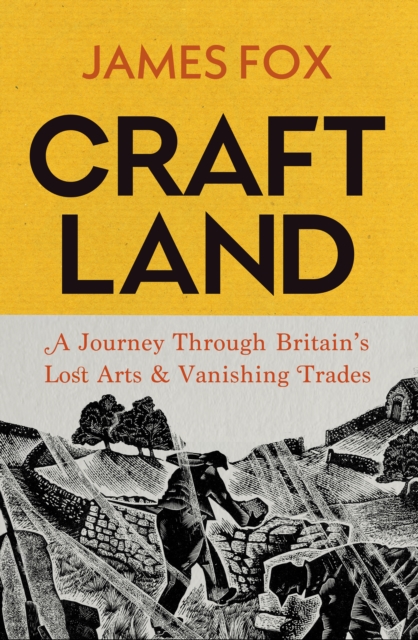 |
Craftland: A Journey Through Britain’s Lost Arts and Vanishing Trades by James Fox, (Vintage, £25)This intimately researched book charts the landscape of Britain’s (dying) crafts. Fox looks at the fundamental connections between people, land and local skills, ultimately arguing for preservation not purely for whimsical nostalgia, but with environmental consideration and local economic generation. If you love Braiding Sweetgrass, but found you couldn’t connect your own life and practice to the teachings of the book through a removal of geography and shared culture, you should read this. Fox spends time with the skilled craftspeople he is writing about, and is so clearly enthused and awed by their work. Flags on lampposts don’t make me proud to be British, but this book does a lot to argue for a genuine heritage, often informed and sustained through migration and skill sharing. –Sarah |
|
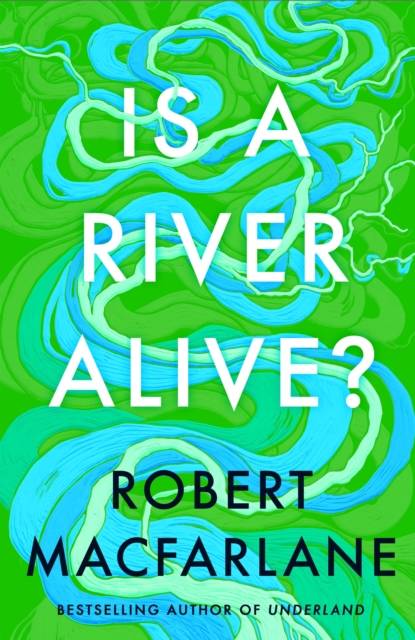 |
Is a River Alive? by Robert Macfarlane (Penguin, £25)This pick is partly for the book itself and partly for what it’s done. As Macfarlane readers will expect, it’s full of vivid descriptions of landscapes and unusual people the author meets while travelling through the world. In particular, it takes us to three rivers, one which has won rights, one which is all but dead, and one which is under threat, while linking them back to the springs, streams, and rivers in this country. At times I found myself longing for the wilder rivers of my childhood in California, but it also got me out exploring the tamer rivers nearest my current home, which can be both heartbreakingly polluted and stunningly beautiful. Regarding what it’s done, this book is more explicitly environmental and activist than Macfarlane’s previous writing. It’s been a joy for me to see it amplify the cause of river restoration in the UK. The Right to Roam movement has spent the year focusing on improving access to rivers, while other groups have been drawing attention to the pollution of these precious places by profit-seeking water companies and industrial agriculture. Of course, this activism has been ongoing for years, but I do think the book has been important in drawing more attention to the cause and is a great contribution to the national conversation. –Kate |
|
Fiction & Poetry |
||
 |
Passion by David Morley (Carcanet, £12.99)David Morely is a naturalist, which is reflected in his poems, and one of a small but growing handful of Romany poets. In Passion, his most Romany book yet, he uses more Romany words than any poet I have read, to great effect. They are glossed at the end of the poems. I’ll try to remember to pick up the book on Christmas Day, the better to appreciate one of his poems which starts: Christmas Day. The dawn is sure and quick and blue. David Morley should be reading in the bookshop early in the New Year. We’ll let you know. –Ross |
|
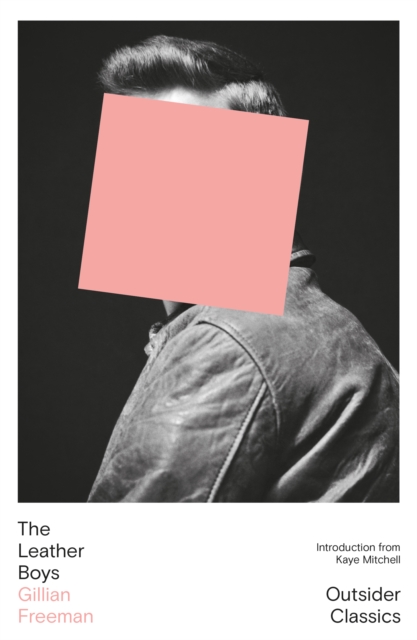 |
The Leather Boys by Gillian Freeman (Dead Ink, £10.99)My favourite cover of the year (as well as a great read)! Originally published in 1961, amid landmark changes around homosexuality in the law in Britain, this comes from the brilliant indie publisher Dead Ink’s Outsider Classics series of lost cult literature. The Leather Boys grapples with class, love, masculinity and queer identity, centring around two working-class men connected through their affiliation with a gang. I am often sceptical about the readability (and enjoyability) of ‘rediscovered classics’, but I found this layered and charming and reading working-class love stories, especially queer ones, is still sadly rare! –Sarah |
|
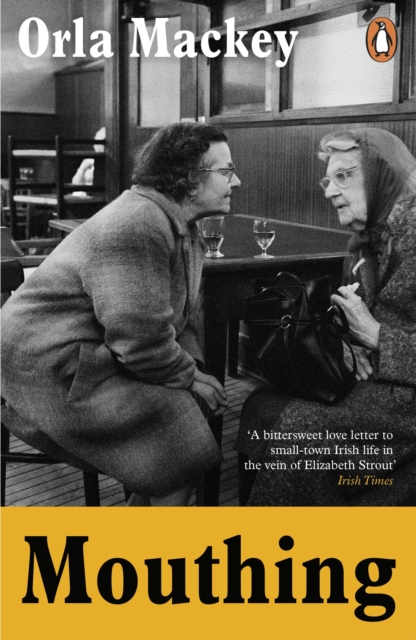 |
Mouthing by Orla Mackey (Penguin, £9.99)My discovery of the year was Mouthing by Orla Mackey, thanks to Sarah for the recommendation. It’s got multiple narrators, and a great sense of personal voice. It’s written in Hiberno-English (posh term for English as it’s spoken in Ireland). It’s the only book I’ve ever read that uses ‘ibex’ in the sense my Mam would (hint: nothing to do with wild goats). I was a bit disappointed Mackey didn’t also use Mam’s other equally loaded term ‘gazebo’ (nothing to do with fancy garden structures). But I’ll watch out for it in her next book. –Deirdre |
|
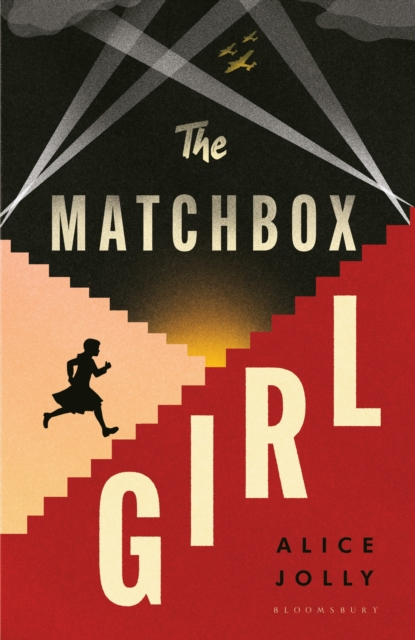 |
The Matchbox Girl by Alice Jolly (Bloomsbury, £18.99)Told through the unique voice of Adelheid Brunner, a non-verbal autistic girl obsessed with collecting matchboxes, Alice Jolly’s book is a compelling historical novel set in wartime Vienna, providing an unforgettable perspective on a dark period. Vividly imagined and meticulously researched, the book is a powerful study of survival and humanity. Most importantly, questioning the knowledge and complicity of Asperger, an otherwise compassionate researcher in such an evil regime. –Carl |
|
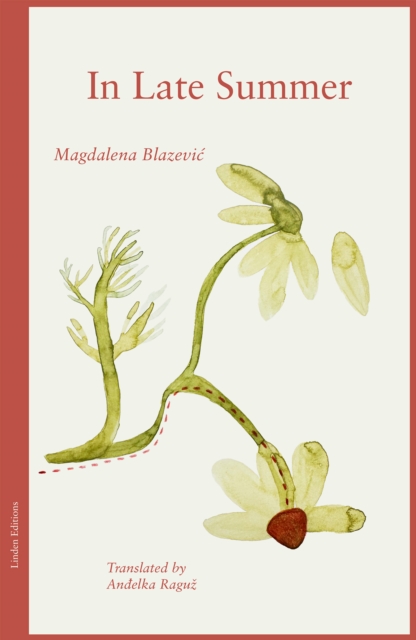 |
In the Late Summer by Magdalena Blaževic, translated from the Croatian by Andelka Raguž (Linden Editions, £12)This is a beautiful, devastating read, set during the Bosnian war and narrated by Ivana, a 14 year old girl we know has died. The juxtaposition of innocence and childish joy with the brutality of war could easily feel gimmicky, but the prose is carefully balanced and the translation holds a rhythm that feels authentic. The narrative is also based on the author’s personal experience and dedicated to the residents of Kiseljak. For all this heaviness, the novel captures so much joy and care in the depiction of childhood friendship, of rural life and family. Certainly not the easiest read, but one I highly recommend nonetheless. –Sarah |
|
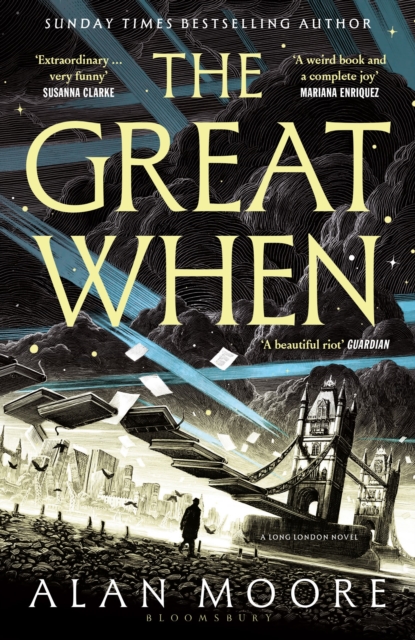 |
In The Great When by Alan Moore (New in Paperback in 2025, Bloomsbury, £9.99)My favourite read this year is from none other than the warped imagination of Alan Moore. I feel I should warn you – the opening chapter is strange, stranger than the rest of the book actually, and at times uncomfortably explicit. It acts as a sort of cinematic opening credit music, setting the scene and the background of the characters that will appear later. But stick with it, and the book eventually turns into a mind-bending romp through a post-war London which is overlayed on a parallel city made of myth and magic. In truth, I’ve read books with roughly that premise before, but this alternate London is somehow more of a psychedelic hallucination, and yet strangely more real feeling than a typical magic London novel. Also, for those who (like me) are geeky about 19th and early 20th century magic, the book is fantastically well researched, weaving historical occultists’ lives with a fictional young bookseller, just trying now to get turned literally inside out… like the last guy. –Kate |
|
 |
Service Model by Adrian Tchaikovsky (Tor, £10.99)*What would happen if we programmed computers and robots to take care of absolutely everything? Look to the future, when the human race has nearly died out and computers are running the world, but still obeying commands given centuries before – the result can only be ridiculously funny. Charles the robot valet is carrying out his tasks. He’s checking his master’s appointment list. He’s laying out his master’s clothes so his master can visit anyone who is on his appointment list for the day, even though his master has not left the house in years. He’s going through his task list one by one, even though none of them make sense any more. He discovers that some of his master’s clothes are covered in blood, and then remembers that he cut his master’s throat while shaving him. He has no idea why. He avoids arrest by robot police and sets off for the Central Services diagnostic centre to find out what’s wrong with himself. He arrives to find a long unmoving queue of odd robots, and is encouraged to jump the queue by an even stranger robot called The Wonk, as the queue hasn’t moved for decades. The Wonk christens the valet UnCharles (he lost his name when his master died) and they set off on an increasingly strange odyssey to discover their destinies. If I haven’t already sold you on this, imagine a robot-controlled library where the robots act like knights to protect the zillion gigabits of data, which in the interests of efficiency they’ve converted to binary then put all the bits in order… I challenge you to read this and not hurt from laughing. – Pippa |
|
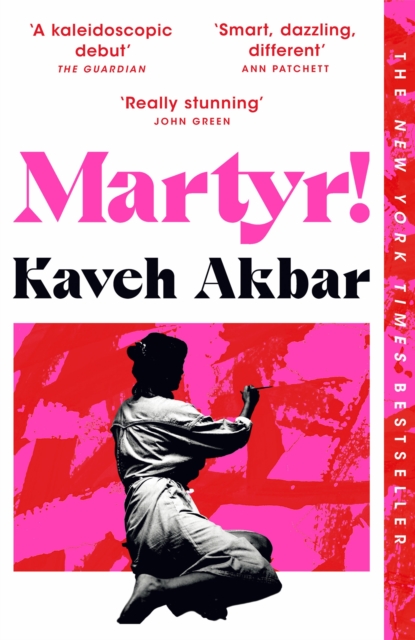 |
Martyr! by Kaveh Akbar (New in Paperback in 2025, Picador, £9.99 )Some books are worth the hype, but being stubborn, I often refuse to pick them up until they’re no longer ‘cool’. Nominated for a slew of prizes, and winning several, this debut novel from a poet managed to take me by surprise. The prose is not florid, it’s funny, sardonic, and very readable. The protagonist could easily be read as an author stand in: Iranian-American poet, aspiring writer, untapped genius. But Akbar takes those expectations and skewers them. Laughing at tropes he has embraced and embodied, while bringing heaps of cultural critique and millennial hopelessness. Obsessed with martyrdom and what it means for a life to have ‘meant something’ in its death, our protagonist embarks on an artistic interrogation of identity and meaning in contemporary America. – Sarah |
|
|
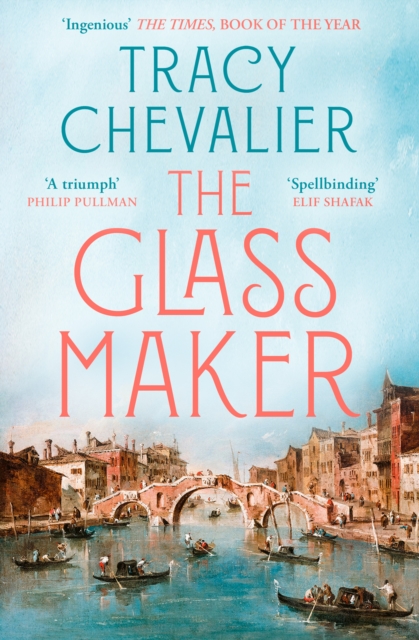
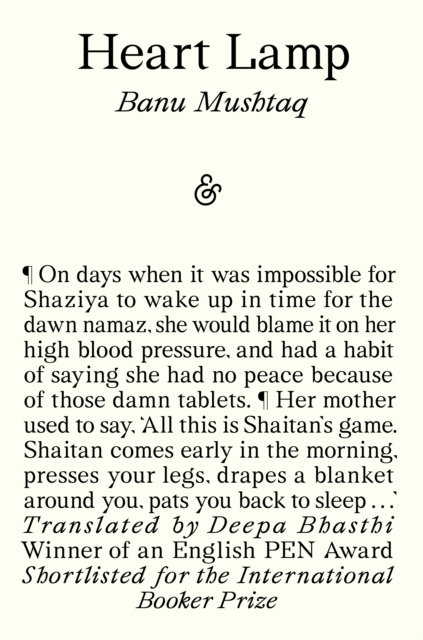
Heart Lamp: selected stories by Banu Mushtaq, translated by Deepa Bhasthi (And Other Stories, £14.99) andThe Glass Maker by Tracy Chevalier (New in Paperback in 2025, Borough Press, £9.99)Following the theme of using “foreign words” in a text for those reading in English. Mustaq and her translator take no prisoners in including more of such words – in Kannada – than I can recall in any novel or set of short stories. There is no gloss here, which helps the reader to feel a bit estranged from the situation, to pay more attention. Heart Lamp won the International Booker Prize and I suspect I was not alone in not having heard of the language before. It’s spoken by about 45 million people in India. The importance of these stories are that they are about the lives of Muslim women in this increasingly Hindu-dominiated country. The day to day problems of the women, however, are based in patriarchy. And unfortunately the women don’t always win. It’s a tough read. In The Glass Maker there’s a few words of Venetian, but that’s not an issue in this more mainstream novel. The book starts in Venice in 1486 or rather across the lagoon at Murano where the trade is in glass. Orsolo Rosso – a woman – learns the trade. Her story, and that of her family continues down the generations to the COVID period, which reflect the even more ghastly plague years in Venice in the past. The plot device of the book is that the same woman, the same family, live in the present moment but the present moment can be a century after the last chapter. There’s no Doctor Who special effects. Down the generations the trade changes. Venice becomes less isolated from the mainland and what was once a craft becomes something for the tourist trade. Each time Rosso and her friends and family have to deal with the circumstances at the time. This is the first book of Chevalier’s I’ve read since The Girl with a Pearl Earring. If you liked that one you will like this. – Ross |
|
| _________________________ | __ |
|